
Usually not. Unlike a home tariff, most public chargers charge the same per-kWh price at midnight as at midday — rapid chargers in particular are almost always flat-rate. A minority of networks vary the price by time of day, mostly on slower AC posts and in app-based pricing, so the only reliable answer is the price the charger or app shows before you start.
Key Takeaways
- Most public chargers, and nearly all rapid chargers, charge one flat per-kWh price all day.
- Time-of-day public pricing exists mainly on slower AC posts and in some networks’ apps.
- A subscription discount is not an off-peak rate — it applies at every hour.
- The price that bills you is the one on your payment method; check app and charger first.

Why Public Prices Are Usually Flat
A home off-peak rate exists because your supplier wants your demand moved to quiet hours, and your home supply can oblige. A public operator’s costs do not follow that pattern. The expensive parts of public charging — the charger, the grid connection, the site lease and upkeep — run around the clock, and our breakdown of why public charging costs what it does shows how heavily those fixed costs weigh on the per-kWh price. An operator recovering them from limited sessions has little reason to discount any hour: one flat price is simpler to display, bill and compare. Time-of-day pricing is the exception in public networks — and the home side of the comparison belongs to home tariffs, not this article.
Where Off-Peak Public Prices Do Exist
| Where you find it | How the cheaper window usually works |
|---|---|
| Slower AC destination posts (car parks, kerbside, workplace) | Some operators price overnight or evening hours lower, because cars are parked for hours anyway |
| App-based networks | Some networks vary rates by time inside their own app — check the app price, not a sign |
| Membership and subscription tiers | A lower per-kWh price for a monthly fee — a loyalty discount, not an off-peak rate; it applies at all hours |
| Rapid and DC fast chargers | Almost always one flat price, day and night |
How to Check Before You Plug In
- Read the price where you will pay. If you start from an app, use its per-kWh price for that specific charger; roaming apps can show a different price from the operator’s own app for the same post.
- Check the charger screen as well. Where the two disagree, the price attached to your payment method is the one that bills you.
- Confirm what else is charged. Some sites add a session fee or charge for time parked after charging ends; the per-kWh figure is not the whole bill.
- Use the federal station tools. The U.S. DOE’s Station Locator lists networks and chargers site by site — a good starting point before a trip.
On U.S. NEVI corridor stations the rules help you check: chargers must be open 24/7, accept contactless payment with no membership required, and hold average uptime above 97% — so the price at the charger is every driver’s baseline. Our guide to how to use a public EV charger covers the session itself.
The One Experiment That Blurs the Line
A UK project reported in our news post on using your home tariff at public chargers aims to let drivers charge publicly on their home electricity deal — which would import home off-peak rates into public charging for those drivers. It is a trial, not the market norm, and it underlines the point: today, your home tariff’s cheap hours stop at your front door. Everywhere else, the operator’s flat price rules unless the app in your hand says otherwise.
For Operators: Pricing Is a Setting, Not a Fixture
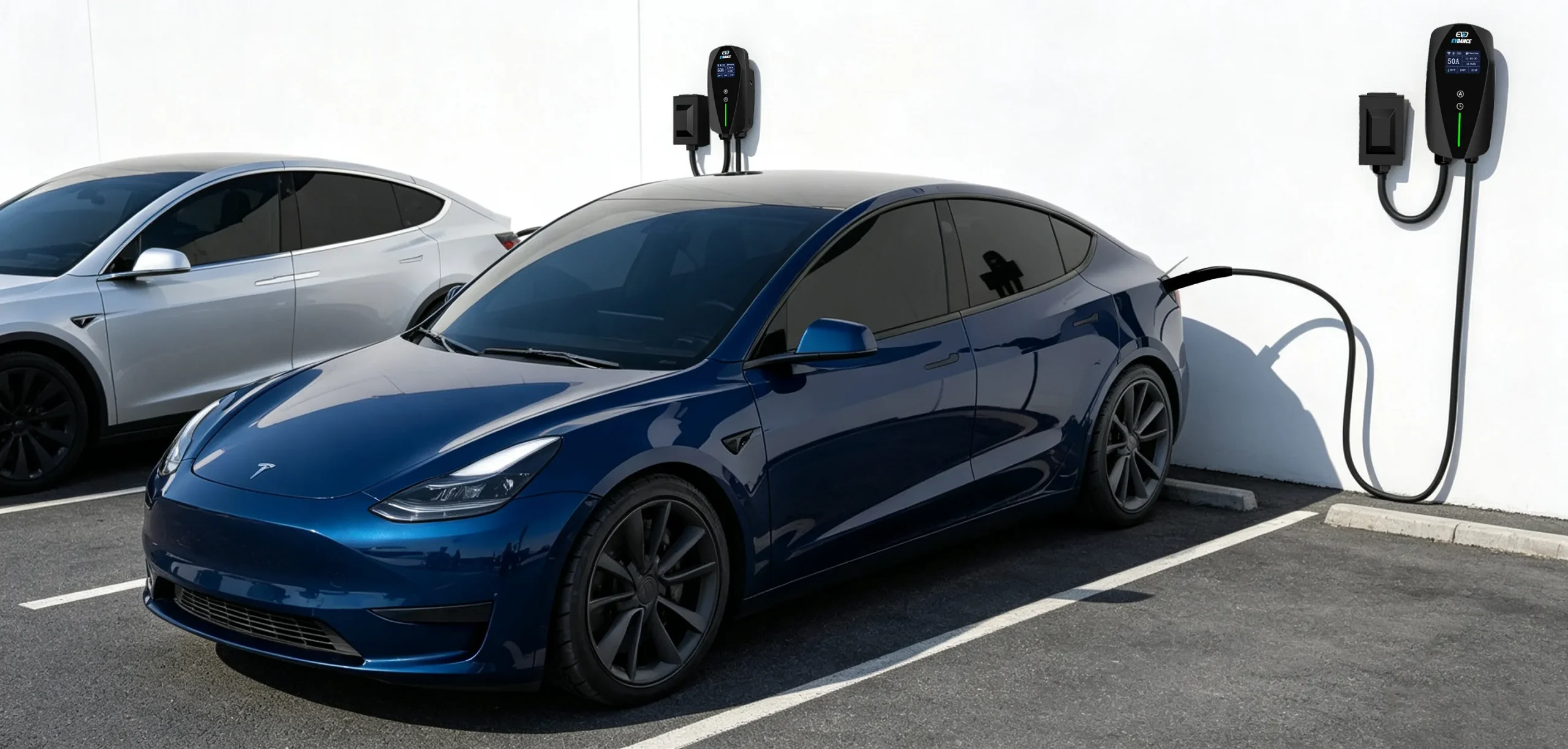
Time-of-day pricing is a software decision on modern AC stations. The EV-AC03201T dual-connector AC station delivers up to 43 kW shared (22 kW per connector) with OCPP 1.6J and RFID, so tariffs are set from the operator’s backend, not at the post. EVDANCE’s commercial EV charging range covers the hardware for sites weighing a quieter-hours price.
Frequently Asked Questions
Does a rapid charger cost less at night?
Generally, no. Rapid and DC fast chargers are almost always priced flat across the day. If a network runs a cheaper overnight rate, its app shows it for that site — check there.
Is a charging subscription the same as off-peak pricing?
No. A subscription lowers your per-kWh price at all hours for a monthly fee. Off-peak pricing varies the price by the clock. Networks may offer one or the other; occasionally both.
Why does the same charger show different prices in different apps?
Roaming. A third-party app may add its own margin or tariff to the operator’s charger, while the operator’s own app shows the operator’s price. Compare both before you start if the amount matters.
Related Reading
- Why Is EV Charging So Expensive at Public Stations?
- How to Use a Public EV Charger (and How to Stop It)
- UK Project Aims to Let Drivers Use Their Home Tariff at Public Chargers

