
Both can be the right buy — the difference is where the risk sits. A new EV costs more and starts with a full warranty and a battery history that is entirely yours. A used EV costs less up front, but you are pricing an unknown: how its battery was treated before you. Decide by looking at the battery evidence, the warranty that remains, and how long you plan to keep the car.
Key Takeaways
- New buys certainty and a full warranty; used buys a lower price and someone else’s battery history.
- Battery evidence — records, a health report, remaining warranty — is what should decide a used purchase.
- EV batteries age gradually (12–15 years in moderate climates per the DOE), so the risk is lost capacity, not sudden failure.
- Charging costs and home setup are identical either way — do not forget the charger in the comparison.
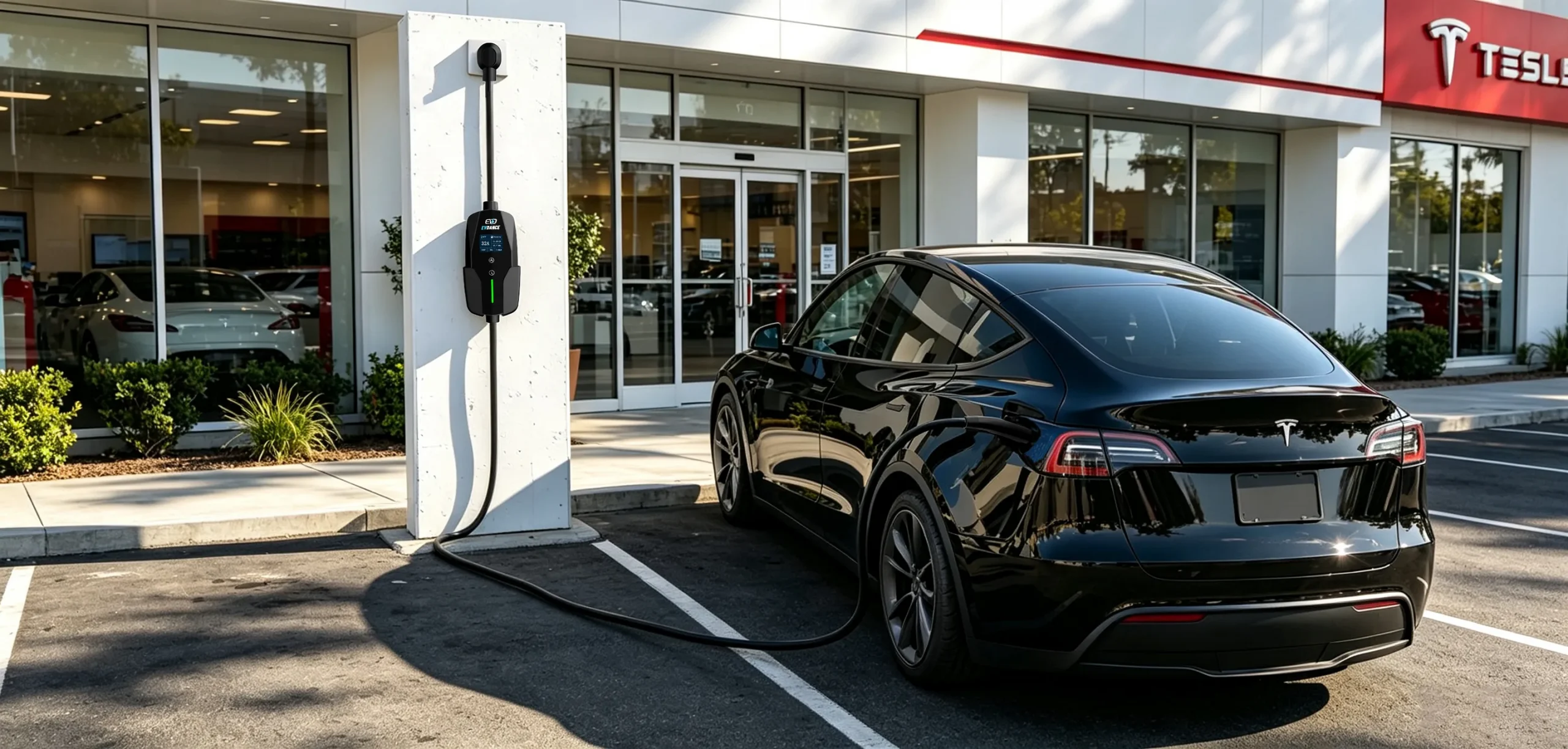
Side by side
| New EV | Used EV | |
|---|---|---|
| Price position | Full list price; the steepest depreciation happens in the early years and lands on you | Someone else has absorbed the early depreciation; entry cost is lower |
| Warranty | Full term runs from your purchase date | Whatever term remains — check it applies to you as the next owner |
| Battery history | Yours from day one | Unknown unless the seller can show records or a health report |
| Charging gear | Sometimes a portable cable is included; sometimes nothing is | May come with the previous owner’s cable — or none; a wallbox usually stays with the seller’s house |
The battery is the whole question
EV batteries age gradually rather than failing suddenly: the US Department of Energy’s FuelEconomy.gov puts battery life at 12–15 years in moderate climates and 8–12 years in severe ones. So a used EV is rarely a car about to stop working. The real question is how much capacity its battery has kept, and that depends on its life so far — how it was charged, stored and driven. Evidence shrinks the unknown: service records, a battery health report if the seller has one, and the remaining battery warranty. Whether an EV battery can be replaced — and what that involves — is worth understanding before you buy used, because it sets the worst case.
The money shape, honestly
Buying new trades a higher price for certainty and the full warranty term. Buying used trades certainty for a lower entry price — set something aside for the ordinary consumables any used car needs, and check whether a home charger is part of the deal, because a home charger’s cost is easy to forget in the comparison. Neither choice wins on running cost: both charge at the same home rates.
- New tends to suit drivers who keep cars a long time, want the full warranty, and prefer a known battery from day one.
- Used tends to suit drivers with a smaller budget who can check the battery evidence carefully and are comfortable with the remaining warranty.
- Walk away from any used EV whose seller cannot or will not show anything about its battery or service history.

Charging setup is the same either way
Whichever route you take, the car will charge at home on the same equipment. The EVDANCE EV-ACS4005T 40 A portable charger (9.6 kW, adjustable, NEMA 14-50, IP66) is a sensible first charger for a used EV that arrives without one, and the EV-ACT5006T 48 A wall charger suits a permanent install. Both carry the standard 3-year EVDANCE warranty.
Frequently Asked Questions
Is a used EV’s battery a gamble?
It is the main unknown, but a manageable one. Batteries lose capacity gradually, and records, a health report and the remaining battery warranty narrow the range of outcomes a lot. The gamble is buying with no evidence at all.
Do used EVs come with a charger?
Sometimes the previous owner’s portable cable is included; often nothing is. A fitted wallbox usually belongs to the seller’s house and stays behind. Ask explicitly — and test any cable you are handed before you rely on it.
What mileage is too high on a used EV?
There is no single figure. Condition, charging history and climate matter more than the odometer on its own. A high-mileage car with records and warranty remaining can be a safer buy than a low-mileage car with neither.
Related Reading
- Portable EV Charger Buying Guide 2026: Specs, Costs, and When to Choose One Over a Wallbox
- How Much Does It Cost to Charge an Electric Car at Home?
- Which Level 2 Charger Should I Buy?
- Can I Have an Electric Car Charger at Home? Houses, Rentals and Condos

