
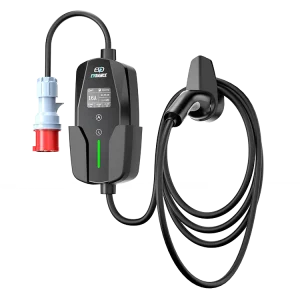
Why Is My 11 kW Charger Only Charging at 3.6 kW?
3.6 kW is one phase’s share of an 11 kW three-phase charger. Either your car takes one phase, or the unit was fed with one — one test with a second car separates the two.
3.6 kW is one phase’s share of an 11 kW three-phase charger. Either your car takes one phase, or the unit was fed with one — one test with a second car separates the two.
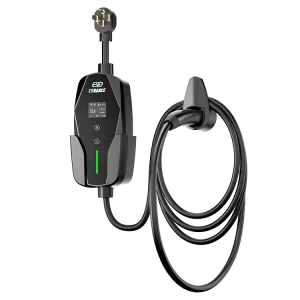
The charger advertises 32 A; the car decides what to draw. A 16 A result comes from the car’s own limit, a 16 A cable, or a 16 A setting — check them in that order.
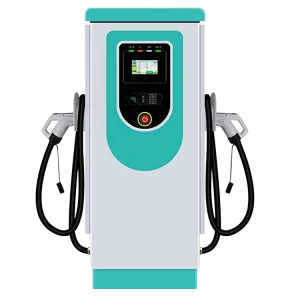
One click at the start and end of a session is the contactor working. Clicking that repeats while charging is a session dropping and restarting — and the pattern says why.
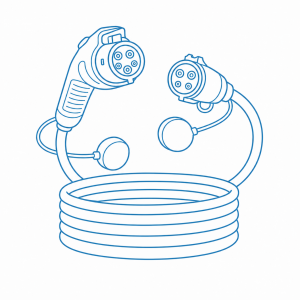
A charging plug that is hot to the touch is a stop-and-inspect sign: heat means resistance where the contacts meet, and the hot end tells you whose problem it is.
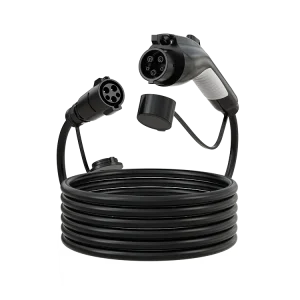
Heat at the wall socket is made inside the receptacle: its hidden spring contacts wear and loosen under hours of continuous EV load. Stop using a hot socket; an electrician replaces it.
Mild warmth spread evenly along a charging cable is normal. One hot spot — at a kink, under a mat, at one connector — is not. Where the warmth is tells you which it is.

Two locks can hold a cable at the car: the handle latch and the car’s inlet pin — plus a session that never ended. Three quick observations tell you which one is holding.
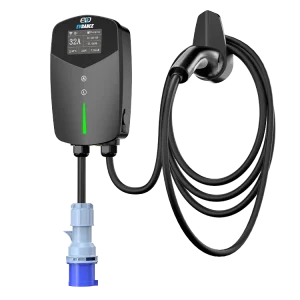
A Type 2 cable stuck in a post is usually a session that never closed on the station’s record. End it properly, then let the operator release the lock — never force it.
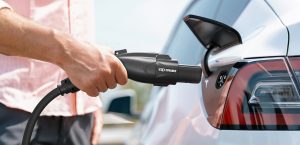
Plugged in but nothing starts? Work the two-minute observations first — what the charger shows and what the car shows assign the fault to one side before any part is blamed.
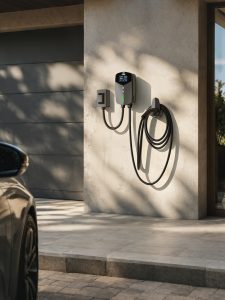
A charger dead after a power cut is usually tripped, latched or waiting — not damaged. The state it woke up in tells you which, and which professional owns it.