
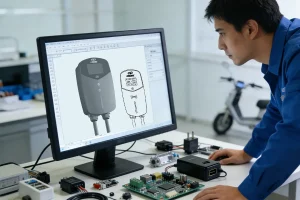
LFP vs NMC: What Is the Difference Between EV Battery Chemistries?
LFP and NMC are the two main EV battery chemistries. The letters name the cathode: iron phosphate vs nickel-manganese-cobalt — and the trade-offs follow from that.
LFP and NMC are the two main EV battery chemistries. The letters name the cathode: iron phosphate vs nickel-manganese-cobalt — and the trade-offs follow from that.
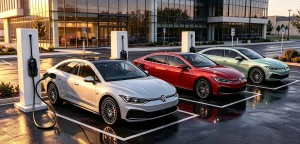
Space beside the car, a level route, reachable controls, manageable cable weight and contactless payment decide whether a disabled driver can use a public charger unaided.
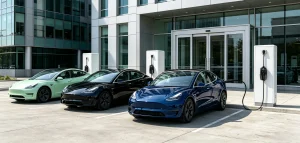
A plug-in hybrid’s small battery is its advantage without home charging: one workplace or public Level 2 session fills it. Where to plug in, and when it stops working.
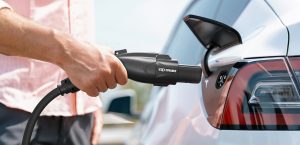
Charger voltage and battery voltage are different numbers. Most EV packs run near 400 V; 800 V models raise the DC fast-charging ceiling, not home charging.
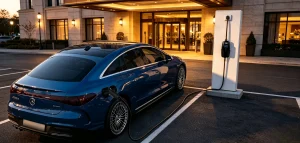
Destination charging is AC Level 2 charging where your car is parked for hours anyway — hotels, workplaces, car parks. The parked time does the work.
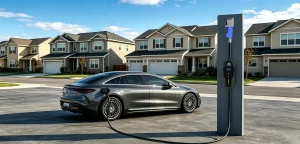
Community solar lets you subscribe to a share of a shared solar array and credit its output on your bill — no roof or panels needed, and your EV charging does not change.

Most EVs carry the drive battery flat under the floor; hybrids and plug-in hybrids use the tunnel, rear seat or boot floor. What that placement means for you.
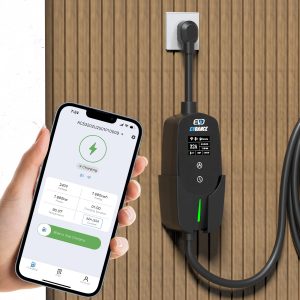
Count it weekly, not per session: a 200-mile week needs about 10–20 plugged-in hours on Level 2 — nearly all of it while you sleep. Level 1 needs 40–100 hours for the same miles.
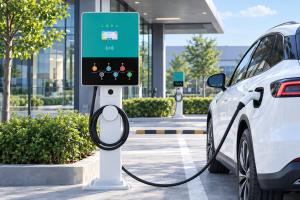
Every EV charger draws from the local grid through a metered service connection and a transformer. The path from power station to battery, stage by stage.
There is no standard off-peak discount — the saving is your peak rate minus your off-peak rate, times the kWh you actually shift. Here is the three-number method.