
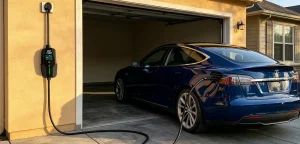
Can You Charge an EV With a Portable Solar Panel?
A portable solar panel makes a few hundred watts; a car needs about 1.4 kW to start charging. Why panel-to-car cannot work, the battery-box workaround, and what the panel is for.
A portable solar panel makes a few hundred watts; a car needs about 1.4 kW to start charging. Why panel-to-car cannot work, the battery-box workaround, and what the panel is for.
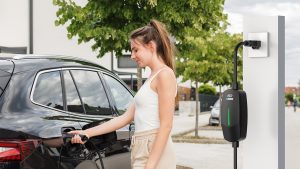
An EV motor draws nothing at a standstill — there is no idling loss. In a jam you pay for cabin heating or cooling, not for sitting still.
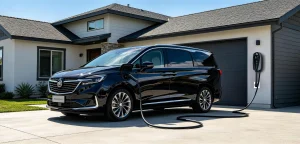
Treat EV battery-fire smoke as harmful and stay clear of it. Why the fumes are dangerous, what to do in a garage, and when to get medical advice.
Wind changes your speed through the air, and drag rises steeply with it. Why headwinds cost more range than tailwinds repay, and how to plan around them.
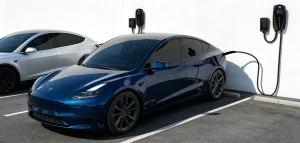
If your EV is recalled for a battery fire risk: confirm it covers your car by VIN, follow the maker’s interim instructions exactly, and book the remedy. How each step works.
The low-speed hum is a required pedestrian warning sound. The whine is the motor and inverter, the clicks are contactors — each EV sound, explained.
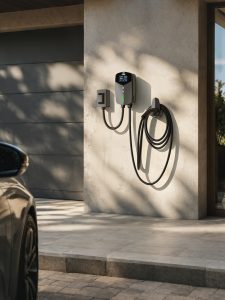
Yes. The NEC treats EV charging as a continuous load, so the breaker is sized at 125% of the charger’s current. What that means for your settings.
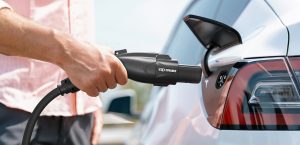
The charging port is the inlet on the car itself, behind the flap. Its fixed shape decides which plugs fit, and whether the car can take AC, DC, or both.
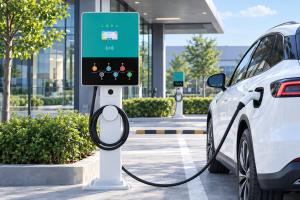
Per-kWh pricing charges for energy; per-minute pricing charges for time. Which costs you more depends on how fast your car charges — here is the maths.
IEC 62196 defines the plugs, sockets and vehicle inlets for EV charging — shapes, pins and ratings. Its connector families, and how it differs from IEC 61851 and ISO 15118.