Before adding EV chargers to an apartment block, office or car park, someone has to answer a simple question: how much spare electrical capacity is there? The answer decides how many chargers can be installed, at what power, and whether a supply upgrade is needed. This guide explains the basics. A qualified electrical engineer must carry out the actual calculation under local rules.
Step 1: Find the Supply Capacity
Start with the rating of the building’s main supply, such as the main breaker or the utility connection. This is the maximum the building can draw.
Step 2: Find the Existing Peak Demand
Measure or estimate the building’s existing maximum demand. Utility bills with demand readings, smart meter data or a temporary load logger are the most reliable sources. Rules in some countries allow measured demand over a period, such as 12 months, to be used.
Step 3: Calculate the Spare Capacity
Spare capacity is roughly the supply capacity minus peak demand, minus a safety margin. That spare capacity is what the chargers can use.
Step 4: Remember Chargers Are Continuous Loads
A charger can run at full current for hours. Under the US NEC, EV charging is treated as a continuous load, so circuits are sized at 125% of the charger current. Similar principles apply in other countries.
A Simple Example
| Item | Value |
|---|---|
| Spare capacity after margin | 100A at 400V three-phase |
| Charger | 22 kW (32A three-phase) |
| Chargers at full power without load management | 3 |
| Chargers with dynamic load management sharing 100A | Many more, at reduced power when busy |
Figures are illustrative only.
Load Management Changes the Picture
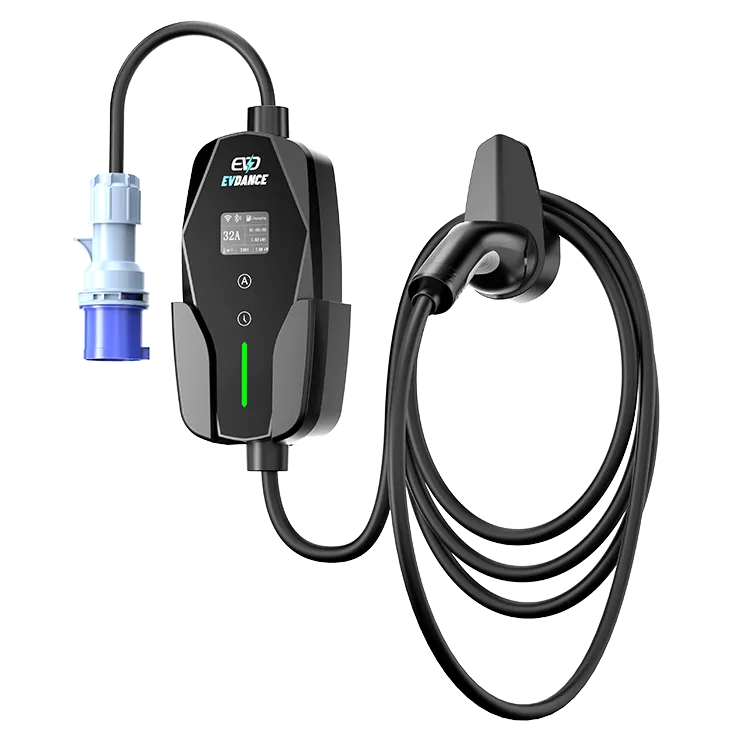
Dynamic load management shares the available capacity between chargers and can reduce charging current when the building is busy. Rules in many places allow the circuit load to be based on the managed limit, which lets far more chargers be installed without a supply upgrade. Chargers such as the EV-ACS3210E support dynamic load balancing.
When to Talk to the Utility
If spare capacity is too small even with load management, or if the project includes DC fast chargers, contact the utility early. Upgrades can take months. See our parking garage and apartment and condo charging pages for project support.
Related Reading
- Fleet Depot Charging: How to Size AC Chargers for Vans and Light Commercial Vehicles
- Apartment and Condo EV Charging: Solutions for Shared Parking
- EV Charging News: Brazil Passes 25,000 Charging Points as DC Chargers Grow 32.8% in Three Months
Key Takeaways
- Spare capacity = supply capacity − peak demand − safety margin.
- EV chargers are continuous loads; circuits are sized accordingly.
- Dynamic load management allows many more chargers on the same supply.
- Talk to the utility early for large projects.
Sources & Standards
- NFPA 70 National Electrical Code — Article 625 and Article 750 (Energy Management Systems)
- IEC 60364-7-722 — Supplies for electric vehicles
- IEC 61851-1 — Electric vehicle conductive charging system