
Adding commercial chargers to a residential-focused range is a business change before it is a catalogue change. The buyer changes from a homeowner to a business with a site, a file and a service expectation, and the evidence and support behind each unit get heavier. Distributors who pilot one commercial line and learn its duties first expand cleanly; those who list a full commercial range at once usually learn the same lessons at full price.
Key Takeaways
- Commercial expansion changes the buyer, file and service duty — not just the catalogue.
- Place every line honestly against the Level 2 and DC bands before listing it.
- Pilot one line for one buyer type, build its file first, and judge it on unanswered questions.
- Agree spares, response duties and claim route in writing before the first order.

What Actually Changes
| Area | Residential habit | Commercial reality to plan for |
|---|---|---|
| Buyer | A homeowner choosing one unit | A business, property manager or project buyer choosing for a site and a duty cycle |
| Evidence file | Datasheet and certificate for the model | The same, plus per-site documentation the buyer’s project asks for — answered per exact model, in writing |
| Sale shape | Single units, short decisions | Multi-unit orders, staged delivery, longer quote and approval chains |
| Service expectation | Warranty handling on a home unit | Downtime matters to a business: response duties and spares must be agreed before the order, not after a fault |
| Access and billing | Rarely part of the sale | Often the buyer’s first question — and only answerable from what the exact model’s listing actually states |
Place the Hardware Honestly
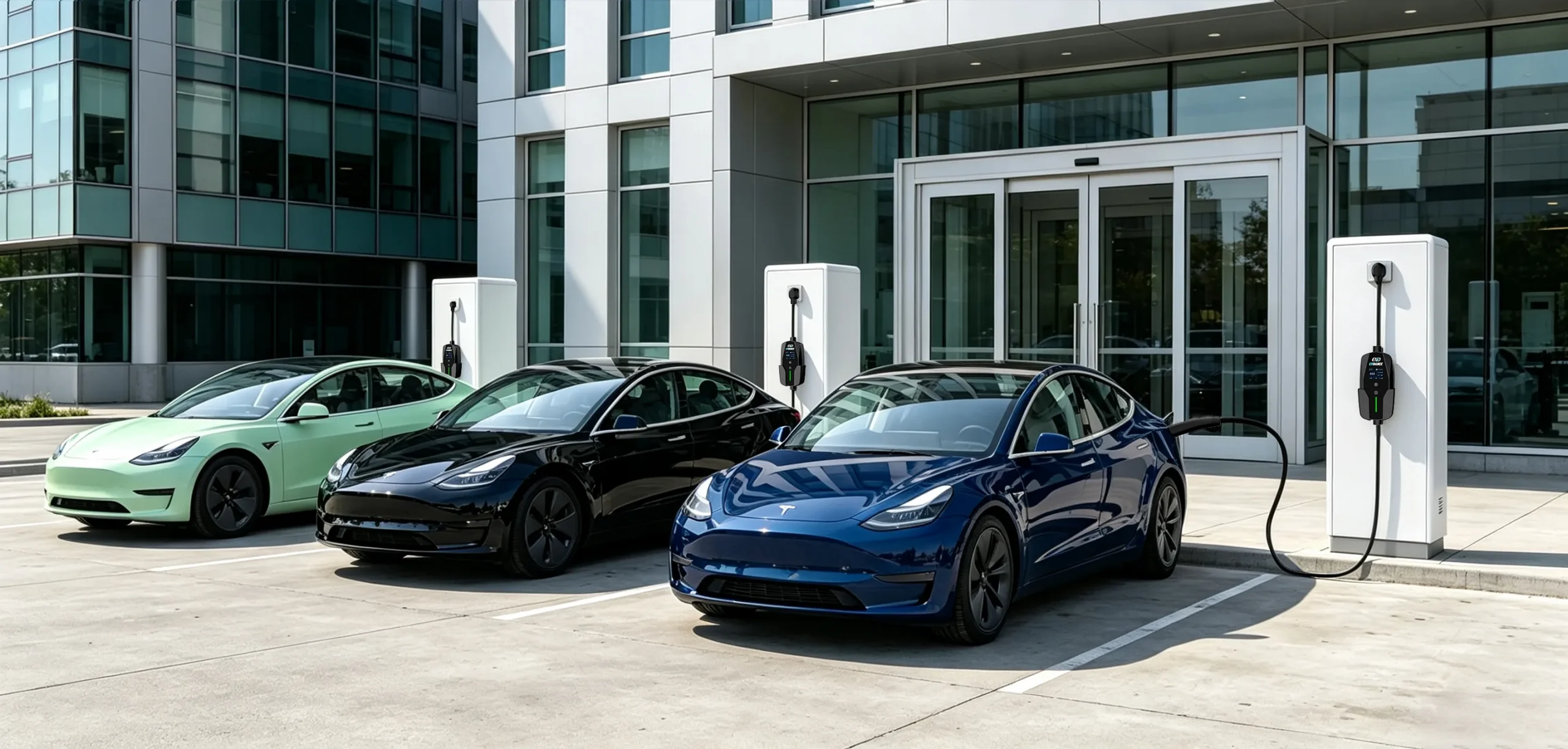
Commercial does not mean one product class. U.S. DOT figures put Level 2 at 7–19 kW and DC fast charging at 50–350 kW, and most early commercial demand — workplaces, hotels, small fleets — is Level 2 work with longer dwell. Place each line against that map before listing it.
- Dual-connector AC stations serve two vehicles from one station where dwell is long and turnover is shared across the day.
- Three-phase wallboxes serve smaller commercial sites that still need access control and a fixed installation.
- Compact DC serves shorter dwell, but sits in its own class: state its actual output plainly instead of borrowing the DC fast band.
The Pilot-Line Method
- Pick one line, one buyer type. A single station line sold to one kind of site — workplaces, for example — teaches more than three lines sold thinly.
- Build its evidence file first. Datasheet, certificates for the exact model, warranty terms and the access and billing answers the listing actually supports, filed before the first quote.
- Agree service before selling. Spares holding, first-response duties and the claim route, in writing with your supplier — a business buyer will ask, usually after the fault if you have not answered before it.
- Judge the pilot on its file, not its margin. Count the questions you could not answer, the documents you had to chase and the service calls you handled. That list is the expansion checklist for line two.
Adding Commercial Lines From EVDANCE
Two EVDANCE lines cover the usual pilot shapes, with a third for shorter dwell. The EV-AC03201T dual-connector AC station offers two Type 2 connectors at up to 43 kW shared (22 kW per connector), OCPP 1.6J, RFID and an IP54 floor-standing form, with a 7-inch touchscreen that is a display, not a payment terminal; its stated dynamic allocation covers its own two connectors. The EV-ACT3204PE 22 kW wallbox (three-phase, tethered Type 2 cable, RFID and app, IP66, CE) suits smaller fixed sites. The EV-RHDC30K-L compact DC charger is a 22 kW single-connector DC unit with OCPP 1.6J and IP54 — honestly below the 50–350 kW DC fast band, its connector variant confirmed in writing per order. See commercial EV charging solutions, the distributor program, or contact the team to plan a pilot line.
Frequently Asked Questions
Should a residential distributor add DC fast chargers first?
Usually not first. Most early commercial enquiries — workplaces, hotels, small fleets — are long-dwell Level 2 work. A compact DC unit can be the right pilot where dwell is genuinely short, but it brings the heaviest evidence and service duties. Pilot where your buyers already are.
Can the same installers fit the commercial lines?
Often, with preparation. Commercial work adds site documentation, staged handovers and business-hours service expectations on top of fitting skill. Brief installers on the file and service agreement before the first commercial order. A licensed electrician remains responsible for the installation itself.
What is the biggest mistake when expanding the range?
Listing breadth before building depth: several commercial lines live in the catalogue while none has a complete evidence file, agreed spares or a rehearsed claim route. One line carried properly outsells three lines carried thinly, because business buyers test the file before they test the price.
Related Reading
- What Is the Best Commercial EV Charging Station? How to Choose
- How Do Commercial EV Charging Stations Work?
- How to Plan a Workplace EV Charging Program
- Fleet Depot Charging: How to Size AC Chargers for Vans and Light Commercial Vehicles

