
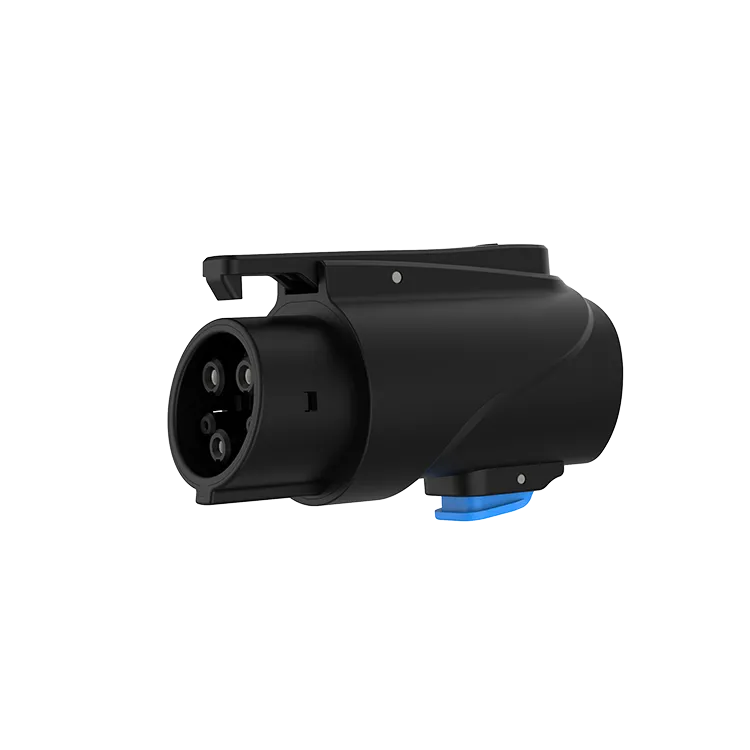
No — and the reason is the shape of the parts, not a setting. DC fast charging reaches the car through two large pins that sit below the round J1772 section; that pair of pins is what turns a J1772 arrangement into CCS1. A NACS-to-J1772 adapter presents a plain J1772 face, with no contacts where the DC pins are, so there is no path for DC current to cross it.
Key Takeaways
- No: a NACS-to-J1772 adapter cannot be used for DC charging, because it has no contacts where the DC pins are.
- DC enters a CCS1 car through two large pins below the J1772 section; a plain J1772 face never reaches them.
- The JT02 class is AC only — home and destination chargers. The DC job belongs to NACS-to-CCS1 adapters.
- DC adapters carry two extra conditions: maker approval for your exact car, and a station open to it.
Where the DC Actually Travels
A CCS1 connection is two interfaces in one housing. The round upper section is the J1772 interface: AC power and the signals car and charger exchange. Below it sit two large DC pins, and those pins — not the round section — carry the fast-charging current. The full anatomy is in whether J1772 works with CCS.
| Part of the connection | What it carries | In a NACS-to-J1772 adapter? |
|---|---|---|
| The J1772 section | AC power and the session signals | Yes — that is the adapter’s whole job |
| The two DC pins below | DC fast-charging current | No — no contacts, no path |
| The car’s DC openings | Where DC enters the battery circuit | Untouched — the adapter’s face ends above them |
On a car with only a J1772 inlet, those openings do not exist at all — the car was built without a DC inlet, which is why what J1772 is describes an AC standard. On a CCS1 car the openings are there, but this adapter still cannot serve them: its car-side face is the plain J1772 socket.
Both Ends of the Adapter Say the Same Thing
Look at the adapter. Its car-side face is a J1772 socket: AC power contacts, signal contacts, and nothing below them. Its station side takes a NACS plug from the AC chargers it was built for — home wall chargers and destination chargers. Inside is a mapped path for that AC arrangement.
So at a DC station, whichever way the plugs come together, the DC circuit is never completed through this part: the session on offer is DC, DC enters a CCS1 car through the pin pair, and through this adapter that pair is connected to nothing. There is no reduced-power version and no low-speed DC fallback — the route is not in the part.
The Part That Does This Job
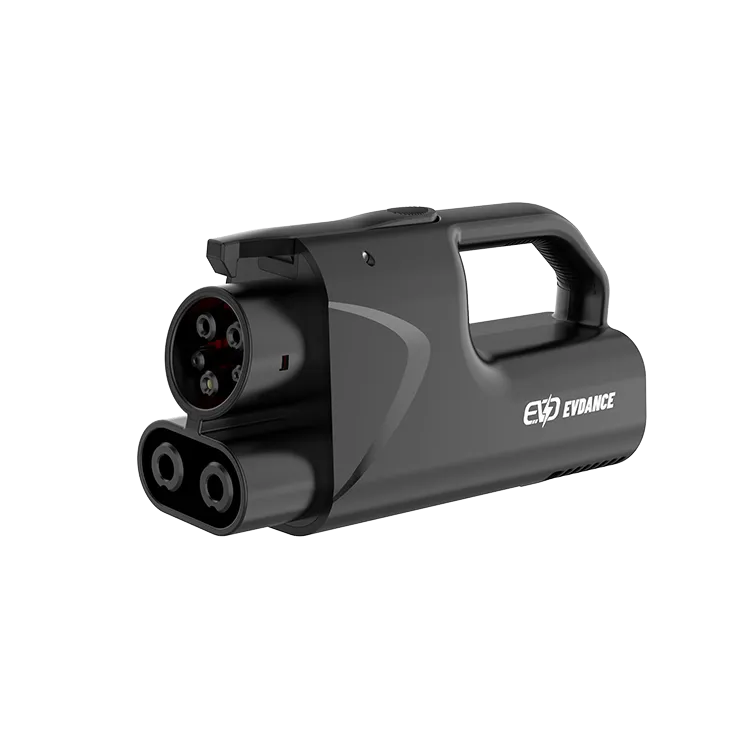
DC fast charging at a NACS station is a different adapter family: NACS-to-CCS1, presenting the full CCS1 face — J1772 section plus DC pins. That family carries two conditions an AC adapter does not: your car maker must approve a third-party DC adapter for your exact car, per the maker’s current document, and the station or network must be open to your car. Fit alone is never the whole answer on the DC side, as whether EV charging adapters are safe sets out.
The Two Adapter Families, Honestly Labelled
The EVDANCE JT02 is the AC part: a NACS-to-J1772 adapter, up to 80 A, AC 250 V, silver-plated copper terminals, IP65 — for NACS AC chargers, and never for DC. The DC job belongs to the EVDANCE JT08 and the handled EVDANCE JT09, NACS-to-CCS1 DC adapters rated up to 500 A and sealed to IP66, used only where your maker approves a third-party DC adapter for your car and the station is open to it.
Frequently Asked Questions
The plugs seem to fit together. Doesn’t that mean it works?
No. A fit at the AC contacts is not a DC path. The deciding geometry is the pin pair below the round section, and this adapter has no contacts there — the DC circuit has nothing to run on.
Can trying it damage the car or the adapter?
This guide makes no claim either way on damage. The deciding point is simpler and settles the question before risk enters it: the part cannot carry DC at all, so it is the wrong tool. Use the DC adapter family, under its two conditions.
My car has a CCS1 inlet. Which adapter do I need at a NACS DC station?
A NACS-to-CCS1 DC adapter — the JT08 or JT09 class — and only where your car maker approves a third-party DC adapter for your exact car and the station is open to your car. Check both in the maker’s and the network’s current documents.
Related Reading
- Does J1772 Work With CCS? CCS Connectors Explained
- What Is J1772? The North American EV Plug Explained
- Are EV Charging Adapters Safe?
- Is the Tesla Charger NACS? NACS, J3400 and Adapters Explained

