
Usually yes — but not on your signature alone. If you own a leasehold flat, you own the inside of your home, while the freeholder owns the building, the outside walls and the land the car park sits on. So a charger normally needs the freeholder’s — or the management company’s — written consent as well as an electrician.
Key Takeaways
- Consent covers the parts of the job that touch the building and its land — the charger itself is the easy part.
- Check the lease first, then get the freeholder or management company’s written consent for the fixings and cable route.
- Feed the charger from your own meter, or from the building supply with proper metering — agree which before the electrician quotes.
- Put the route, installer, metering and making-good in the request; paperwork gets flats approved.
Why a Flat Is Not a Small House
On a house, an installer works only on your property. In a block of flats, almost every route from meter to car crosses something shared: an outside wall, a communal path, a parking court owned by the freeholder. Your lease says what you may alter, and most leases treat fixings to the structure and runs across communal land as alterations needing consent. The management company is usually the freeholder’s agent — the desk your request lands on.
The Three Permissions, in Order
| Question | Who answers it | What to hold in writing |
|---|---|---|
| Does my lease allow a charger and a cable route? | Your lease, first; a solicitor if it is unclear | The clauses on alterations, parking and cables |
| May I fix a charger and cross communal land? | The freeholder or management company | Written consent naming the charger, the fixings and the exact cable route |
| Is the building’s supply and insurance position covered? | The management company, with your electrician’s input | Any conditions: certified installer, metering arrangement, making good |
The Two Workable Layouts
Fed from your own flat’s meter. The electricity is simply yours, on your bill. The catch is the run: the cable travels from your meter to your space, usually across communal areas, and long runs can make this the expensive option — but it avoids any argument about shared electricity.
Fed from the building’s supply at your bay. The energy then has to be metered back to you — typically through the charger’s own metering with RFID or app access. When several residents want charging, this becomes a building project, and our guide to apartment and condo charging in shared parking covers that rollout.
If neither route is agreed, the fallbacks are the ones in our guide to charging when you live in an apartment: workplace charging or nearby public charging while the consent conversation continues.

What to Put in the Request
- The exact charger and installer — model, where it will be fixed, and a licensed electrician’s details and insurance.
- A cable route drawing — every wall and strip of land the run crosses, marked on the site plan.
- How the electricity is paid for — your own meter, or the charger’s metering with RFID or app records.
- Making good and maintenance — who repairs the fixings, and what happens when you sell.
- The capacity check — your electrician confirms the supply can carry a continuous load: a 32 A unit belongs on a 40 A breaker.
Chargers That Fit an Allocated Bay
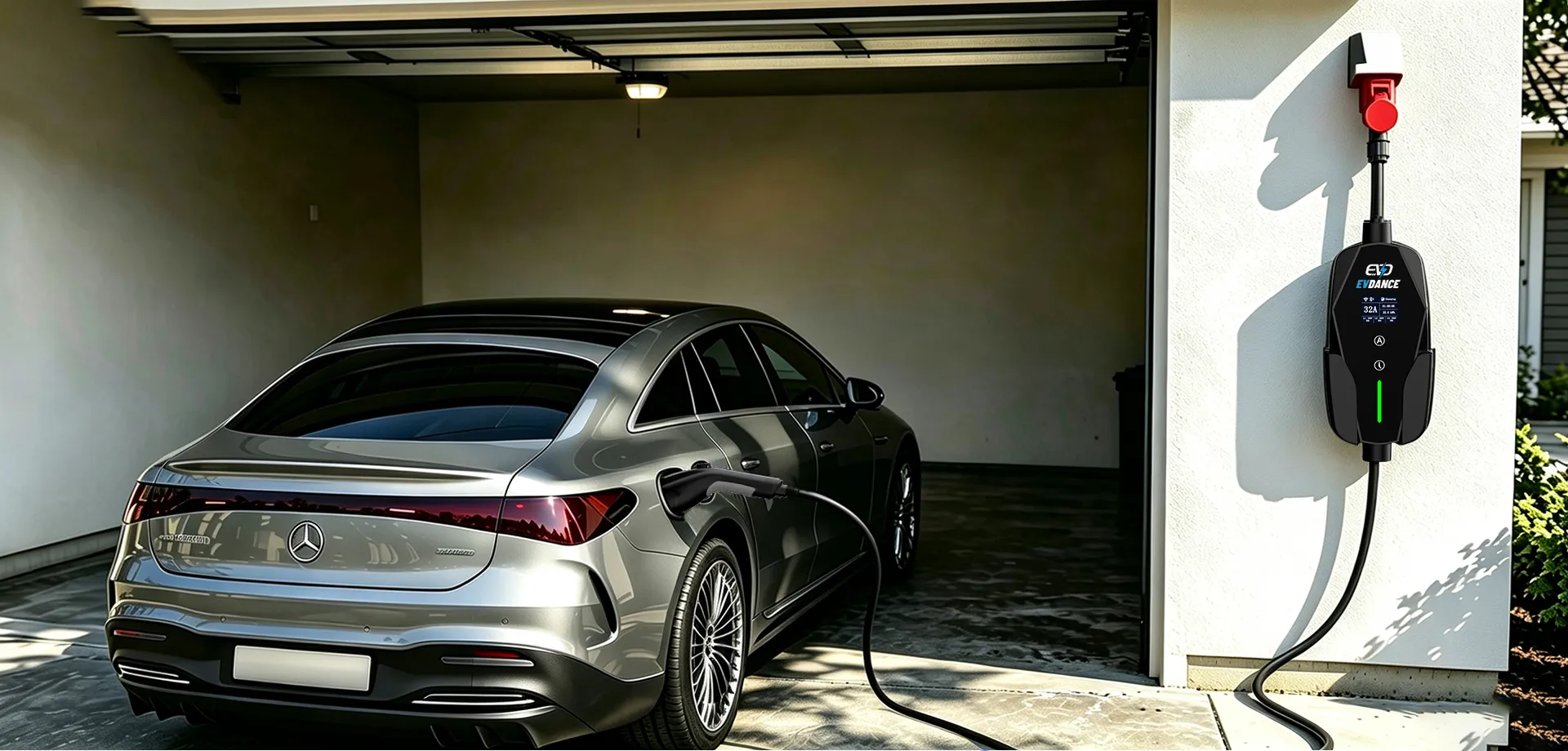
For a consented bay, the EVDANCE EV-ACT3204PE 22 kW wallbox offers a tethered Type 2 cable with RFID and app control — the RFID side makes per-resident metering practical on a shared supply. Where consent covers only an existing socket at your space, the EVDANCE EV-ACS3210E 32A Type 2 portable charger plugs in and leaves with you. Neither removes the consent step: it comes first.
Frequently Asked Questions
Can the freeholder simply refuse?
It depends on the lease and on local law, which differ by country and region. Ask in writing, and ask for reasons if the answer is no — a refusal with reasons can often be answered with a different route or charger position. Do not drill first and argue later.
Who pays for the installation?
For a charger serving only your flat, expect to pay for the unit, the installation and your own electricity. Infrastructure that serves the whole block — new cabling to the car park — is a collective decision for the owners and the freeholder, not a cost one leaseholder carries alone.
Can I trail the cable from my flat to the car as a temporary fix?
Not as an arrangement. A loose cable across communal paths is a trip hazard and exactly what consent is meant to prevent. A fixed, agreed route — in conduit or a proper channel — is the version a management company can say yes to.
Related Reading
- How to Charge an EV When You Live in an Apartment
- Apartment and Condo EV Charging: Solutions for Shared Parking
- EV Charger Hardwired vs Plug-In: Which Should You Choose?
- What Size EV Charger Can I Have at Home? Panel Capacity Explained

