
Sometimes a blocking car can be removed — but the power to do it almost never sits with the charging operator personally, and it is never safe to assume. Whether a non-EV in a charging bay can be towed turns on three things: whose land the bay is on and which rules govern it, what the posted terms say, and who is authorised to remove vehicles there. This page is information about how the question is decided, not legal advice for a specific site.
Key Takeaways
- Removal turns on land status, posted terms, and who is authorised — settle all three before an incident.
- On public land the authority enforces; on private land the landowner’s parking scheme does. The charging operator reports and escalates.
- Never move or block in the other vehicle yourself.
- Evidence and logged patterns are what make any enforcement route work.
The Three Questions That Decide It
| Question | Why it decides the answer | Where the answer lives |
|---|---|---|
| Whose land is the bay on? | A bay on a public road answers to traffic law; a bay in a private car park answers to the landowner’s terms and local private-parking rules. The removal route differs completely. | The site’s land status, then the local authority or the landowner’s parking arrangements |
| What do the posted terms say? | Removal normally follows the rules displayed at the bay — who may park, for how long, and what happens otherwise. Terms that were never posted are hard for anyone to act on. | The sign at the bay and the operator’s terms of use |
| Who is authorised to remove vehicles here? | Towing and clamping are regulated activities in many places. Typically it is a parking authority, the police, or a licensed operator working under the landowner’s scheme — not the charging operator acting alone. | Local parking law and the site’s enforcement agreement, confirmed before any incident |
Public Bay, Private Bay
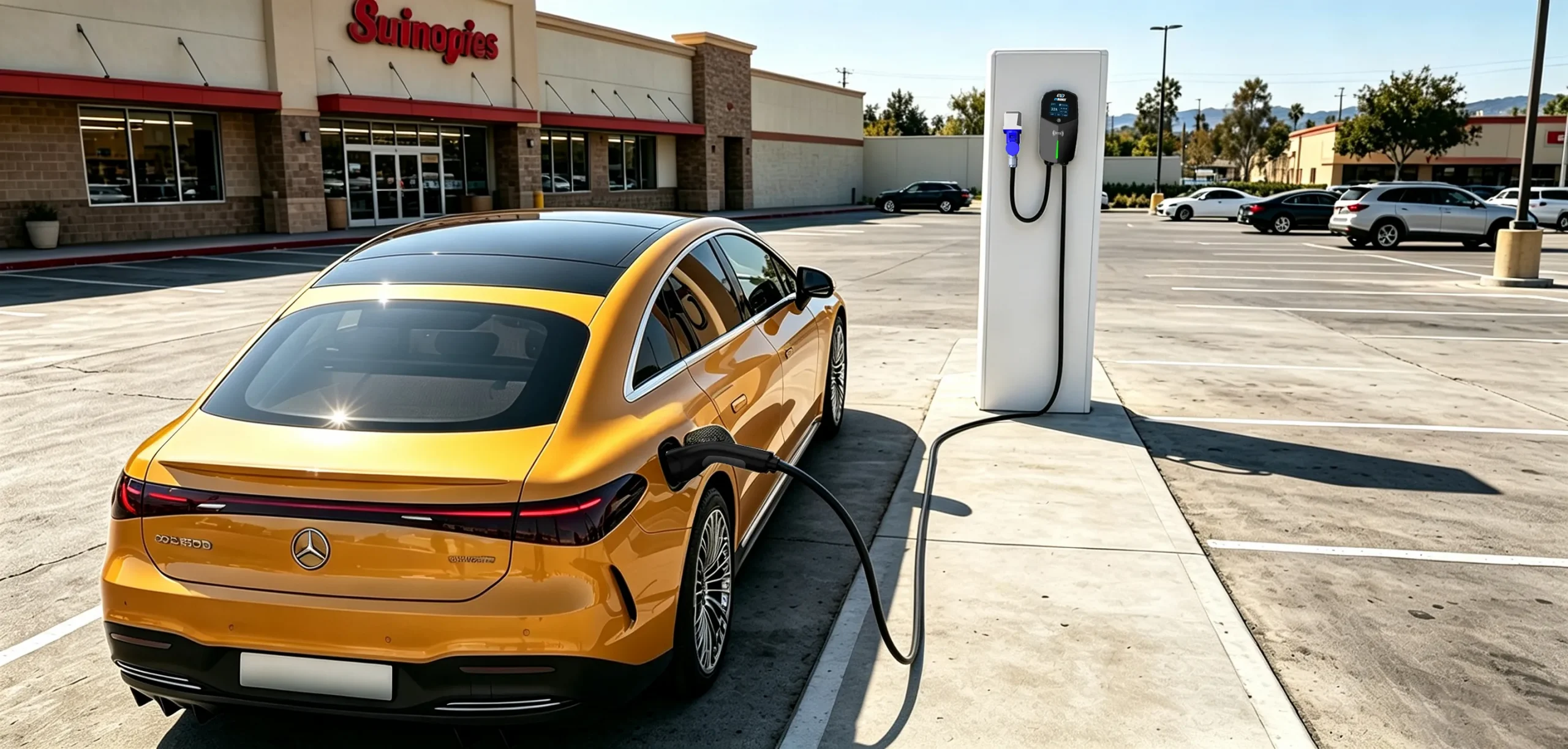
On a public road or in a municipal car park, enforcement belongs to the parking authority. The operator’s role is to report the blocked bay with evidence and let the authority’s process run. On private land — a retail park, a workplace, a residential development — the landowner sets terms of entry, and removal, where it is available at all, runs through the landowner’s contracted parking operator under the local rules for private land. In both cases the pattern is the same: the charging operator reports and escalates; someone else holds the removal power.
One boundary holds everywhere: never move, clamp, block in or touch the other vehicle yourself. Self-help creates a second problem — potentially a claim against you — on top of the blocked bay.
What to Do Instead, in Order
- Use the human route first. Site staff may know the owner, or can make an announcement — at hotels, workplaces and leisure sites this clears most blocked bays in minutes.
- Report it with evidence. A photograph with the time, the bay number and the session state is what a parking authority or contracted operator acts on. A single report is an incident; logged reports are a pattern they can staff against.
- Log it in the station record. Networked chargers show when a bay is occupied with no session running — a record that supports both the report and any later layout review.
- Fix the cause, not just the car. Repeat blocking usually points to unclear marking, contested placement near an entrance, or terms nobody can see — design and signage fixes, covered in our guide to how commercial charging stations work.
The hardware side of that record is mundane: the EV-AC03201T dual-connector AC station (two Type 2 connectors, up to 43 kW shared, OCPP 1.6J, RFID, IP54) logs sessions per connector, so “occupied but not charging” is visible in data rather than argued from memory. Shared residential sites face their own version, covered in our guide to apartment and condo charging in shared parking. The wider range is on the commercial EV charging page.
Frequently Asked Questions
Can I block the car in or move it myself?
No. Do not touch, move or obstruct the vehicle. Self-help removal can create liability for you and a dispute the operator does not need. Use the reporting route instead.
Does the same apply to an EV that finished charging hours ago?
It is a different problem with different tools. Removal powers, where they exist, usually target vehicles that should not be there at all; a finished EV is handled by the operator’s own instruments — stay limits and idle fees — plus the site host asking the driver to move.
Who pays for a tow when one happens?
That is set by the local rules and the site’s posted terms, not the operator’s preference. Read both before an incident, not after the first blocked bay.
Related Reading
- Apartment and Condo EV Charging: Solutions for Shared Parking
- How Do Commercial EV Charging Stations Work?
- How Do EV Charging Stations Work?
- How to Plan a Workplace EV Charging Program

