
Theme parks and stadiums suit AC charging because visitors park for several hours during a visit or event. Dual-connector stations like the EV-AC03201T let one pedestal serve two bays, share up to 43 kW between them, and connect to an OCPP platform for payment and power management. The planning challenge is the peak: thousands of cars arrive within an hour or two, so bay policy and load management matter more than raw speed.
Key Takeaways
- Multi-hour stays make AC charging the right fit.
- Plan for arrival and departure peaks with load management.
- Bookable bays and clear signage reduce frustration.
- Off-season use improves the business case.

Visitor Patterns Shape the Design
| Venue | Typical stay | Peak pattern | Design priority |
|---|---|---|---|
| Theme park | 5 to 8 hours | Morning arrival, evening departure | Many moderate-power bays |
| Stadium, match day | 3 to 5 hours | Sharp arrival and departure peaks | Load management, quick bay turnover after events |
| Concert or event venue | 3 to 6 hours | Evening peaks | Lighting, night safety |
| Staff parking | Full shift | Steady | Fleet and staff cards |
Even modest power over five hours adds a large share of a car’s daily energy needs. A car drawing 7 kW for five hours gains about 35 kWh.
Power and Grid Capacity
Large venues often have big electrical connections, but event days also bring floodlights, catering and screens. Use load management so charging takes what is left without exceeding the site limit. Off-season, the same chargers can serve staff or local residents. Read load balancing for multi-charger sites.
Payment and Bay Policy
- Bundle charging with premium EV parking, or charge per kWh through an app or card.
- Make EV bays bookable with tickets, so drivers know a charger will be free.
- Use idle fees or staff to move cars after charging, where practical.
- Show clear signage from the entrance to the EV area.
Our guide on turning dwell time into visits covers the commercial logic, and commercial charger costs helps with budgets.
Durability and Operations
High-traffic venues need robust equipment and quick fault response. Protect pedestals with bollards, keep connectors holstered, light bays for evening events, and monitor stations remotely. Train staff to help first-time users on busy days. A short laminated guide at each pedestal, showing how to start a session and who to call, prevents most queues at the bays. After each major event, check the session data for failed starts or faults, and fix them before the next crowd arrives.
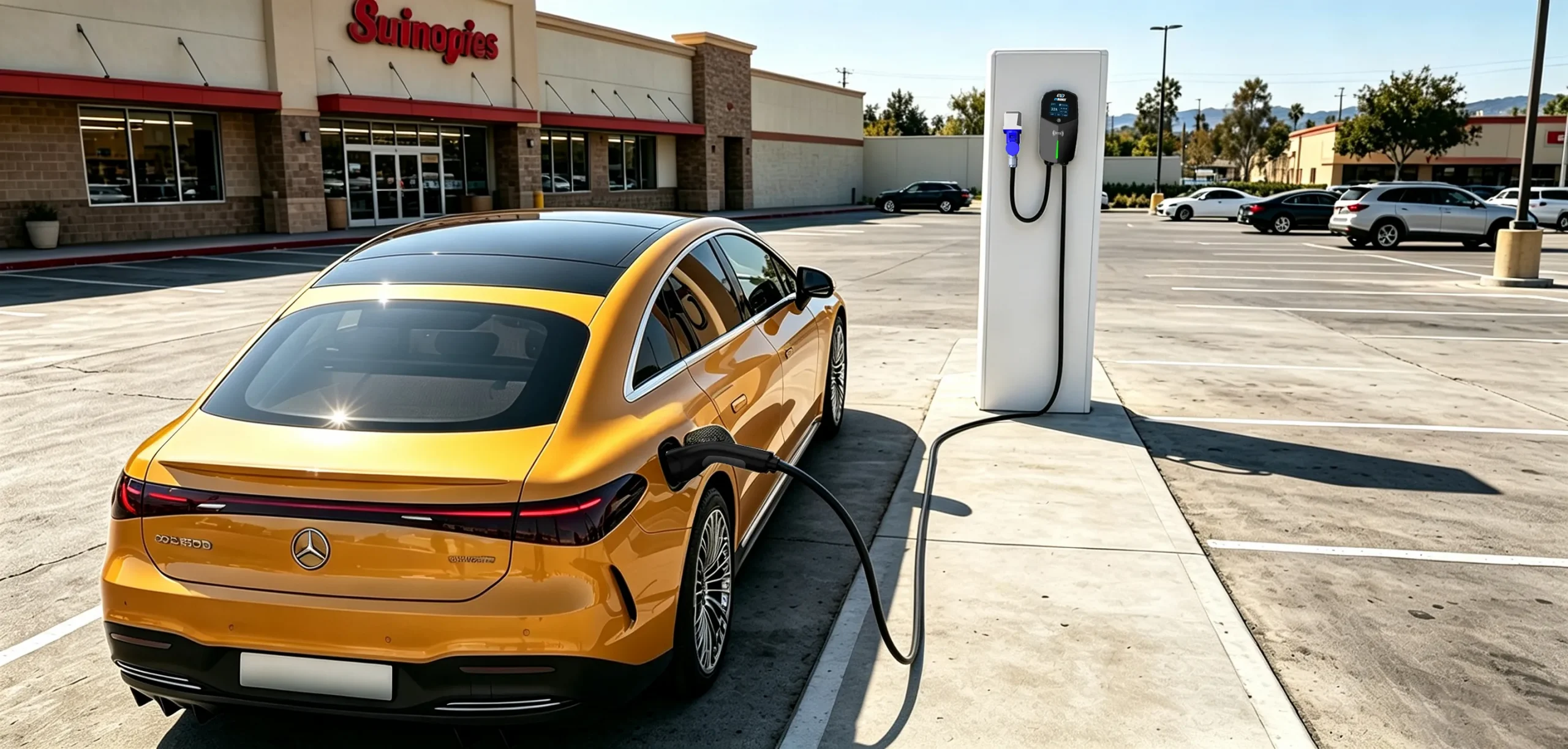
The EV-AC03201T is a floor-standing dual-connector AC station with two Type 2 connectors, up to 43 kW shared (22 kW per connector), a 7-inch touchscreen, RFID, OCPP 1.6J and IP54 protection. See EVDANCE commercial solutions for large-site layouts.
Frequently Asked Questions
Do stadiums need DC fast chargers?
Most visitors stay several hours, so AC charging is usually enough. A few DC units can serve staff or quick-turnaround needs.
How can venues handle event-day demand?
Load management, bookable EV bays and clear signage spread demand and keep the site within its supply.
Can venue chargers be used off-season?
Yes. Staff, local residents or fleets can use them, improving the return on investment.
Related Reading
- What Is EV Charger Load Balancing? How Multi-Charger Sites Share Power
- EV Charging for Restaurants and Retail: Turning Dwell Time Into Visits
- How Much Do Commercial EV Chargers Cost?
- Are EV Charging Stations a Good Investment?

