
One connector charging slowly on the EV-AC03201T is usually not a fault. The station’s 43 kW is a shared ceiling — 22 kW maximum per connector — and the product description states that power is allocated dynamically between the two connectors, so a busy second connector and the car’s own acceptance explain most slow sessions. A fault is what remains after two operator-level checks — the pattern check and the swap test — neither of which needs the station opened.
Key Takeaways
- Start with the ceilings: 22 kW per connector, 43 kW shared — a busy second connector explains most slow sessions.
- The car caps its own rate; a car that accepts 11 kW AC shows 11 kW on a healthy connector.
- The swap test separates car from connector using only the station’s own hardware and your platform’s session view.
- A connector that is slow with every car is a fault pattern: record it completely and escalate under the 3-year warranty.

First: Read the Ceilings Before You Blame the Connector
Three limits sit on every session, and the lowest one wins: the 22 kW connector ceiling, the 43 kW ceiling the two connectors share, and the car’s own AC acceptance. The table uses only the published ceilings and labelled arithmetic.
| Situation | What the ceilings predict |
|---|---|
| Your car alone, and it accepts 22 kW AC | Up to the 22 kW connector ceiling — the full single-connector rate |
| Two cars charging, both able to take 22 kW | The pair is capped at 43 kW combined, so each sits just under its connector ceiling — expected, not a fault |
| Your car accepts 11 kW AC | About 11 kW on either connector — the car is the limit, on a healthy station |
One further case drivers misread: near full, the car’s rate tapers by design — see why charging slows after 80%.
Second: The Car Sets Its Own Rate
The car controls its own rate: its onboard charger caps what it will accept, whatever the connector offers. A car that accepts 7.4 or 11 kW AC will show exactly that figure on a healthy connector, all session. Before touching the station, read the car’s stated AC acceptance in its manual and compare it with the rate on the station’s screen. If they match, the connector is doing its job.
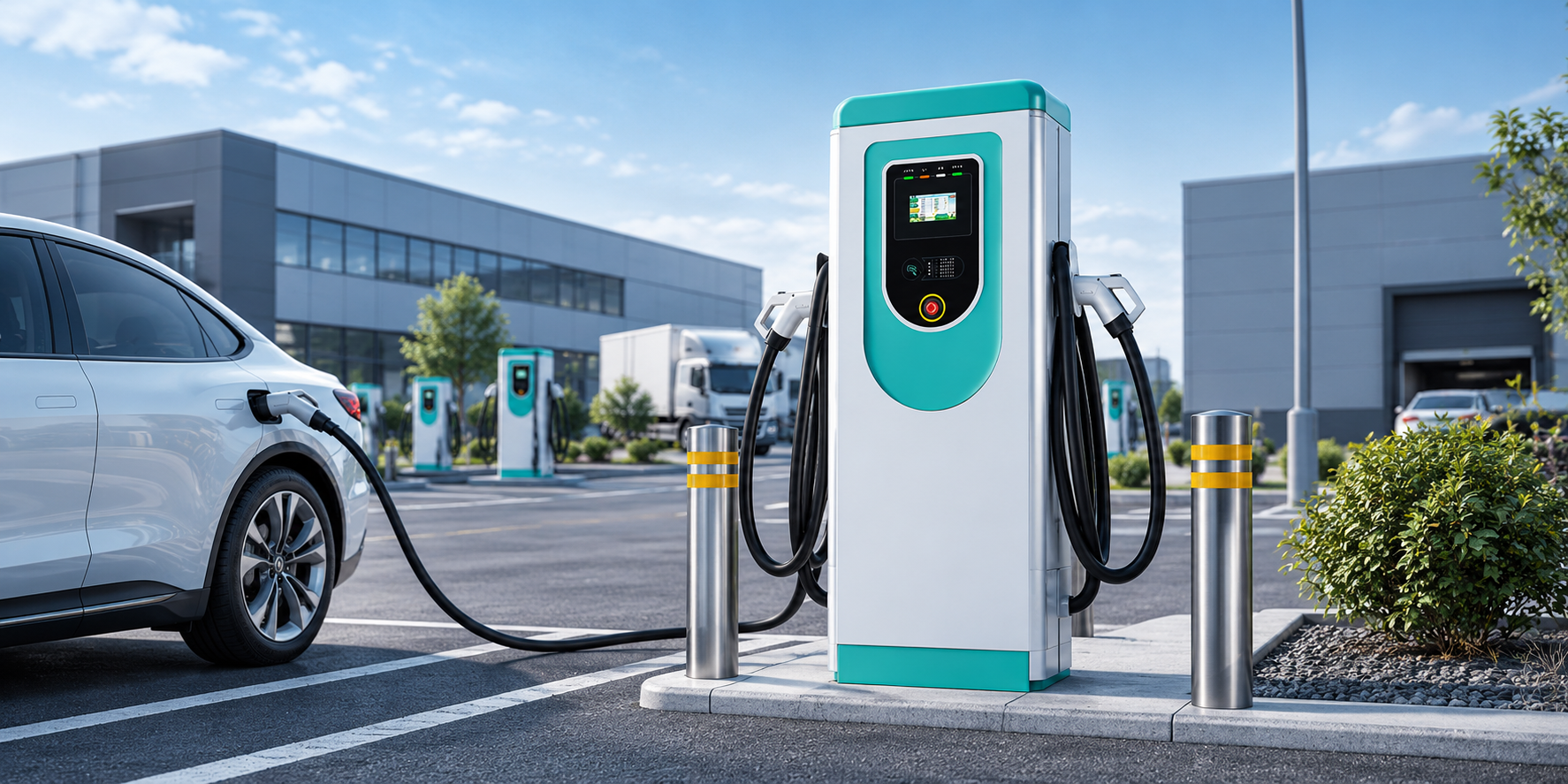
The Swap Test: Separating Car From Connector
- Move the same car to the other connector when it is free. If the slow rate follows the car, the station is cleared.
- Plug a different car into the suspect connector — one whose AC acceptance you know. If it charges at its expected rate, the connector is cleared.
- Read both sessions as your platform shows them — both connectors’ rates with the times. The pattern — one car only, one connector only, or both connectors — is the diagnosis.
- Look at the connector and cable: visible damage, or a connector that will not seat properly — take that connector out of use and record it. Do not open the station.
When It Is a Fault: Record and Escalate
If the pattern survives the swap test — the same connector slow with every car, the other connector normal — treat it as a connector-side fault. Record the site and station, which connector, the date and time window, both connectors’ rates as the platform recorded them, the cars involved and their stated AC acceptance, what the swap test showed, and photographs of any visible damage. Send the record to EVDANCE support: a complete record is what turns a complaint into a diagnosis, and the station carries the 3-year standard warranty. How reported faults should be handled is covered in our guide to common charger faults and supplier handling.
Frequently Asked Questions
With both connectors busy, should each car get exactly half — 21.5 kW?
No. 43 kW is a combined ceiling, not a promised equal split. The description states the station allocates power dynamically between the connectors, and each car caps itself too — so two cars rarely sit at identical rates, and neither is faulty for it.
The same connector is slow with every car, and the other connector is fine. Is that a fault?
That is the pattern the swap test isolates, and on that evidence, yes — treat it as a connector-side fault. Record it as above and escalate; if the connector or cable shows visible damage, keep it out of use meanwhile.
Can I restart the station to clear a slow connector?
No restart or reset procedure is published in the listing, and this guide does not invent one. Any power cycle follows the manual and your installer’s instructions, with no session running — and it is a step after the swap test, not instead of it.
Related Reading
- What Is a Dual Port EV Charger? How It Works and How to Choose
- Why Does EV Charging Slow Down After 80%?
- Does Load Balancing Increase EV Charging Speed?
- Why Is My Electric Car Charger Not Working? A Driver’s Checklist

