
If your Kia, Hyundai or VW has a J1772 inlet, the EV-AC04001U plugs straight in — no adapter, no configuration, and nothing to wait for while the industry changes connectors. Newer models from the same brands are arriving with NACS ports, but a charge port is hardware: the inlet your car was built with is the inlet it keeps, and yours takes J1772 chargers directly.
Key Takeaways
- A J1772 inlet is fixed hardware — newer NACS models from your brand do not change your car.
- The EV-AC04001U fits your Kia, Hyundai or VW directly. No adapter is involved.
- Public Level 2 keeps J1772 under the NEVI rules; your car is not being stranded.
- Adapters are one-direction parts: the JT02 covers your car at a NACS charger, not the other way round.
Your Inlet Is Settled for the Life of the Car
Car makers change connectors across model generations; they do not retrofit them to cars already sold. So the charger question for the car in your driveway was answered the day it was built. If the inlet on your Kia, Hyundai or VW is the round J1772 shape — or the CCS1 combo inlet, whose upper section is a J1772 inlet, as our CCS explainer shows — then every J1772 AC charger fits it, this one included. Our guide to what J1772 is covers the standard your car follows.
Newer NACS ports do not make your inlet dated in any way that matters at home: it is the same AC connection, at the same speeds, on the same outlet.
The NACS Transition Does Not Strand J1772 Cars
Public charging keeps J1772. Under the federal NEVI rules, funded corridor stations carry J1772 on their Level 2 ports — the standard is written into the program, not left to fashion. And the J1772 fleet is large and long-lived: every North American EV and plug-in hybrid built on that inlet over many model years.
What is changing is covered in our explainer on whether the Tesla charger is NACS — a story about new cars and DC networks. For a J1772 car, home charging is untouched by it.

Adapters: Which Direction Solves What
Adapters enter the picture only when a charger and a car carry different standards — and each adapter works in one direction only:
| Your situation | What bridges it |
|---|---|
| Your J1772 car and the EV-AC04001U | Nothing — a direct fit |
| Your J1772 car at a NACS home charger, such as a household member’s wallbox | The JT02 — a NACS plug into your J1772 inlet, AC only, up to 80 A, used only where your car maker approves it |
| A NACS-inlet car at a J1772 charger | That car maker’s own adapter for the J1772-to-NACS direction — the mirror image of the JT02, not the same part |
Do not use an adapter in the reverse direction from the one it was built for, and treat the car maker’s approval as the deciding word for any of them, as our guide to whether a Tesla can use J1772 chargers sets out for the opposite pairing.
Buy for the Car in Your Driveway
A home charger is matched to the car you charge today. If your next car has a NACS inlet, that is the moment to decide between a native NACS charger and the approved adapter route. Buying a NACS charger now, for a J1772 car, puts an adapter into every session for years to serve a car you do not own yet.
The Charger for Your Car
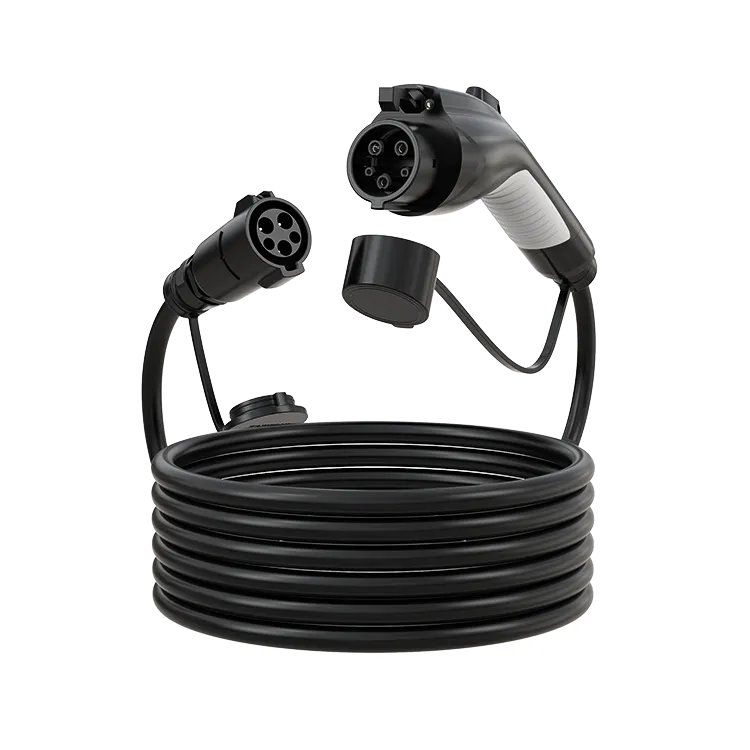
The EVDANCE EV-AC04001U is a 40 A J1772 portable charger: 9.6 kW, NEMA 14-50P plug, SAE J1772 connector, IP66 enclosure, 25 ft cable, and a 3-year standard warranty. For a household whose second car is J1772 as well, one unit serves both. If the household also has a NACS charger, the EVDANCE JT02 adapter covers your J1772 car on it — AC charging only, up to 80 A, where your car maker approves it.
Frequently Asked Questions
Will public chargers stop fitting my car as NACS spreads?
No. Public Level 2 keeps J1772 — the NEVI rules require it on Level 2 ports at funded stations — and home charging depends only on your own inlet, which never changes.
Do I need the JT02 to use the EV-AC04001U?
No. Your car and this charger are both J1772. The JT02 solves the opposite pairing: your J1772 car charging from a NACS charger.
My car has a CCS1 port rather than a plain J1772 inlet. Does it fit?
Yes. The top section of a CCS1 inlet is a J1772 inlet, and that is the part this charger uses. The two DC pins below it stay idle during AC charging.
Related Reading
- What Is J1772? The North American EV Plug Explained
- Type 2 vs J1772 vs NACS: Which EV Charger Connector Does Your Market Need?
- Does J1772 Work With CCS? CCS Connectors Explained
- Can a Tesla Use J1772 Chargers?

