
Yes — bring the portable charger, but know that the EV-AC04001U either works at a family home at full speed or not at all. It is a fixed 40 A unit with a NEMA 14-50 plug and no lower settings, so it needs a 14-50 outlet on a 50 A circuit. With family, the answer never changes: check the house once and every visit is settled.
Key Takeaways
- The EV-AC04001U is fixed at 40 A: it needs a 14-50 outlet on a 50 A circuit.
- Family charging is a repeat arrangement — verify panel and parking geometry once, not per visit.
- Holiday houses run busy panels; charge overnight and agree the parking spot for the stay.
- On a 30 A circuit, the plan B is a stepped portable set to 24 A, never an adapter forcing 40 A through.
Family Visits Are a Repeat Problem, Not a One-Off
A friend’s driveway is a single favour: check an unfamiliar outlet once, charge gently, leave. A family home is the same panel, outlet and parking spot several times a year — so the checks a guest runs on an unknown outlet settle the question for good, and the politeness side (ask first, agree where to park, pay for the energy) becomes a standing arrangement, not a fresh negotiation every holiday. Our guide to what it costs to charge an electric car at home shows the sums your hosts will see.
The One-Time Check That Settles Every Visit
Before the first trip, ask your relatives for two things: a photo of the breaker panel for the garage or driveway outlet, and the outlet’s location:
| What the house has | What it means for this charger |
|---|---|
| A 14-50 outlet on a 50 A breaker | Plug in at the full 40 A (9.6 kW) — this visit and every visit |
| A 30 A dryer circuit (14-30 or older 10-30) | This unit cannot step down to fit it. It stays home; see the plan B below |
| Only household outlets | Level 1 charging with the car’s own cord — slow, but enough for local trips |
| The panel cannot be identified | Not suitable until a licensed electrician identifies the circuit |
EV charging is a continuous load, so the breaker must be 125% of the charging current: 40 A belongs on a 50 A circuit. A 14-50 face alone does not prove that circuit — our guide to what a NEMA 14-50 outlet is explains how to read what is actually there. Measure the parking geometry once, too: the 25 ft cable must reach your charge port along the ground, not in a straight line.
The Holiday Panel Is a Busy Panel
Holiday houses are busy: the oven runs for hours, every room is heated, guests add demand — and your charger pulls 40 A through all of it. Plan around the house:
- Charge overnight. Start when cooking and laundry are done; a full evening is rarely necessary.
- Agree the spot once — who parks where, for the whole stay.
- Tell them what it costs. Four hours at 9.6 kW is about 38 kWh — roughly $7 at the U.S. average of 18.31 cents per kWh (labelled arithmetic, not their tariff).

The Charger You Bring, and the Plan B
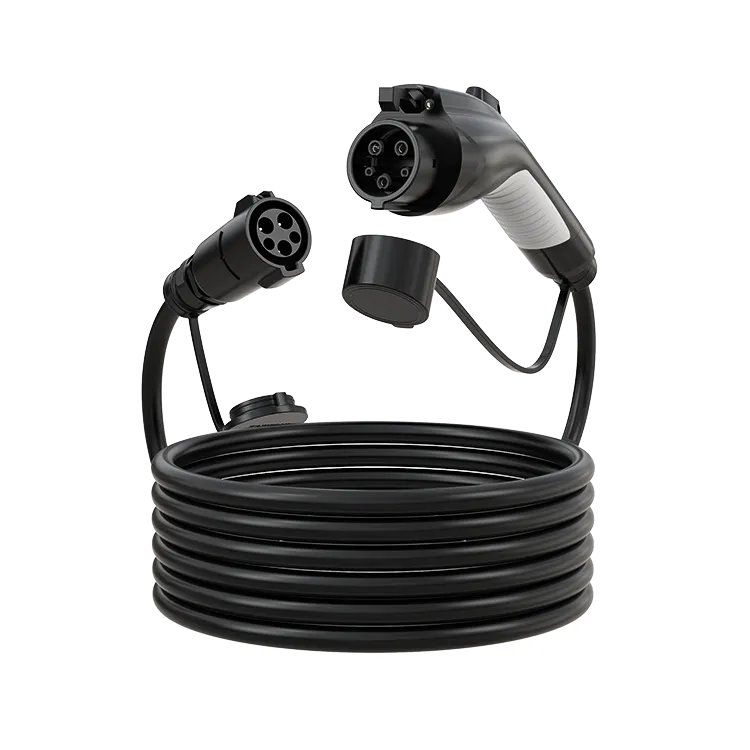
The EVDANCE EV-AC04001U is a 40 A J1772 portable charger: 9.6 kW, NEMA 14-50P, IP66, a 25 ft cable and a 3-year standard warranty. At a house with the right circuit, it makes the family driveway your regular holiday charging point. Where the house only offers a 30 A circuit, the honest plan B is a stepped portable set to 24 A, such as the EV-ACS4005T, with the receptacle question settled by an electrician. What neither unit should ever meet is an adapter chain forcing a 40 A load onto a smaller circuit.
Frequently Asked Questions
Can I plug this charger into my parents’ dryer outlet?
No. Dryer outlets are usually 30 A (14-30 or the older 10-30): a different face your plug will not fit, and this charger has no lower setting for a 30 A circuit. Our explainer on plugging a Level 2 charger into a dryer outlet covers the types and limits.
How much should I offer my family for a weekend of charging?
Read the energy from your car’s screen and multiply by their price per kWh (18.31 cents if they do not know it). Two evenings might come to about 60 kWh, roughly $11. Round up — with family, a standing arrangement beats per-session change.
My relatives’ 14-50 is in the garage but I park outside. Will it reach?
Only if the ground route to your charge port stays within the 25 ft cable. Measure it on the first visit, parked as you will park. If it falls short: parking orientation, or an outlet in a better place (an electrician’s job) — not an extension cord.
Related Reading
- How Much Does It Cost to Charge an Electric Car at Home?
- What Is a NEMA 14-50 Outlet? A Guide for EV Owners
- Can I Plug a Level 2 Charger Into a Dryer Outlet?
- Portable EV Charger Buying Guide 2026

