
Yes — the cable will feel stiffer on a freezing morning, and that is normal. Stiffness is not damage: what ages a cable is being bent sharply or forced while frozen stiff. The routine: coil its cable in wide loops at the end of the session, while it still moves easily, and let a stiff cable drape rather than wrestling it into shape.
Key Takeaways
- A stiff cable on a freezing morning is normal; forcing it frozen is what does the damage.
- Coil in wide loops at the end of the session, while the cable still moves easily — not in the morning.
- Handle the connector by its body, two hands; never chip ice or use hot water on it.
- This unit’s published facts state IP66 sealing but no minimum temperature — check the manual for its rated range.
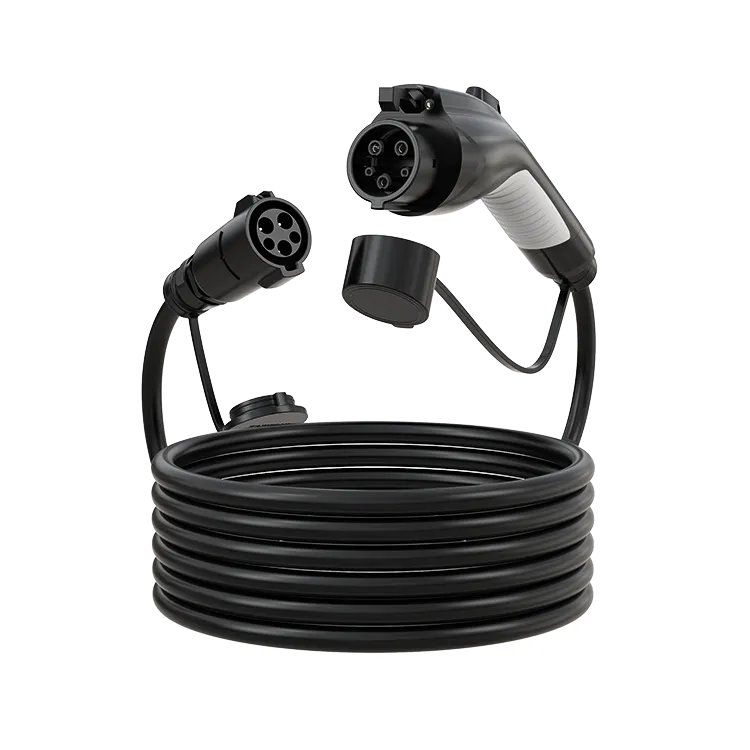
Stiff Is Not the Same as Damaged
Cold stiffens any cable jacket; that is physics, not a defect. Our guide to cold-weather EV charging covers the general treatment, including why the car’s cold battery — not the charger — slows a winter session. This article stays on handling this unit’s cable.
One honest limit first: this unit’s published facts state IP66 sealing, but no minimum operating temperature and no cable jacket material — check the manual for your unit’s rated range rather than assuming one. Keep the two apart: a stiff cable that relaxes as it warms is an observation; a cracked or split jacket is damage — stop and contact the manufacturer.
The Habits That Keep It Supple
- Coil it at the end of the session, not in the morning. At the end of a charge the cable is as movable as it will ever be; put it away then, in wide loops, instead of fighting it frozen tomorrow.
- Wide loops, always. A loose drape over a hook or holster — tight wraps around the unit store a bend at the same points nightly, and cold makes those bends the stiffest part.
- Give the two ends room. Bends concentrate at the two strain reliefs, at the unit and at the connector. Never fold it sharply there, and never use the cable as a lever.
- Never force a frozen loop open. Carry the coil as it lies, or move only the length you need. A loop pried apart while frozen is where jackets split.
- Handle the connector by its body. Gloves halve your grip: use both hands, seat the connector straight, and work its release as designed rather than rocking it free.
| A freezing morning, and you meet… | What to do |
|---|---|
| A cable that holds its coil shape and resists unrolling | Uncoil only what you need, in wide loops; let the rest stay coiled |
| Ice or packed snow on the connector face | Shake and wipe it clear; let ice melt off on its own — no chipping, no hot water |
| A cable frozen to the driveway or buried at the plough line | Free it gently by hand; re-drape it out of the meltwater and the plough’s path |
| A jacket that looks cracked or split | Stop and contact the manufacturer — damage, not stiffness |
Where the Cable Rests Decides the Morning
A portable has no fixed home, so between sessions its cable takes the temperature of wherever it rests. On a hook off the floor it stays out of slush and meltwater; on cold concrete it freezes to the floor’s temperature and collects grit. Keep the connector capped or holstered, and plan the run so the cable reaches without stretching — our cable length guide covers layout; a stretched cable cannot be re-draped when the plough line moves. Our guide to hiding and managing a charger cable covers the storage options.

The EV-AC04001U in Winter Use
The EVDANCE EV-AC04001U is a 40 A J1772 portable charger: 9.6 kW from a NEMA 14-50P plug, IP66 sealed, with a 25 ft cable and a 3-year warranty. Nothing in that spec changes for winter; the habits above are the whole adjustment. Expect longer sessions while the car’s battery is cold — the car managing itself, not the cable or charger struggling.
Frequently Asked Questions
Will the cold crack the cable?
Cold alone stiffens; it does not crack. Sharp bending and forcing while frozen stress the jacket. A crack or split is damage: stop and contact the manufacturer.
Can I warm the cable up with hot water or a heat connector?
No. Never pour hot water on a frozen connector, and keep heat away from the jacket and seals. Let it thaw on its own, or move the session.
Should I store the charger indoors all winter?
Only if your manual’s storage range says your garage falls below it. Otherwise the normal pattern is the routine above: off the floor, capped, in wide loops.
Related Reading
- Cold-Weather EV Charging: What Happens to Chargers and Cables Below Freezing
- How to Hide and Manage an EV Charger Cable
- How Long Do EV Charging Cables Last, and Can They Be Repaired?
- EV Charger Cable Length Guide: 5 m, 7.5 m or Longer?

