
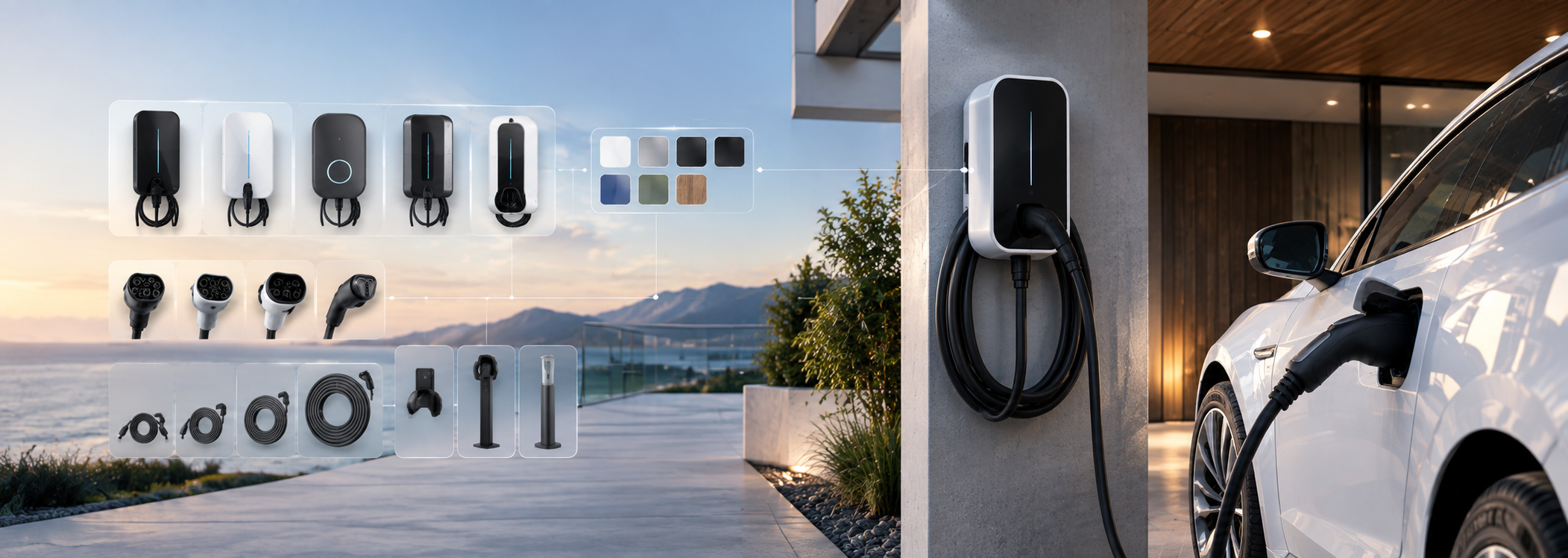
Utilities and electric cooperatives can offer members a private-label Level 2 charger under their own program brand. A plug-in J1772 portable charger such as the EV-AC04001U suits many programs because it needs only a 14-50 receptacle rather than a hard-wired installation. EVDANCE offers private label from 100 units with a 3-year standard warranty, but the program design, eligibility rules and any rebates are set by the utility.
Key Takeaways
- Plug-in J1772 chargers keep program installation costs low.
- Plan NRTL listing and labeling before finalizing branding.
- Incentive terms follow the utility’s approved program rules.
- EVDANCE offers private label from 100 units with a 3-year warranty.
Why Co-ops and Utilities Run Charger Programs
Programs help members adopt EVs and, just as important for the utility, encourage charging at times when the grid has spare capacity. Some programs pair a charger offer with a time-of-use rate, others with a rebate or an on-bill payment plan. Any incentive terms must follow the program’s approved rules and the utility’s regulator, so check those before designing the product side. State and utility incentive programs are listed in the DSIRE database.
Co-ops in rural areas often have members with long driveways, detached garages and farm buildings. A portable charger with a long cable and strong weather protection can suit those homes well, while urban utilities may see more demand for compact wall units in attached garages. Survey members before choosing the product mix.
What to Specify for a Program Charger
| Decision | Options | Program consideration |
|---|---|---|
| Connector | J1772 or NACS | Match the vehicles your members drive |
| Installation type | Plug-in 14-50 or hard-wired wallbox | Plug-in lowers installation cost |
| Smart features | Basic or networked | Networked units enable managed charging data |
| Branding | Logo, colors, packaging, manual | Co-branded or program-branded |
| Certification | NRTL listing, FCC | Program and inspector requirements |
| Support | Warranty, replacement process | Who handles member calls |
Certification and Documentation
Utility programs and inspectors usually expect chargers listed by an OSHA-recognized testing laboratory. Plan the certification path before you finalize branding, because label and listing details must match. Our guides on UL and ETL listing and who owns certificates in private label explain the steps. Confirm FCC requirements too.
Planning the Rollout
- Pilot with a small group of members and collect feedback on setup and support.
- Decide whether members buy, lease or receive the charger as part of a rate plan.
- Prepare a simple installation guide that explains the 50 A circuit and receptacle requirement.
- Set warranty and replacement steps between the utility, any installer partners and the manufacturer.
Read the OEM and private-label guide and MOQ explained for order planning.
Where EVDANCE Fits
EVDANCE has manufactured chargers in its own Shenzhen factory since 2011, exports to more than 30 countries and supports private label from 100 units. The EV-AC04001U is a 40 A J1772 portable charger with a NEMA 14-50P plug, IP66 protection, a 25 ft cable and a 3-year warranty. Program teams can start through the OEM and private-label program.
Frequently Asked Questions
Can a utility put its own brand on an EV charger?
Yes. Private-label programs let the utility brand the charger, packaging and manual, subject to certification and labeling rules.
Should program chargers be plug-in or hard-wired?
Plug-in units reduce installation cost; hard-wired units suit higher currents and permanent installs. Many programs offer both.
Who sets rebate rules for program chargers?
The utility and its regulator. Program terms must follow the approved rules for that territory.
Related Reading
- OEM and Private-Label EV Chargers: A Complete Guide for Brands
- UL and ETL Listing for EV Chargers: How NRTL Certification Works
- Who Owns the Certificate in a Private-Label EV Charger?
- EV Charger MOQ Explained: What Sets Minimum Order Quantities

