
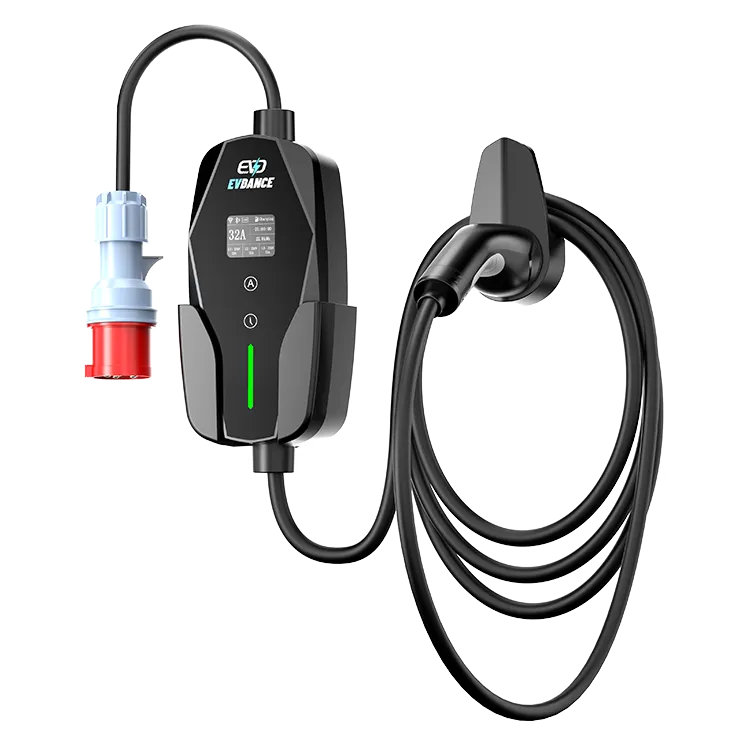
A hire firm can rent out a portable 22 kW charger like the EV-ACS3205PE because there is nothing to install: what goes out the door is the unit itself, plus one requirement the hirer must meet — a 32 A five-pin CEE socket on a three-phase supply at their site. The business is therefore inspection discipline: checking every unit out and back in, in writing, so wear is caught at the depot, not at a customer’s site.
Key Takeaways
- The hire product is the unit plus a requirement: a 32 A CEE socket, confirmed before dispatch.
- Check-out and check-in inspections, with photographs, are the business — wear is priced and benched at the depot.
- The specification lists no app or RFID, so tracking is the firm’s paperwork, not telemetry.
- Deposits, liability and insurance are the firm’s own written terms; no rate or rule is quoted here because none is the charger’s to give.
What the Hirer Is Actually Renting
The unit delivers up to 22 kW three-phase (32 A at 380–400 V) through a Type 2 connector, drawing every watt from the hirer’s socket. That shapes the hire conversation: a hire fails at the socket, not at the charger. If the site offers only 16 A outlets, this is the wrong unit to dispatch; the smaller ACS1605PE 11 kW class is the conversation to have instead. Our guide to CEE plug classes is the reference to send with the quote, settling the socket question before the van is loaded.
The Check-Out and Check-In Routine
Portable kit earns its money in strangers’ hands, so the routine at both ends is identical every time:
| Checkpoint | Check out | Check in |
|---|---|---|
| Cable and connector | Jacket uncut, connector face clean, latch working; photograph both | Same photographs retaken; any new damage recorded against the hire |
| CEE plug | Pins straight, housing uncracked, cap present | Pins checked for heat discolouration — any sign means the unit is benched, not re-hired |
| Unit and display | Housing sound; display lights up on a depot test socket | Display and behaviour confirmed again before it returns to the pool |
| Paperwork | Serial number, socket requirement and hire terms signed by the hirer | Condition sheet signed back in; exceptions noted the same day |
Two stop rules protect the pool: a unit with a heat-discoloured plug or damaged cable does not go out again until assessed through the manufacturer’s service route, and no repair is improvised at the depot. EVDANCE is a Shenzhen manufacturer founded in 2011; the model carries its 3-year standard warranty; what it covers in hire use should be settled with EVDANCE in writing before building a fleet on it.
No App, No RFID: Tracking Is Paperwork
Be clear-eyed about what this model does not do. The published specification for the EV-ACS3205PE lists no app, no RFID and no network platform, so a hire firm gets no telemetry back from a unit in the field — no sessions, energy or location in a dashboard, because there is none. Tracking is the serial-number register, the signed condition sheets and the depot test: paperwork, run properly. Deposits, damage liability, insurance and competent-use terms are the firm’s own commercial terms to write and take advice on; the charger’s specification answers none of them, and this article states no going rate for any of it.
Who Hires a Charger Like This
The demand pattern follows the socket. Workshops and dealers hire cover while a fixed wallbox is down. Event and site crews hire charging that follows a temporary supply. Fleets hire a unit to prove a routine before committing to installed posts. In each case the customer is really hiring time: 22 kW today, at a socket they already have, with no installation project. The firm’s job is to make the unit boring — identical checks, identical paperwork, every hire.
Frequently Asked Questions
Does the charger report usage back to the hire firm?
No. The specification lists no app, RFID or connectivity for this model, so there is no session reporting. The firm’s records — serial register, condition sheets, depot tests — are the tracking system, and the hire terms should be written with that limit in mind.
What happens if the hirer has no 32 A CEE socket?
It cannot deliver 22 kW, and adapters between CEE classes are no workaround for a continuous load. That is why the socket class is confirmed before dispatch; 16 A sites belong to the 11 kW portable class in our guide to portable charger types.
Who repairs a cable damaged on hire?
Nobody at the depot bench. A damaged unit leaves the pool for the manufacturer’s service route; the hire paperwork decides who pays. Improvised repairs on a 32 A continuous-load device are what the check-in photographs exist to prevent.
Related Reading
- CEE Plugs Explained: Choosing 16A or 32A for a Three-Phase Portable EV Charger
- Portable EV Charger Types Explained: 10A, 16A, 32A and Three-Phase Models
- Single-Phase vs Three-Phase EV Charging: 7kW, 11kW and 22kW Explained

