
A two-car home with one NACS car and one J1772 car has three practical options: one charger with an AC adapter so both cars can use it, two chargers each with the right connector, or two chargers sharing capacity through load management. With EVDANCE, a NACS charger such as the EV-ACT5006T or EV-ACS4005T plus a JT02 NACS-to-J1772 AC adapter is the lowest-cost route; adding an EV-AC04001U J1772 portable charger gives each car its own connector.
Key Takeaways
- One NACS charger plus an AC adapter is the lowest-cost option.
- Two chargers let both cars charge at once but need capacity.
- Load management can share capacity between two chargers.
- Never use the AC adapter at DC fast chargers.

Three Ways to Set Up
| Option | Equipment | Pros | Cons |
|---|---|---|---|
| One NACS charger plus AC adapter | EV-ACT5006T or EV-ACS4005T with JT02 | Lowest cost, one circuit | Cars take turns; adapter handling |
| Two chargers, two circuits | NACS charger plus EV-AC04001U | Both charge at once, no adapter | Two circuits, more capacity needed |
| Two chargers, shared capacity | Two chargers with load management | Both plug in; power shared | Needs compatible load-sharing setup |
Taking Turns on One Charger
Most households can share one Level 2 charger. At 40 A, a charger supplies about 9.6 kW, so each car’s daily driving is usually replaced in one to three hours. Plug one car in early evening and swap after it finishes, or alternate nights if daily mileage is low. The car’s charge limit and schedule settings make this easy. Many couples settle into a simple pattern: the car with the longer commute charges first on weeknights, and the other car charges later in the night or at weekends. Because each car only needs to replace one day’s driving, the turn-taking rarely causes problems once the routine is set. Read the two-EV household guide for scheduling ideas.
Two Chargers and Capacity
Two chargers at full current can exceed a home’s spare capacity. An electrician’s load calculation decides whether two circuits fit, whether each charger should run at a lower setting, or whether load management is needed. Our article on whether you can have two chargers at home covers this.
Adapter Notes
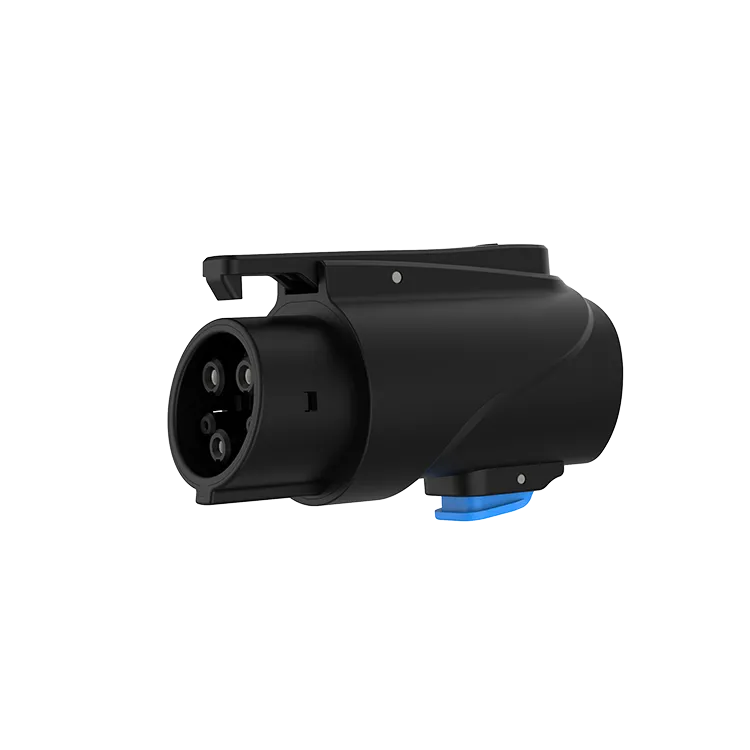
The JT02 is a NACS-to-J1772 adapter for AC charging only, rated up to 80 A, so it lets a J1772 car use a NACS home charger. Keep it with the charger, store it clean and dry, and never take it to a DC fast charger. If both drivers use it, agree where it lives, such as a hook beside the charger, so it is always there when the J1772 car needs it. Check its contacts occasionally for dust and damage. Read adapter safety for good practice.
EVDANCE chargers carry a 3-year standard warranty. See EVDANCE residential charging for more home options.
Frequently Asked Questions
Can two different EVs share one home charger?
Yes. With an AC adapter, a J1772 car can use a NACS charger, and the cars take turns.
Is one charger enough for two EVs?
Usually, because each car’s daily energy is replaced in a few hours at Level 2.
Can I install two chargers on one circuit?
Only with an approved load-sharing setup designed by an electrician. Otherwise each charger needs its own circuit.
Related Reading
- The Charging Duo Problem: How Two-EV Households Can Charge Smarter, Not Harder
- Can I Have Two 7kW Chargers at Home?
- Are EV Charging Adapters Safe?
- Can a Tesla Use J1772 Chargers?

