
Remove a V2L connector in this order: switch off whatever it is powering, end the discharge session in the car’s menu, unlock the car, then pull the adapter straight out. The order matters because, unlike a charging cable, a V2L adapter may still be live while it is plugged in — power is flowing out of the car. Never pull the adapter while a load is running, and never force it if it resists.
Key Takeaways
- Removal order: load off, discharge ended in the car, car unlocked, then pull straight out.
- A V2L port that will not release is usually still in discharge mode — check the menu before anything else.
- Never pull a live adapter, never force it, and never pry with tools.
- If the checks fail, stop and go to the owner’s manual or the car maker.

Why Removal Has an Order
Vehicle-to-load turns the charge port into a power outlet, as our explainer on bidirectional charging: V2L, V2H and V2G sets out. Two things follow. First, the car keeps the port locked while discharging, so the adapter will not simply pull free — and it is not meant to. Second, the session ends when you tell the car to stop, not when you start tugging. Work through the shutdown first and the connector normally releases easily.
This is also where V2L differs from a stuck charging connector. A charger that will not disconnect after charging is usually a lock or latch problem; our guide to why an EV charger won’t disconnect covers that case. With V2L, the port usually refuses because the car is still in discharge mode.
The Removal Order
- Switch off the load first. Turn off the appliance or tool and unplug it from the adapter or the car’s outlet.
- End discharge in the car. Use the car’s screen or menu to stop V2L, and wait until the discharge indicator goes out.
- Unlock the car. Many cars release the port lock when the doors unlock, exactly as they do after a charge.
- Press the release, if the adapter has one. Some discharge adapters have their own latch button — hold it fully in while you pull.
- Support the adapter and pull straight out. Keep it in line with the port. Do not twist, lever or rock it.
- Close the port cover. Then coil the adapter away somewhere dry, with the contacts protected.
If the Adapter Will Not Budge
| What you find | Likely cause | What to do |
|---|---|---|
| The car still shows discharging | The session never ended | Stop discharge in the menu, wait a few seconds, unlock and retry |
| The car is locked | Port lock follows the door locks | Unlock with the fob or app, then press the release and pull |
| An appliance is still plugged in and on | The car holds the session while a load is connected | Switch the load off and unplug it from the adapter first |
| Release button feels stiff | The latch is loaded by the adapter’s weight | Push the adapter gently in to unload the latch, then press the release fully and pull |
| Grit, ice or a damaged seal around the port | Physical obstruction | Clear loose debris, warm a frozen port gently with the car’s preconditioning — never pry |
If none of that frees it, stop. Do not use the car’s emergency charge-port release unless your owner’s manual says it applies to discharge adapters, and do not use tools. A port that repeatedly refuses to release is a fault: contact the car maker — see which EVs can do bidirectional charging for how the details vary by brand.
Gear That Lives With the Adapter
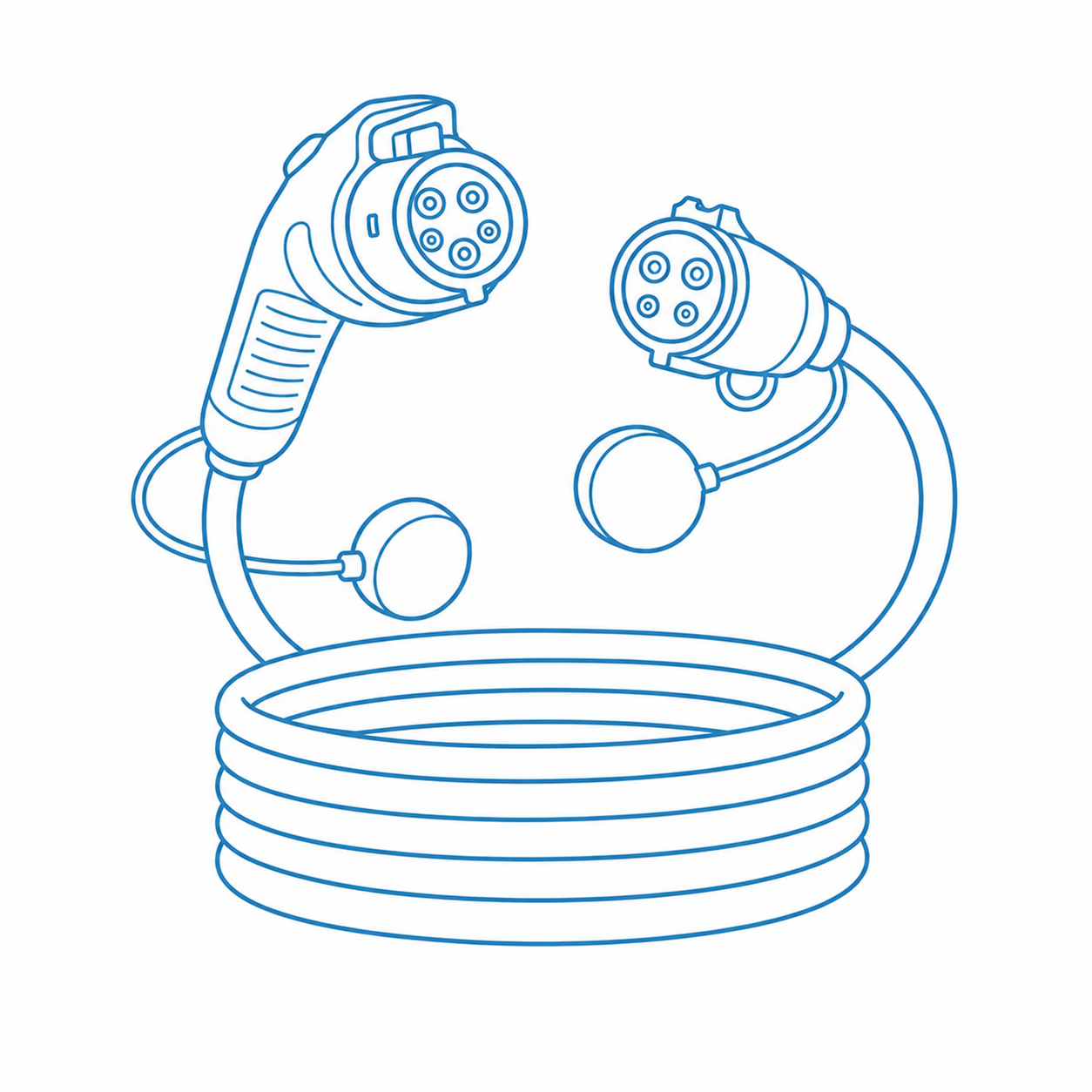
The V2L adapter powers your gear at the far end of a trip; the car still needs a charge when you get there. A portable charger in the boot covers that — the EVDANCE EV-ACS4005T 40A NACS portable charger delivers 9.6 kW from a NEMA 14-50 outlet — and a connector adapter such as the EVDANCE JT02 NACS-to-J1772 adapter widens the AC chargers your car can use. Keep adapters dry and capped in storage.
Frequently Asked Questions
Can I pull the V2L adapter out while it is powering something small?
No. Switch the load off and end the discharge session first, whatever the load. Pulling a live connector apart under load is hard on the contacts and is exactly what the car’s port lock is there to prevent.
The adapter is out, but the car still shows a discharge warning. What now?
Check the car’s menu — some models keep the session open until you confirm it has ended on screen. Close the port cover, lock and unlock the car once, and if the warning persists, follow the owner’s manual or ask the dealer.
Can I leave the discharge adapter plugged in between uses?
Better not. An adapter left in the port collects dirt and moisture and can be knocked. Remove it after each use, close the port cover, and store it dry.
Related Reading
- Bidirectional Charging Explained: V2L, V2H and V2G
- Why Won’t My EV Charger Disconnect? Stuck Connector Fixes
- Which EVs Can Do Bidirectional Charging?

