
The JT02 is rated IP65, but that rating belongs to the adapter alone. A charging session in the rain joins three products — the charger, the adapter and your car’s inlet — and each one carries its own rating and its own condition. IP65 answers for one of the three, so it pays to know exactly what it covers, and what it was never asked to.
Key Takeaways
- IP65 belongs to the JT02 alone: dust-tight and resistant to water jets, as tested on a new, undamaged unit.
- A rainy session has three ratings — the charger’s, the adapter’s and the car inlet’s — and the chain is what keeps water out.
- Pressure washers, immersion, damage and an unseated joint are all outside what the rating promises.
- Check each part on its own terms and the adapter’s IP65 does its third of the job.
What IP65 Says, Briefly
Two digits grade the sealing. The first, 6, means dust-tight. The second, 5, means the unit resists water jets directed at it from any angle — rain, in other words, is well inside the test. The rating is awarded from a laboratory test on a new unit in good condition. The full scale, and how IP65 sits between IP54 and IP66, is compared in our guide to IP ratings for EV chargers; this article is about the boundary of one adapter’s rating, not the scale itself.
Three Parts, Three Ratings
| Part of the session | Whose rating covers it | What to look for |
|---|---|---|
| The charger | Its maker’s own IP rating | The rating on its plate or in its manual. An outdoor wall unit is sealed to its own figure — the adapter’s IP65 neither raises nor lowers it. |
| The JT02 adapter | IP65, as listed by EVDANCE | Dust-tight, resistant to water jets — for the adapter body, undamaged and fully seated at both ends. |
| The car’s inlet | The car maker’s specification | The inlet’s design and its flap and seals. A worn flap seal or a cracked surround is the car’s side of the session, and no adapter rating covers it. |
The session’s weatherproofing is the whole mated chain, in good condition — not the strongest label in it. A driver who reads only the adapter’s rating has checked the middle third of the equipment they are about to use in the rain. The other two checks are quick: an outdoor-rated charger, an inlet whose flap and seals look sound, and faces wiped and fully seated when you connect.
Rain itself, as our guide to charging an electric car in the rain explains, is a normal operating condition for equipment rated for it.

Where the Rating Stops
- Pressure washers. The water-jet test is not a pressure washer at close range. Never aim one at a connected adapter or inlet — that jet is beyond what the second digit was tested against.
- Immersion. IP65 is not a submersion rating. A connector left sitting in a puddle is outside the test, whatever the label says.
- Damage. A cracked housing or a torn seal quietly cancels the condition the test was performed on. A damaged adapter is an unused adapter until it is replaced.
- An unseated joint. A connector that has not clicked fully home is not a sealed joint. The rating assumes the connection is made properly.
The JT02 in That Picture
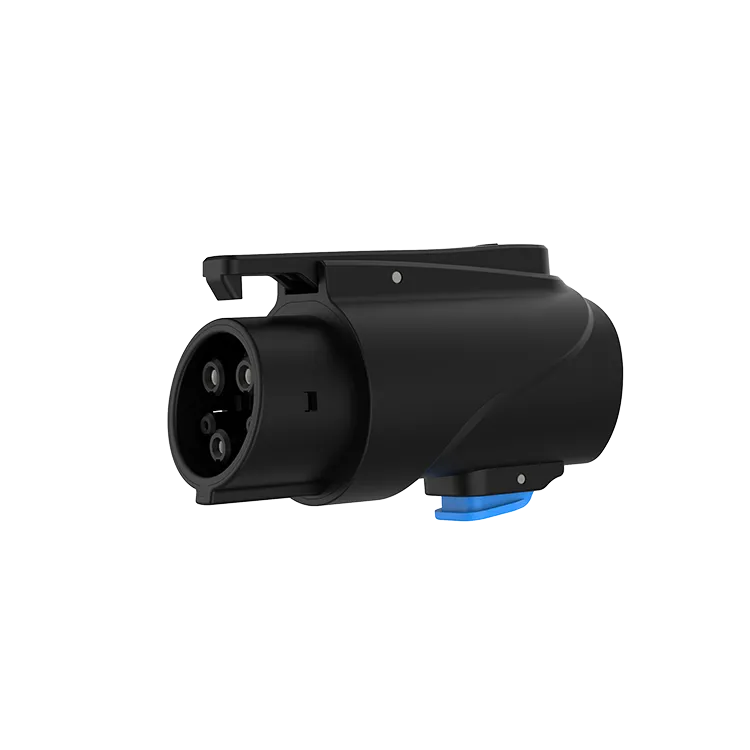
The EVDANCE JT02 NACS-to-J1772 adapter carries IP65 alongside its other stated figures — AC charging up to 80 A at AC 250 V, with silver-plated copper contacts. In a rainy session it is the part whose rating you can read straight off the listing; the charger’s figure is on its plate, and the car’s inlet is a visual check. Drivers comparing portable equipment for outdoor use can start from our guide to whether portable EV chargers are waterproof and the full range on the products page.
Frequently Asked Questions
So can I use the JT02 in the rain?
Yes, within its rating — the adapter itself is covered. Give the other two parts their ten seconds: the charger should be rated for outdoor use, the car’s inlet should look sound, and the contact faces should go together dry and fully seated.
My charger is IP54 and the adapter is IP65. Which rating counts?
Both. Each part keeps its own rating, and neither borrows the other’s. IP54 on the charger is itself a rain-capable figure; the adapter’s IP65 does not upgrade it, and the session is fine as long as each part is within its own rating and in good condition.
Can I wash the car while it charges through the adapter?
Not with a pressure washer anywhere near the connection — that is precisely the jet the rating does not cover. The simple rule is to wash after unplugging.
Related Reading
- IP Ratings for EV Chargers: IP54, IP65 and IP66 Compared
- Can You Charge an Electric Car in the Rain?
- Are Portable EV Chargers Waterproof? IP Ratings Explained for Drivers

