
A NACS-to-CCS1 DC adapter is a bridge with two different faces: one side takes the NACS connector of a DC fast charger, the other presents a CCS1 face to the car, so DC power and the station-to-car data conversation pass through unchanged. It converts nothing and adds no power. Two conditions decide whether you may use one at all: your car maker must approve third-party DC adapters for your car, and the station — a Tesla Supercharger, for example — must be open to your car under the network’s current terms.
Key Takeaways
- A NACS-to-CCS1 adapter is a pass-through bridge: power and data cross it unchanged.
- Conversion stays in the station; the adapter’s ratings are ceilings, never output.
- The data negotiation must survive the bridge intact — why these parts exist only under maker approval.
- The JT08 and JT09 work only where the maker approves the adapter and the station is open to the car.
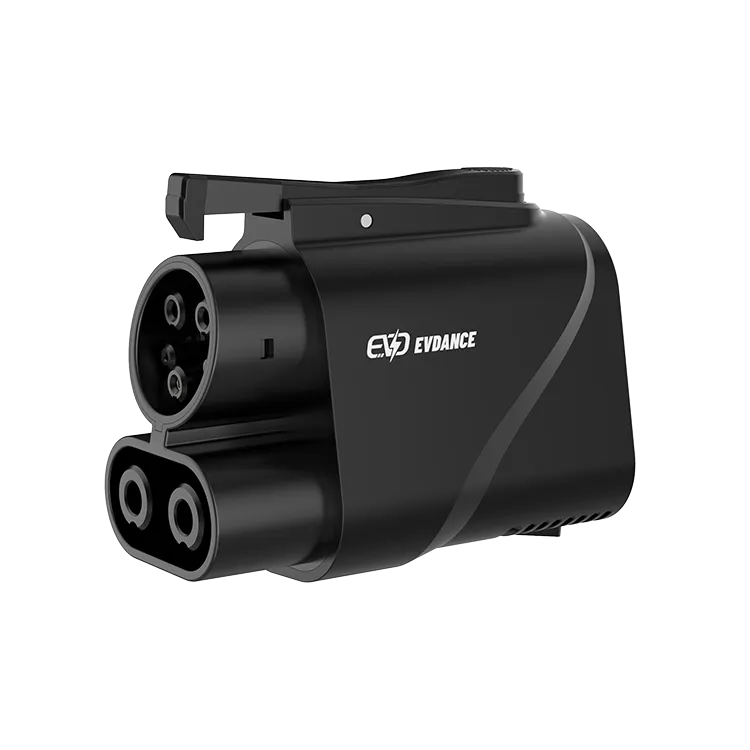
Two Ends of One Bridge
North American DC fast charging runs on two connector families: NACS, the connector Tesla built its network around, as whether the Tesla charger is NACS explains, and CCS1, the fast-charging inlet on most other cars. A CCS1 car cannot take a NACS plug directly; the adapter is the meeting point between the two.
| Part of the adapter | What it meets | What passes through it |
|---|---|---|
| Station side | The charger’s NACS connector | DC power in, plus the station’s side of the data |
| Car side | The car’s CCS1 inlet | The same power and data, in CCS1 form |
| The adapter itself | Both, at once | A pass-through; its ratings are ceilings, not output |
The Power Path: Conversion Stays in the Station
In DC fast charging the station does the heavy electrical work: its cabinet converts grid AC to DC and controls it against what the car asks for, so power at the connector is battery-ready. The adapter sits at the end of that path and changes none of it: the same DC enters the car’s inlet at the rate the station delivers and the car accepts. The car’s onboard charger plays no role in a DC session.
So the headline numbers are limits, not promises: a 500 A rating means the part can carry up to that current, not that a station will deliver it. The session rate belongs to the station’s output and the car’s acceptance, which falls as the battery fills — U.S. DOT puts the DC fast class at 50–350 kW.
The Data Path: The Negotiation Has to Survive the Bridge
Before any DC power flows, station and car talk: the car states what it can accept, the station answers, and that negotiation continues through the session, keeping delivery inside the car’s limits. An adapter extends the connector, so the conversation must cross it intact — yet the adapter itself is no participant: it holds no account, makes no decisions, grants no permissions.
This is the serious engineering point: a bridge that carried current cleanly but garbled the data would leave station and car unable to agree a session. It is also why these parts are used only where the maker approves them: the maker has signed off that conversation and current survive the bridge on that car.
What the Adapter Cannot Do
- Add power. It cannot raise a station’s output or a car’s acceptance; it can only avoid being the limit.
- Grant approval or access. A physical fit is not permission; approval and access are separate conditions.
- Cross over to AC. A DC adapter is not a Level 2 part, and an AC adapter such as the JT02 is never a DC part.
The JT08 as the Worked Example
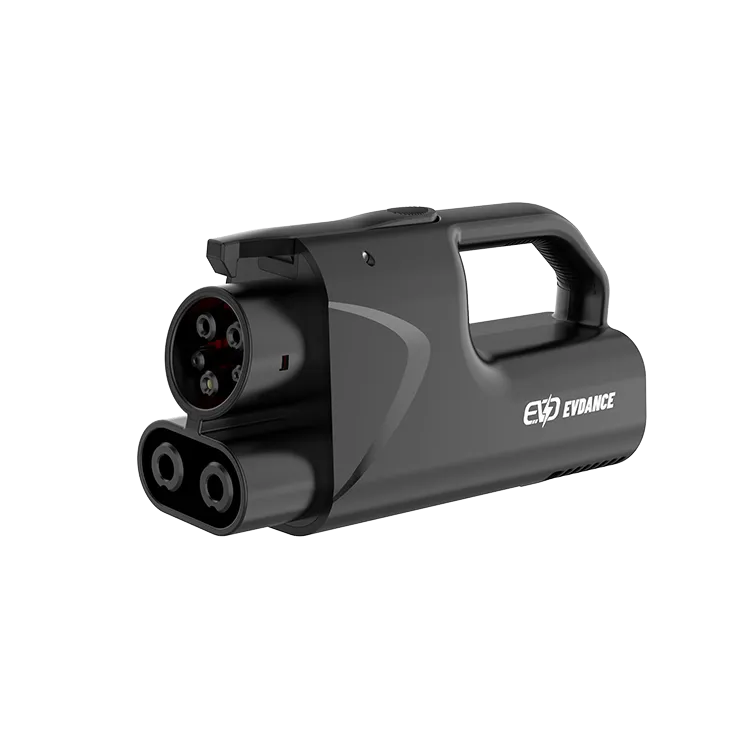
The EVDANCE JT08 is the handleless member of the family: up to 500 A / 1000 V, IP66, in the 250 kW class. The EVDANCE JT09 covers the same job with a handle, at up to 500 A and IP66. Both carry the two conditions from the opening: use one only where your car maker approves a third-party DC adapter for your car, and only at stations open to your car. The safety picture is in whether EV charging adapters are safe.
Frequently Asked Questions
Does a NACS-to-CCS1 adapter slow DC fast charging down?
It adds no conversion step, so nothing in it slows the session by design. Rate is set by the station’s delivery and your car’s acceptance, under the adapter’s ceiling, and tapers as the battery fills.
Can I use one at any DC fast charger?
No. The station’s connector must be NACS for a bridge to be needed — a CCS1 station plugs into a CCS1 car natively — and the approval and access conditions still decide.
Is this the same part as the adapter used at Tesla AC chargers?
No. AC adapters such as the JT02 serve Level 2 charging, where conversion happens in the car; a DC adapter serves fast charging, where it happens in the station. Not interchangeable.
Related Reading
- Is the Tesla Charger NACS? NACS, J3400 and Adapters Explained
- Does J1772 Work With CCS? CCS Connectors Explained
- Are EV Charging Adapters Safe?

