
Usually not. The charger on your wall still delivers the same AC power it always did — what changed when you changed cars is only the shape of the plug. In most cases an AC charging adapter, or a fresh cable on a socketed wallbox, bridges the difference for far less than a replacement charger.
Key Takeaways
- A car change creates a plug problem, not a power problem — the circuit and charger output are unchanged.
- An AC adapter is the first bridge; a socketed wallbox can simply take a new cable.
- DC adapters belong at fast charging stations, with automaker approval, and have no role at home.
- If you do replace, buy for the connector your cars will use, not for extra power the car cannot take.
What Actually Changed — and What Did Not
Your circuit, breaker and wiring are untouched by a car change, and so is the charger’s output. The new car still sets its own AC charging speed through its onboard charger, exactly as the old one did. The only mismatch is the connector: J1772 and NACS are the two AC plug shapes on North American cars, and the background to how they relate is covered in our explainer on whether J1772 works with CCS and the comparison of Type 2, J1772 and NACS connectors. Treat this as a plug problem, not a power problem.
Your Three Bridges, in Order of Effort
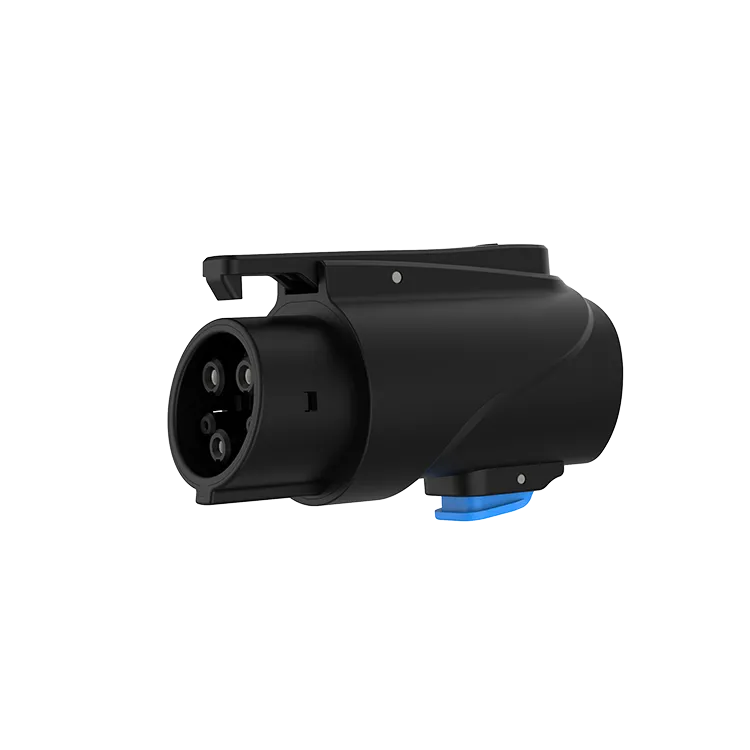
- An AC adapter. The simplest bridge. The JT02 NACS-to-J1772 adapter (AC, up to 80 A, IP65) lets a J1772 car charge from a charger fitted with a NACS connector; adapters for the opposite direction work the same way. Buy one rated unit, matched to the direction you need, and keep it with the car that needs it.
- A new cable on a socketed wallbox. If your wallbox takes a separate cable, swapping the cable for one that ends in the new connector solves it permanently — the difference between the two designs is set out in tethered vs socketed wallbox chargers. Follow the charger’s manual; anything hard-wired stays electrician work.
- Replacing the charger. The last resort, for a tethered unit with no adapter path. The existing circuit usually carries over, but the swap itself is a licensed electrician’s job, not a weekend project.
| Your charger ends in | Your new car takes | First bridge to try |
|---|---|---|
| NACS | J1772 | An AC adapter in that direction, such as the JT02 |
| J1772 | NACS | An AC adapter rated for that direction |
| A separate cable (socketed unit) | Either | A new cable ending in the car’s connector |
| A fixed cable (tethered unit) | The other shape | Adapter first; replacement only if none is approved |
What an Adapter Cannot Do
Keep DC out of this. Adapters such as the JT08 NACS-to-CCS1 DC adapter belong to DC fast charging stations, work only where the automaker approves them, and do nothing at home — home charging is AC, and no adapter turns a wallbox into a DC charger. Never stack two adapters together, and never use an adapter that feels loose, runs hot, or lacks a proper rating; the connector carries full charging current for hours.
If You Do Replace, Replace for the Plug, Not the Power
When a replacement genuinely makes sense, choose the connector your household’s cars will use for the next several years — that choice matters more than chasing a higher rating the car cannot accept. The EV-ACT5006T 48A Level 2 wall charger (up to 48 A, hard-wired or NEMA 14-50P, NACS connector, 25 ft cable, ETL/FCC/CE) is the shape of that decision for a NACS household: the circuit sizing follows the usual continuous-load rule, and the car still decides how much of the offer it takes.

Frequently Asked Questions
Does my car’s maker allow charging adapters?
Policies differ by maker and model, so check the owner’s manual before you rely on one, and use only an adapter with a proper safety rating. If the manual rules adapters out for your car, the cable swap or a replacement charger is the route instead.
We now have two cars with different plugs. What then?
One adapter that lives on the shared charger’s connector usually covers it: the car that matches the charger plugs straight in, the other uses the adapter. A socketed wallbox with a cable for each car is the tidier long-term version of the same idea.
Is a DC adapter a shortcut at home?
No. DC adapters are made for DC fast charging stations and depend on the automaker’s approval for that use. At home the wallbox supplies AC, the car’s onboard charger does the conversion, and a DC adapter has no role in that chain.
Related Reading
- Tethered vs Socketed Wallbox Chargers: Which Should You Install?
- Portable EV Charger Buying Guide 2026: Specs, Costs, and When to Choose One Over a Wallbox
- Does J1772 Work With CCS? CCS Connectors Explained
- Type 2 vs J1772 vs NACS: Which EV Charger Connector Does Your Market Need?

