
In the textbook, the difference is clean: OEM means the factory builds to your design or specification; ODM means the factory’s proven design is adapted and branded for you. In real quotations the words are not standardised — one factory’s “OEM service” is another’s private label — so two offers with the same heading can be different deals. The labels start the conversation; only the written details tell you which deal is on the table.
Key Takeaways
- OEM builds to your design; ODM brands the factory’s design — but factories use both words loosely.
- Two quotes with the same heading can be a branding run and a development project. Never compare them on the label.
- Five written fields define the real deal: design source, change rights, certificate holder, tooling ownership, minimum basis.
- EVDANCE’s stated route is private label from 100 units; design-led work starts with those fields in writing.
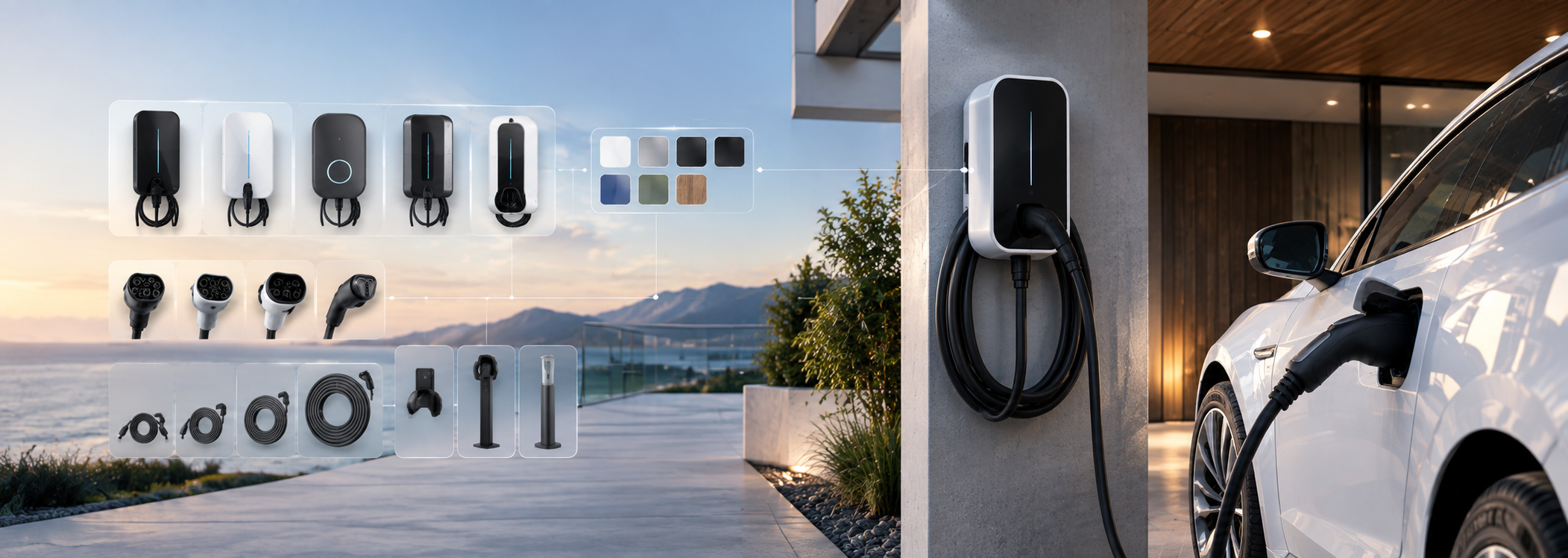
The Textbook Difference, Briefly
Our full comparison of OEM vs ODM EV chargers works through the two models in depth. The short version:
| Question | OEM | ODM |
|---|---|---|
| Where does the design come from? | You: drawings or a specification | The factory: an existing, proven model |
| What typically changes? | Potentially everything, as a development project | Branding, colours, packaging and offered configuration options |
| How does it reach the market? | Slower: design, tooling and certification come first | Faster: it builds on an already certified model |
Most private-label projects sit between the two: a certified base model with the buyer’s branding and a few agreed changes.
Why the Same Word Covers Different Deals
There is no standards body policing these terms. Sales teams may use “OEM” as an umbrella for any work ending with the buyer’s name on the product, while engineers reserve it for design-led builds. Translation widens the gap further. The result: a quote headed “OEM” that prices a catalogue model with your logo added, next to a quote headed “OEM” that prices design work, new tooling and fresh certification. Comparing the two on price alone compares a branding run with a development project. The fix is not a better dictionary; it is comparing written fields instead of labels.
The Five Fields That Define Your Deal
Whatever the heading says, five answers — obtained in writing — define the arrangement:
| Field | Ask, in writing | Why it decides the deal |
|---|---|---|
| Design source | Is this model your existing design, or built to my specification? | Everything else follows from whose design it is |
| Change rights | Which changes can I make without a new evaluation? | Defines whether you bought flexibility or a fixed product |
| Certificate holder | Whose name is on the certificate for this exact model, and can my brand be added? | The holder controls the file your market checks rely on |
| Tooling ownership | If I pay for moulds or plates, who owns them afterwards? | Tooling you paid for but do not own locks you to one factory |
| Minimum basis | What does the minimum order cover — per model, colour or configuration? | A minimum means nothing until its unit is named |
On the certificate field, our guide to who owns the certificate in a private-label charger explains why the holder’s name carries legal weight. A supplier who answers all five fields clearly has told you the deal, whatever word sits on the letterhead.
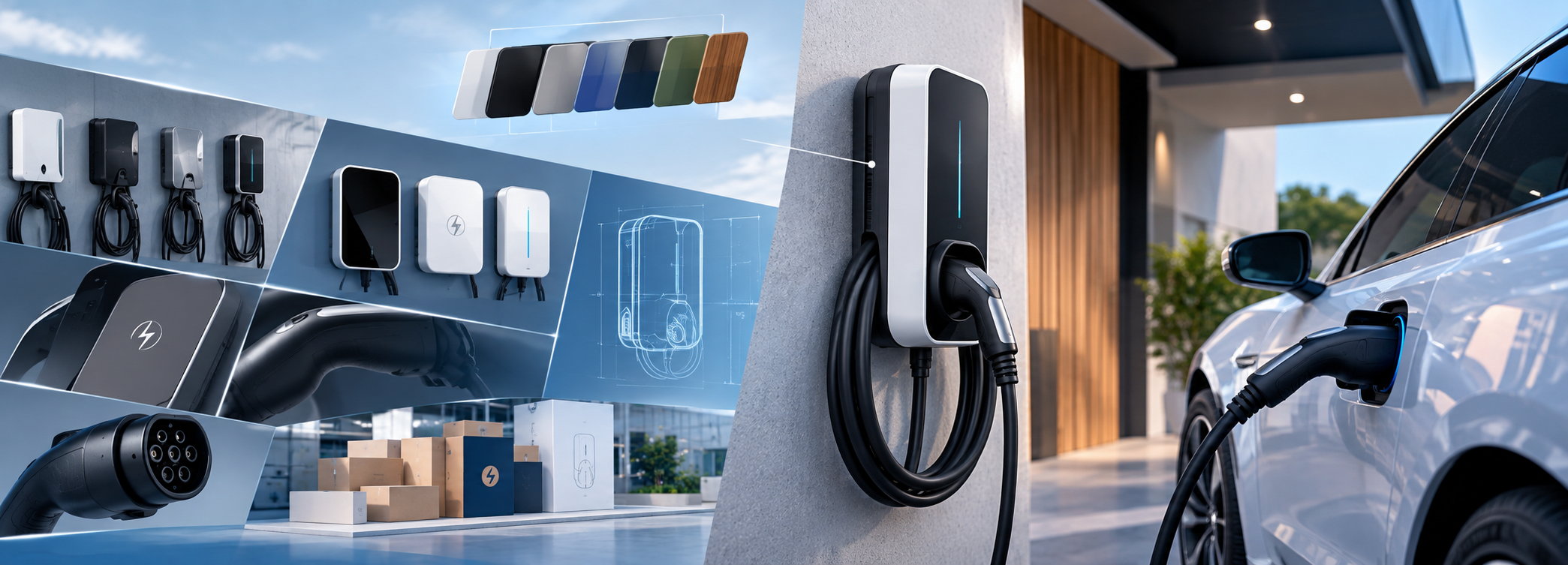
How EVDANCE States Its Offer
EVDANCE is a Shenzhen EV charger manufacturer founded in 2011, with its own factory, exports to more than 30 countries and a 3-year standard warranty. The offer stated on our site is private label from 100 units — existing models carrying your brand — set out on the OEM and private-label program page, with the full range on the products page and a separate EVDANCE-branded route on the resellers and distributors page. If your project starts from your own design, that is a different conversation: put the five fields above in writing through our contact page before asking for a price.
Frequently Asked Questions
A supplier calls everything it does “OEM”. Is that a red flag?
Not by itself. Loose terminology is common across the industry. Judge the offer by the five written fields — design source, change rights, certificate holder, tooling, minimum basis — not by the heading.
Which route is cheaper, OEM or ODM?
Branding an existing certified design avoids new tooling and new certification work, which is why most first projects start there. A design-led project carries development costs a branding run never sees.
Can an ODM project become an OEM project later?
Yes, and it is a common growth path: start on a proven model, then commission design work once volume justifies it. Expect the file questions to reopen — tooling, certificate and minimums are renegotiated, as the sequence in how an OEM charger project works shows.
Related Reading
- OEM vs ODM EV Chargers: How Private-Label Charging Works
- OEM and Private-Label EV Chargers: A Complete Guide for Brands
- How an OEM EV Charger Project Works, Step by Step
- Who Owns the Certificate in a Private-Label EV Charger?
Sources & Standards
- U.S. DOE AFDC — Procurement and Installation for EV Charging Infrastructure
- OSHA — Nationally Recognized Testing Laboratory (NRTL) Program
Related: Charging Pile OEM/ODM: How a Wallbox and Charging Station OEM Project Runs
Related: OEM Charging Partnerships: From Sample to Full OEM Under Your Brand

