
A live video audit that you direct can verify a factory’s identity, that a production line exists and is running, and that documents match the models on camera. It cannot verify what a camera cannot sense: whether test instruments are calibrated, what sits inside a sealed unit, or whether quality holds after the call ends. Used inside its limits, video narrows a supplier list to finalists; outside them, it manufactures false confidence.
Key Takeaways
- Video verifies identity, a running line, directed actions and documents on camera.
- Defeat staging with continuity: one unbroken walk, live requests, random choices.
- Calibration, sealed-unit internals, senses and consistency are beyond any camera.
- Close the gaps with samples, independent inspection and, for big programs, a visit.
What a Live Video Audit Verifies Well
- Identity and place. One continuous walk from outside the building to the production line, with signage and the business licence on camera, matched against the documents you already hold.
- Production, live. Chargers being assembled and tested during your call — ideally your model, in your market’s configuration, not a display row.
- Directed actions. You choose a unit and ask for its rating label read aloud, its end-of-line test record opened, a housing unclipped. Compliance with unscripted requests is itself evidence.
- Documents in close-up. A certificate’s holder name, model and report number are readable on a good connection — then checked afterwards against the PDF files, and for North America against the OSHA NRTL program listings.
Staged Footage and the Counter-Moves
Every weakness of video is a staging opportunity. The counter-move is always the same principle: you direct, live, and choose at random.
| Risk | Counter-move |
|---|---|
| Pre-recorded footage presented as live | Speak requests the host must act on in real time: walk left, open that carton, read that label aloud |
| A showroom standing in for the factory | One unbroken walk from the gate to the line, with no cuts and no “we will reconnect inside” |
| A borrowed or rented line | Match the address and signage to the business licence; ask to see your model in production, with its labels |
| Rehearsed answers from a sales host | Direct unscripted questions to the person at the test station — a relay type, a failure’s next step |

What Video Cannot Verify
- Calibration. A screen shows a reading; it cannot show whether the instrument behind it is accurate.
- Inside a sealed unit. Materials, terminations and build quality beyond the one unit opened for you.
- Anything the senses catch. Weight in the hand, connector fit, heat, the smell of stressed insulation.
- Records over time. One good test record on camera says nothing about last month’s production.
- Consistency. Other shifts, other months, component substitutions made after your call.
Close those gaps with checks that do not depend on a camera: your own sample testing, as our guide on testing an EV charger sample before a bulk order sets out; an independent inspection of the first production run, booked as your own arrangement; and the on-site checks in our factory audit checklist for importers when the program is large enough to justify travel.
Putting EVDANCE Through the Same Call
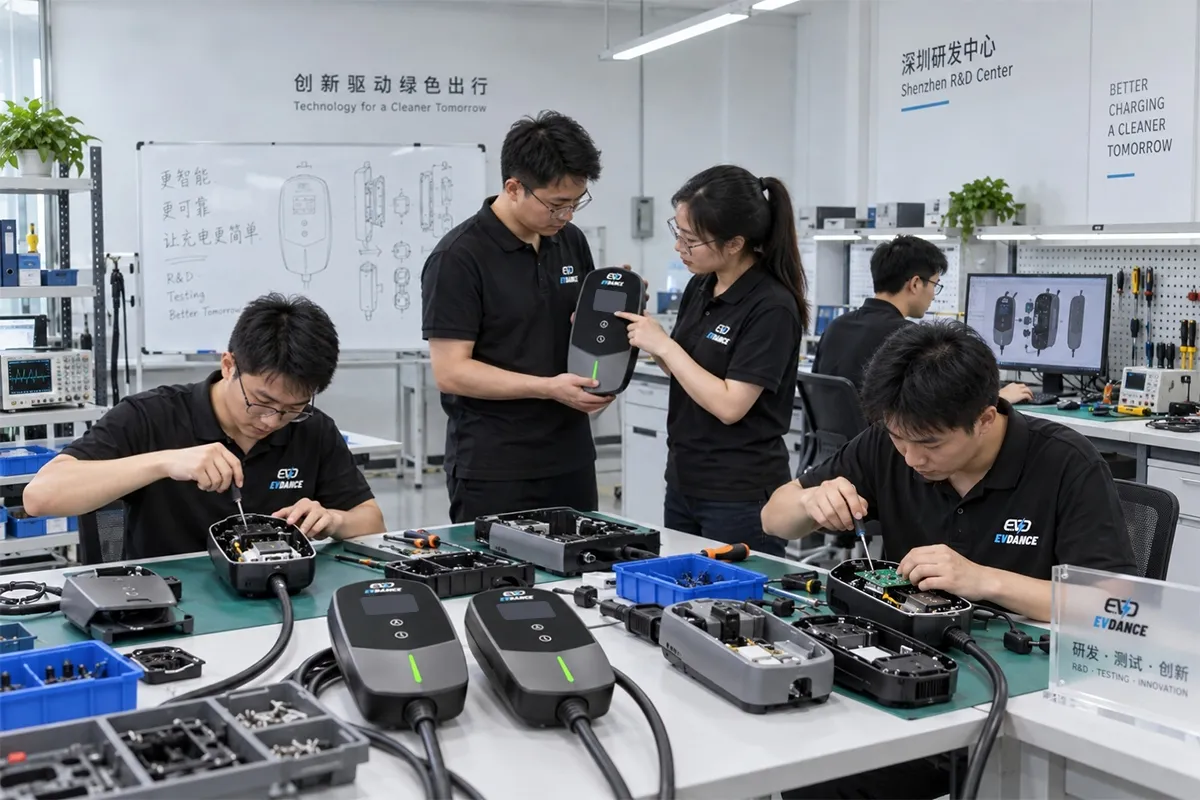
EVDANCE is a Shenzhen EV charger manufacturer founded in 2011, with its own factory, exports to more than 30 countries, private label from 100 units and a 3-year standard warranty. Put us through the same directed call you would give any finalist: bring your unscripted requests, choose the units yourself, and score what the camera can prove — and what it cannot. Start through our OEM and private-label program or contact us.
Frequently Asked Questions
Can a video audit replace an on-site visit?
For shortlisting, yes; for a large or long-term program, it narrows the field to finalists and the physical checks decide. Video verifies capability today — consistency, calibration and sealed-unit quality still need hands, samples or an inspector on site.
A supplier sent a polished factory video. Is that an audit?
No. A recording is marketing until you direct a live call: your route, your unit choices, your questions answered in real time. The difference between the two is exactly the difference between evidence and presentation.
What single request best proves a call is live?
Pick a unit on the line yourself and ask for its serial number and end-of-line test record, read and opened on camera. It is unscripted, specific to that moment, and ties the physical unit to the factory’s records in one move.
Related Reading
- EV Charger Factory Audit Checklist for Importers
- How to Test an EV Charger Sample Before Placing a Bulk Order
- Chinese EV Charger Manufacturers: Factory, Trading Company or Marketplace Seller?
- How to Choose a Portable EV Charger Supplier: A B2B Checklist for Importers
