
The proximity pilot is the second low-voltage signal inside an EV charging connector, alongside the control pilot. Its job is presence and release: it tells the car a connector is latched in place, and the moment you press the handle’s release button it tells the car to stop drawing current before the pins separate. On Type 2 connectors it does a third job too — it identifies the rating of the cable itself.
Key Takeaways
- The proximity pilot confirms the connector is latched and stops the current before the pins part.
- Pressing the handle button is an instruction to the car, not just a mechanical release.
- On Type 2, the same circuit tells the car the cable’s own current rating.
- A faulty proximity signal looks like random session failures — inspect, isolate, get damage assessed.
Two Signals, Two Different Jobs
Drivers meet the connector as one plug, but the car is listening to two separate conversations. The J1772 connector explained in our plug guide carries both signals on its two small pins:
| Signal | What it handles | When it matters |
|---|---|---|
| Control pilot | Negotiates how much current the car may take | At the start of a session, and whenever the limit changes |
| Proximity pilot | Confirms the connector is latched; orders a stop when the release button is pressed; on Type 2, codes the cable’s rating | At plug-in, and in the last second before you pull the handle out |
One signal agrees the size of the flow. The other makes sure the flow has stopped before the connection physically breaks.
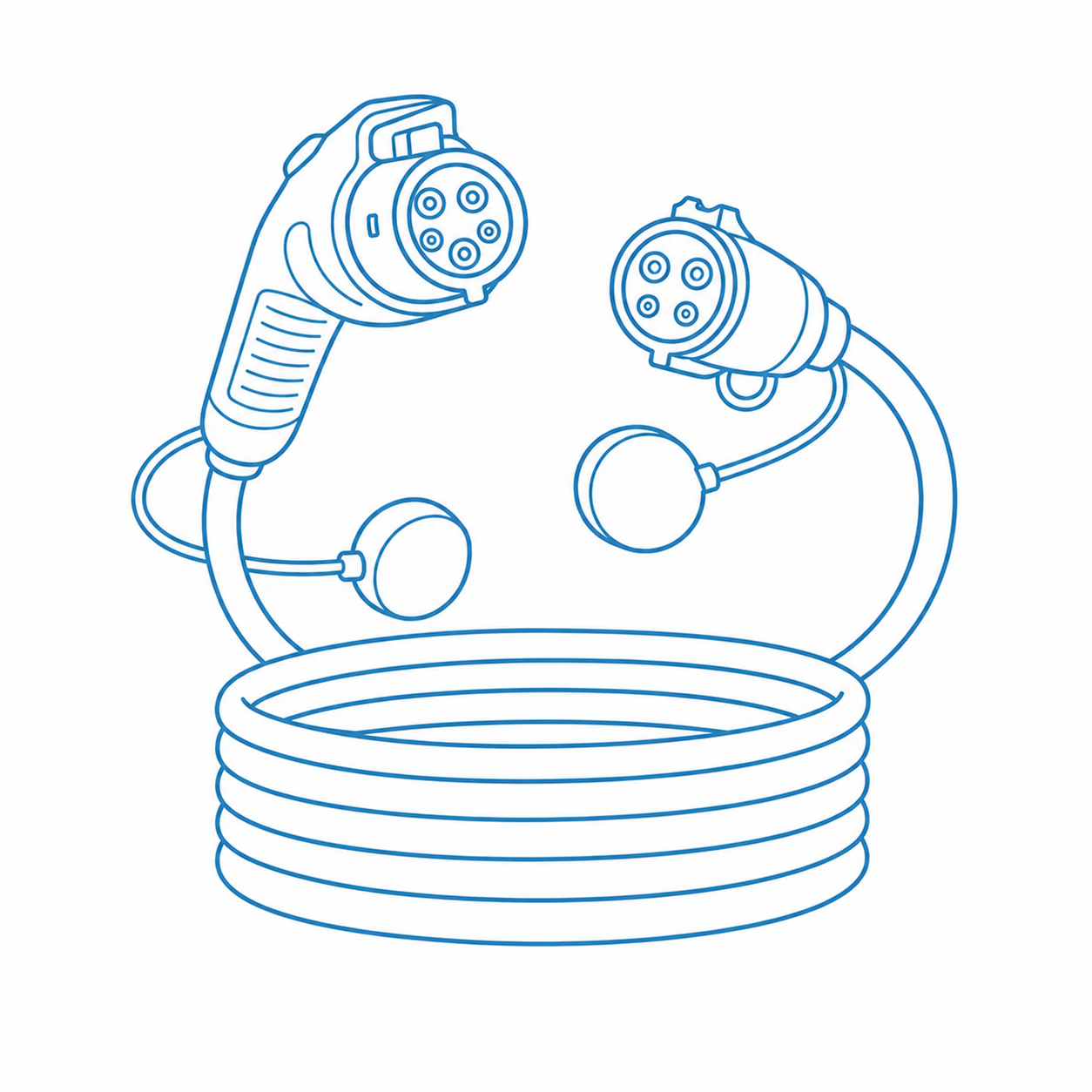
What Happens When You Press the Button
Ending a session feels like one motion, but the order of events is deliberate:
- You press the button on the handle, which changes the proximity signal.
- The car reads the change and stops taking power.
- Only then does the latch let go, and you pull the connector out with no current flowing across the pins.
That is why you should never force a stuck connector. A plug that will not release is usually the latch or the car’s lock still doing its job; the fixes are in our guide to why a connector will not disconnect, and none of them involves pulling harder.
The Cable-Rating Job on Type 2
European Type 2 cable assemblies carry a resistor in the connector that the car reads through the proximity circuit, as the comparison of Type 2 vs J1772 vs NACS connectors sets out. The resistor’s value states the current the cable itself is built for, and the car caps the session at that ceiling even if the wallbox could offer more. This is why a slim portable cable can bottleneck an otherwise powerful setup: the car trusts the weakest link, and the proximity signal tells it which link that is.
When the Proximity Signal Goes Wrong
Because the car treats the proximity signal as the truth about the connector, faults here produce confusing behaviour:
- A worn latch or sticky button can make the car behave as if the connector is always half-removed, so sessions refuse to start or end early.
- A damaged handle can interrupt the signal when the cable moves, stopping a healthy session.
- Dirt or bent pins in the connector can break the signal path entirely.
None of these is a home repair. Inspect the handle and pins, try a different charger to isolate car from cable, and have a damaged connector assessed rather than taped up — the signal is part of the safety chain, not an accessory.
Handles Built Around the Signal
On portable chargers the release button you use every day is the proximity switch. The EV-ACS3210T portable charger (32 A, about 7.7 kW, NEMA 14-50P, IP66) and the EV-AC04001U (40 A J1772, 9.6 kW, IP66) both put that button on the handle, so the stop-before-release sequence happens in the same squeeze. The JT02 adapter passes the same signals through between NACS and J1772, which is why an adapted session still ends cleanly when you press the button.

Frequently Asked Questions
Is the proximity pilot the same as the control pilot?
No. The control pilot negotiates how much current the car may draw. The proximity pilot reports that a connector is latched in, orders the current stopped when you press the release button, and on Type 2 identifies the cable’s rating.
Why does charging stop the instant I squeeze the handle?
Because that squeeze is the signal working as designed. The car stops drawing power first, so the pins separate with no load on them — no arc, no wear, no live contacts.
Do DC fast chargers use a proximity signal?
Combined connectors carry the same signalling ideas further, as our explainer on how J1772 works with CCS describes, and DC sessions add an electronic lock that holds the connector until the session ends.
Related Reading
- What Is J1772? The North American EV Plug Explained
- Type 2 vs J1772 vs NACS: EV Charger Connectors Compared
- Does J1772 Work With CCS? CCS Connectors Explained
- Why Won’t My EV Charger Disconnect? Stuck Connector Fixes

