
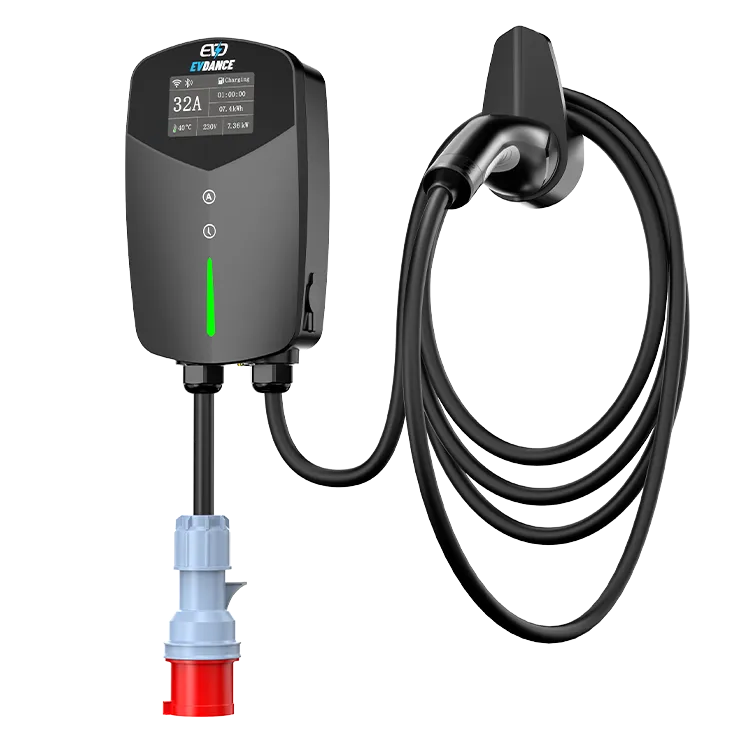
A European standard charging pile OEM/ODM order means a charger built with a Type 2 vehicle connector to IEC 62196-2, charging behaviour to IEC 61851, and a CE declaration backed by test reports that match the exact configuration you will sell. For an importer or brand owner, the standards are only half of it. Once your name is on the nameplate, you carry the manufacturer’s obligations. So the real question is whether the factory can give you a technical file you can stand behind. This guide lists what to ask for and how to check it before you commit to a branded batch.
Key Takeaways
- “European standard” = Type 2 connector (IEC 62196-2), charging system requirements (IEC 61851) and CE conformity.
- CE for a smart charger usually involves the Low Voltage, EMC and RoHS directives, plus the Radio Equipment Directive when Wi-Fi, Bluetooth or 4G is fitted.
- The brand owner placing the product on the market takes on manufacturer duties, so ask for the test reports, not just a certificate image.
- Check that reports name the same model, rating, plug and connector configuration you are ordering.
- Great Britain needs UKCA; Northern Ireland follows CE rules (plus UKNI where it applies).
What “European Standard” Means on a Charging Pile
| Item | Standard or rule | What to check on the sample |
|---|---|---|
| Vehicle connector | IEC 62196-2 (Type 2) | Connector type, rated current, cable length |
| Charging system | IEC 61851-1 (general requirements); wallboxes and stations normally run in Mode 3 | Rated voltage and phases, current settings, protection functions |
| Portable chargers | IEC 62752 for the in-cable control and protection device (Mode 2) | Control box marking and supply plug |
| Electrical safety | Low Voltage Directive 2014/35/EU | Covered in the Declaration of Conformity |
| Electromagnetic compatibility | EMC Directive 2014/30/EU | EMC test report for the model |
| Radio (if Wi-Fi, Bluetooth or 4G) | Radio Equipment Directive 2014/53/EU | Radio test report; RED then covers safety and EMC as well |
| Hazardous substances | RoHS Directive 2011/65/EU | RoHS declaration or test report |
Our article on EV charger compliance in the EU explains how these directives fit together. For the difference between Mode 2 and Mode 3, see Mode 2 vs Mode 3 charging (IEC 61851).
The CE File an Importer Should Hold
CE marking is a self-declaration by the manufacturer, supported by a technical file. When you sell under your own brand, regulators and large retailers will ask you, not the factory, for that evidence. Before the first branded batch, ask for:
- EU Declaration of Conformity listing the directives and standards applied, with model numbers that match your nameplate.
- Test reports (not only certificates) for safety, EMC and, where relevant, radio, naming the tested model and rating.
- Rating label and manual drafts in the languages of your target countries.
- Bill of critical components, so you know what may not change between batches without your agreement.
The EU requires the technical documentation to be kept for ten years after the product is placed on the market. Brand compliance files: what to keep for every model gives a checklist you can use as a filing system.
How to Check the Reports Match Your Order
The most common gap is a report that covers a sister model: the same housing with a different current rating, or a different plug. Check these fields one by one:
| Field in the report | Must match |
|---|---|
| Model number(s) | Your nameplate model, or a listed variant |
| Rated voltage, phases and current | For example 230 V single-phase 32 A, or 400 V three-phase 32 A |
| Connector and cable | Type 2 tethered or socket, cable length |
| Radio modules | Wi-Fi / Bluetooth / 4G as fitted on your version |
| Applicant / manufacturer | The factory that actually builds your units |
Our broader guide to EV charger certifications (CE, UKCA, UL, ETL, CB) explains what each mark covers.
European Standard Models in the EVDANCE Range
| Model | Type | Rating | Notes from the product page |
|---|---|---|---|
| EV-ACT3204E | Wallbox | 7 kW, 32 A single-phase | Wall-mounted AC unit |
| EV-ACT3204PE | Three-phase unit | 22 kW, 32 A three-phase, AC 380–400 V | IEC 62196-2 Type 2 connector, IP66, CE marked on the product page |
| EV-AC03201T | Floor-standing, dual gun | 43 kW combined, 22 kW per gun | Two Type 2 guns, OCPP 1.6J, IP54 |
| EV-ACS3210E | Portable | 32 A single-phase | Type 2 portable for EU distributors |
| EV-ACS1605PE | Portable | 11 kW, 16 A three-phase | Red CEE 16 A 5-pin supply plug |
Ask us for the current certificate list and the test reports for the configuration you plan to brand. A range-wide list does not replace model-specific evidence.
Single-Gun or Dual-Gun Charging Pile OEM/ODM?
A single-gun wallbox suits homes and individual bays. A dual-gun station serves two bays from one supply and one foundation, and on the EV-AC03201T the two guns share a 43 kW pool with dynamic load balancing. For a branded range aimed at EU installers, many distributors start with a single-gun 7 kW and 22 kW pair, then add a dual-gun station for car parks. The charging pile OEM/ODM guide shows how those choices feed into order tiers.
Building a European standard charger under your brand? Send the target countries, connector and quantity through the EV charger OEM & ODM page. We will confirm the configuration and the documents available for it.
Frequently Asked Questions
Is a CE certificate from a test lab enough?
No. CE is the manufacturer’s declaration. A lab certificate or report is supporting evidence. You need the Declaration of Conformity and the reports behind it, matching your model.
Does a charger with Wi-Fi need different paperwork?
Yes. Radio equipment falls under the Radio Equipment Directive, which also covers safety and EMC for that product. Ask for the radio test report.
Can I sell the same branded charger in Great Britain?
Great Britain uses UKCA marking, and the UK has its own smart charge point rules. Check both before shipping. See smart charging compliance in the UK.

