
Yes — and the arrangement that works is one household, one meter, one circuit. In a duplex with two meters, each charger is wired back to its own unit’s panel, exactly like a single-family install, and neither household ever sees the other’s charging on a bill. The complicated cases are a single shared panel or a single shared driveway — both settled on paper before an electrician starts.
Key Takeaways
- Two meters means two independent installs; one meter means the cost split has to be agreed before the work starts.
- On a shared panel, the load check decides whether both chargers run at full rate, at reduced settings, or one at a time.
- Separate circuits per charger are what make a fair split measurable.
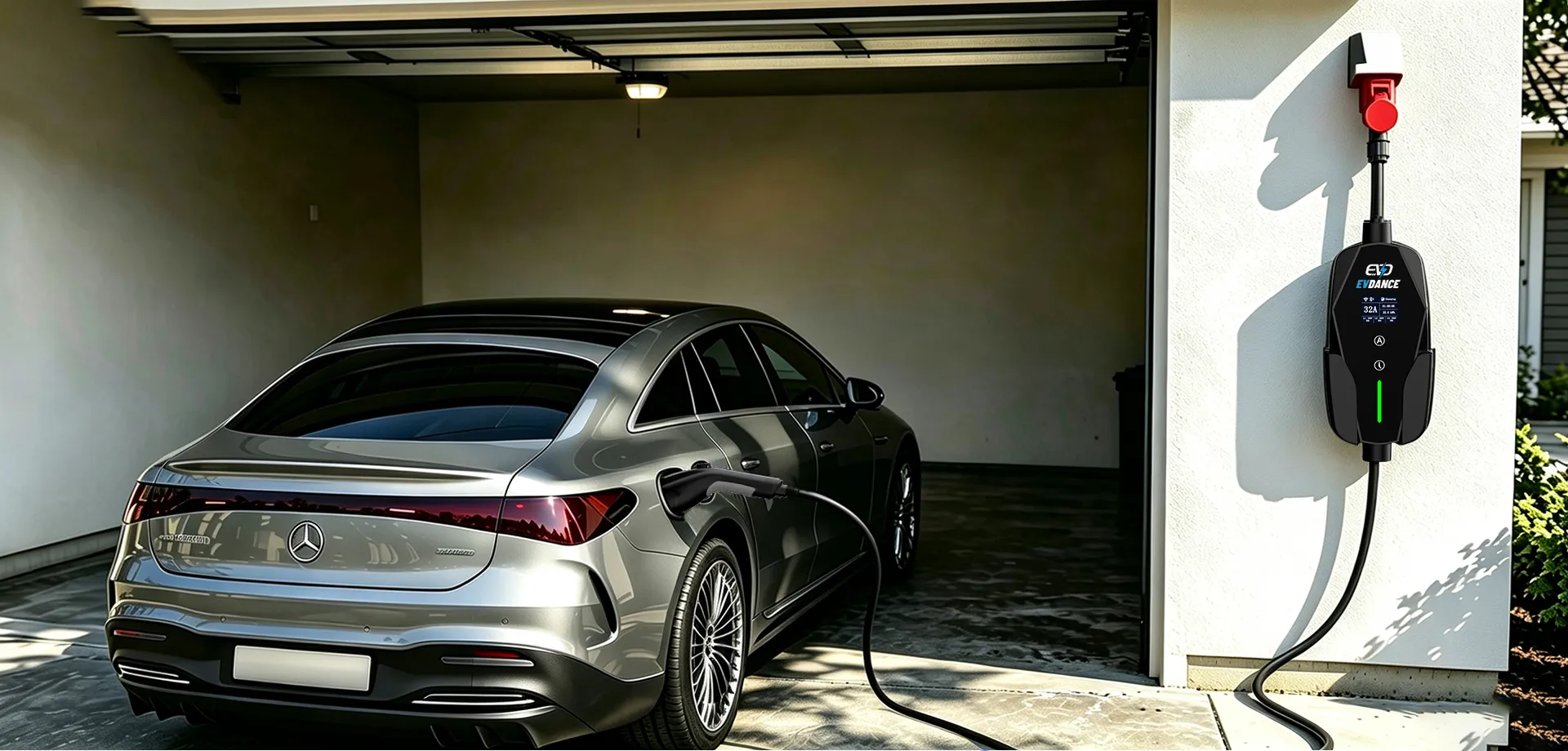
- Mount on your own wall or your own ground, and keep cables off the shared drive.
Start With the Meters, Not the Chargers
Everything follows from how the building is metered:
- Two meters, two panels. The straightforward case. Each charger gets its own dedicated circuit from its own panel, sized by the same rule as any home charger (see what size breaker an EV charger needs).
- One meter, one panel feeding both units. Every charge lands on one bill, whoever plugged in. Agree the fix before installation: separate circuits per charger, and a settlement method both sides accept.
- One unit owner-occupied, one rented. The charger is a change to the building, so it is the owner’s decision, and the metering question above decides who pays for the electricity.
One Shared Panel Feeding Both Units
EV charging is a continuous load, and the NEC rule sizes the breaker at 125% of the charger’s current — 32 A of charging takes a 40 A breaker, 48 A takes a 60 A breaker. Two chargers on one modest service can claim a large share of it, so the electrician’s load check comes first. Its usual outcomes:
| What the load check finds | What usually happens |
|---|---|
| Capacity for both at full rate | Two dedicated circuits, one per unit, and no further compromise |
| Capacity for both, not both at full rate | Chargers set to a lower current, or charging times staggered by schedule |
| Capacity for one | One circuit now; the second waits for a panel or service upgrade |
None of these is a problem to discover mid-installation: the load check is a calculation from the panel and the building’s other large loads, and it is the same check whether the building has one front door or two.
Placement When the Driveway and Walls Are Shared
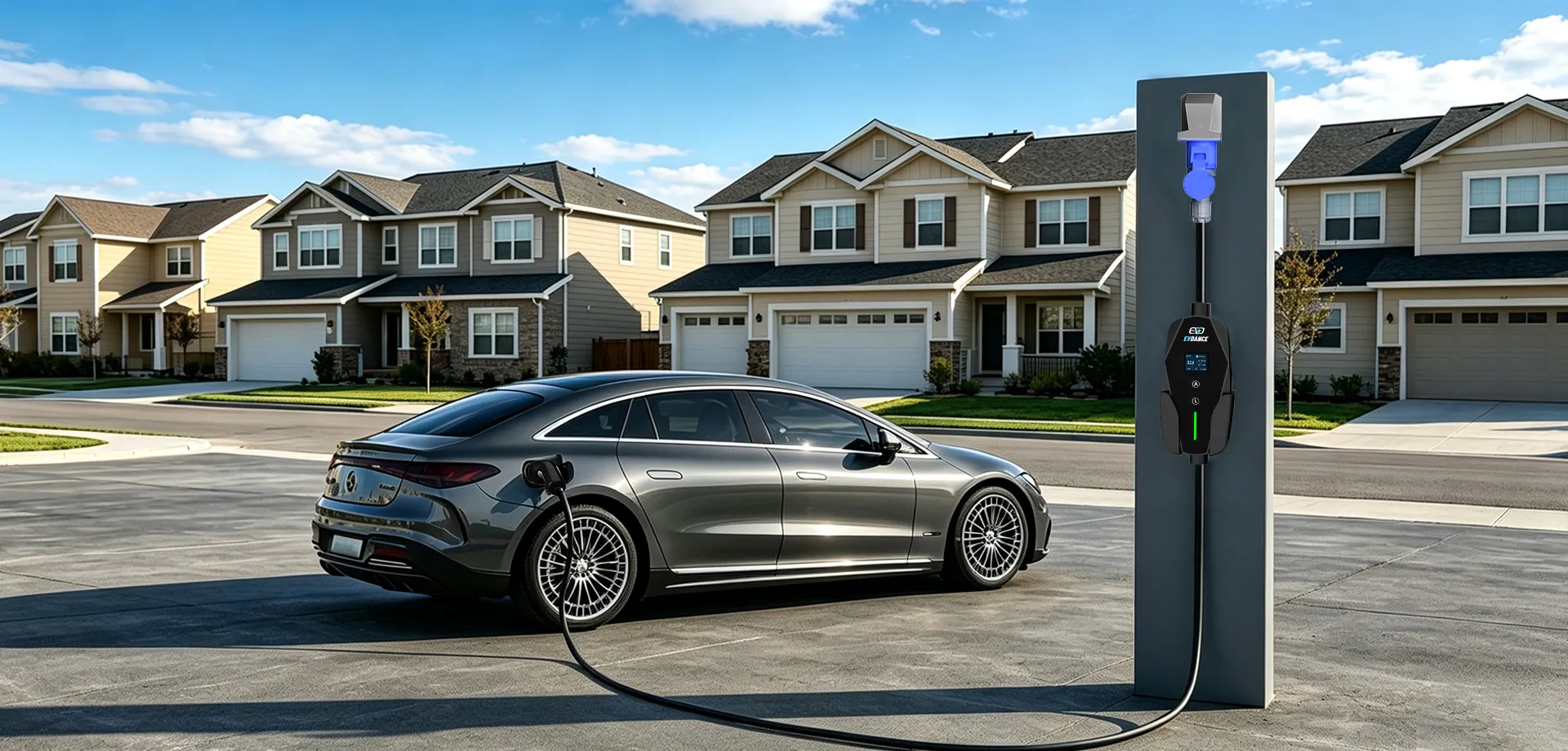
Keep the hardware on your own side: the charger mounts on your unit’s wall, or on a post in your part of the plot, and the cable should park without lying across the shared drive. The placement trade-offs are the same ones covered in inside or outside the garage. Where a duplex’s parking works more like a small shared lot — unassigned bays, a residents’ association — the model is closer to apartment and condo charging in shared parking, and the building’s own rules join the conversation.
Chargers That Keep the Two Households Separate
For a hard-wired install on your own circuit, the EV-ACT5006T 48 A Level 2 wall charger can be set to match whatever current the load check allows, up to its 48 A maximum. Where one panel feeds both units and costs are settled between households, the EV-ACT3204PE 22 kW wallbox earns its place differently: it has RFID and app control, so sessions are recorded per user — the record a fair cost split needs. Both carry EVDANCE’s 3-year standard warranty.
Frequently Asked Questions
Can both units charge at full speed at the same time?
Only if the building’s service has the capacity. Each charger is a continuous load sized at 125% on its breaker, so two at full rate is a real demand. The electrician’s load calculation decides; if it falls short, lower settings or staggered schedules are the usual compromise.
We have one meter. How do we split the cost fairly?
Agree the method before installing. The clean options are a charger that records sessions per user (by RFID or app account) with a periodic settlement, or a submeter on the charger’s circuit fitted by the electrician. What does not work is estimating from memory at the end of the year.
I rent one side of a duplex. Is my position different?
Yes — the charger is fixed to the building, so it is the owner’s project, and the metering decides who pays for your charging. The questions to put to a landlord are covered in how to charge an EV when you live in an apartment; the duplex version of the same conversation usually goes better because the owner is next door.
Related Reading
- Apartment and Condo EV Charging: Solutions for Shared Parking
- How to Charge an EV When You Live in an Apartment
- What Size Breaker Do I Need for an EV Charger?
- EV Charger Hardwired vs Plug-In: Which Should You Choose?

