
The EV-AC04001U charges at up to 9.6 kW — 40 A drawn from a 240 V NEMA 14-50 outlet. That sits inside the U.S. Department of Transportation’s Level 2 band of 7–19 kW, adding roughly 10–20 miles of range per hour. Unlike an adjustable charger it has one fixed output, so the speed you actually get is decided almost entirely by the car: its onboard charger accepts what it accepts, and this unit simply keeps up.
Key Takeaways
- The EV-AC04001U delivers up to 9.6 kW — 40 A at 240 V, squarely in the Level 2 band.
- It has one fixed output; your car’s onboard charger decides the real session speed.
- Adding 40 kWh takes about 4.2 hours at full rate, about 5.2 hours at a 7.7 kW car limit.
- It belongs on a NEMA 14-50 outlet on a 50 A circuit, per the NEC continuous-load rule.
What 9.6 kW Means in Hours
Charging time is energy divided by power. These are worked examples at the two rates most J1772 cars will see on this unit — its full 9.6 kW, and the roughly 7.7 kW ceiling of a car whose onboard charger accepts less — before charging losses, and most cars taper the rate as the battery nears full:
| Energy to add | At 9.6 kW (car accepts the full rate) | At about 7.7 kW (car’s onboard charger is the limit) |
|---|---|---|
| 20 kWh | About 2.1 hours | About 2.6 hours |
| 40 kWh | About 4.2 hours | About 5.2 hours |
| 60 kWh | About 6.3 hours | About 7.8 hours |
For a typical day’s driving — often 20–40 kWh to replace — either column is an evening or overnight charge. Our test of how portable charger speed depends on the outlet covers the supply side of the same arithmetic.
One Fixed Rate, So the Car Decides
Three facts shape every session on this charger:
- The unit offers 40 A, always. There is no settings dial to match smaller circuits, which is why it belongs on a NEMA 14-50 outlet on a 50 A circuit — the NEC rates EV charging as a continuous load, so the breaker must be 125% of the charger’s current.
- The car sets the real rate. The onboard charger converts AC to DC and has its own limit. A car built to accept 7.7 kW charges at 7.7 kW here; a plug-in hybrid, which usually accepts less, charges at its own lower rate — our guide to whether a plug-in hybrid needs an EV charger explains why that is still enough for a small pack.
- The supply voltage matters. Power is volts times amps. Where a building’s supply is 208 V rather than 240 V, the same 40 A works out to about 8.3 kW instead of 9.6 — the arithmetic, not a fault.

The Charger in Brief
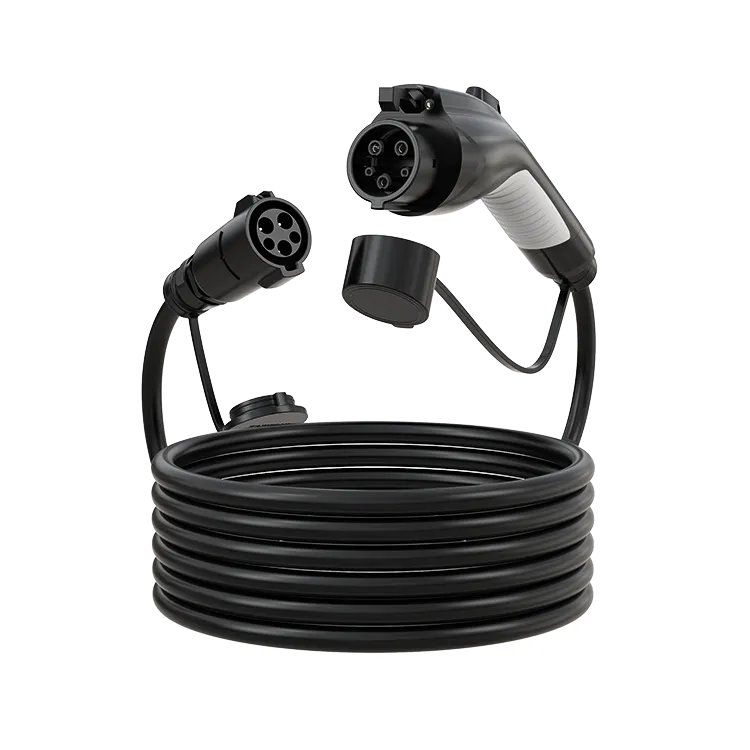
The EVDANCE EV-AC04001U is a 40 A J1772 portable charger: 9.6 kW, NEMA 14-50P plug, SAE J1772 connector, IP66 enclosure, 25 ft cable, covered by EVDANCE’s 3-year standard warranty. Among portable units that is the fast end — our roundup of the fastest portable EV chargers shows where 9.6 kW sits. If your car’s port is NACS rather than J1772, the same output class comes as the EV-ACS4005T, which adds adjustable current settings.
Frequently Asked Questions
Is the EV-AC04001U faster than a 32 A J1772 charger?
On paper, yes: 9.6 kW against about 7.7 kW. In the car, only if the onboard charger accepts more than 7.7 kW. If your car’s limit is 7.7 kW, both chargers deliver the same session.
How long does a full charge take?
It depends on the battery size and where it starts. As division: refilling 60 kWh takes about 6.3 hours at the full 9.6 kW, before losses and the slow-down near full. Most drivers replace a day’s driving, not a whole pack.
Why does my car charge below 9.6 kW on it?
Almost always the car’s onboard charger, which caps the rate it can convert. The charger offers its full 40 A; the car takes what it is built for, and it also tapers the rate itself as the battery fills.
Related Reading
- What Is the Fastest Portable EV Charger?
- Do Portable EV Chargers Work? How Speed Depends on the Outlet
- What Is J1772? The North American EV Plug Explained
- Do I Need an EV Charger for a Plug-In Hybrid?

