
Yes — for a fleet whose cars share the J1772 inlet, standardizing on one portable unit like the EV-AC04001U is a workable model, and what it buys is operational: one spare pool, one driver routine, one asset record. What it does not remove is the electrical work: every parking spot still needs its own 50 A circuit. And a portable brings no billing, access control or session data, so fleets that need cost recovery per driver are standardizing on the wrong class — that job belongs to networked chargers.
Key Takeaways
- One portable model buys a fleet one spare pool, one driver routine and one asset record.
- Every parking spot still needs its own 50 A circuit — standardizing the charger does not shrink the electrical work.
- A portable has no billing, access control or session data; fleets that need those should standardize on a networked class instead.
- The model only serves J1772-inlet cars; NACS cars need an approved adapter or their own unit.
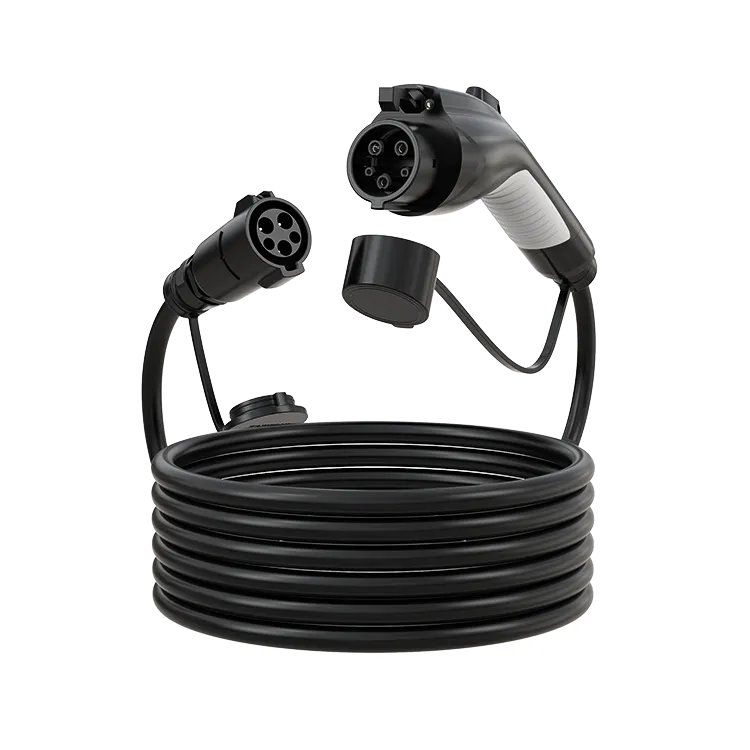
What One Model Buys a Fleet
- One spare pool. A failed unit is swapped at the plug: a spare from the pool goes onto the same outlet, and the depot is charging again without waiting for a repair visit.
- One driver routine. Every driver learns one plug, one latch, one set of checks. Training, signage and the fault-reporting habit are written once and hold at every site.
- One asset record. Model, serial, site and purchase date in a single format — which is also the file a warranty claim runs on, under the 3-year standard warranty.
- One connector. J1772 is the inlet on the fleet’s current cars and plug-in hybrids alike, so the same unit serves both.
The Circuit Work Does Not Shrink
A portable charger removes the charger’s installation, not the circuit’s. Each unit draws a fixed 40 A, and EV charging is a continuous load, so each parking spot needs a 50 A circuit of its own — sized at 125% of the charger’s current, as our guide to breaker sizing sets out. Ten bays charging overnight is a load-calculation question, not a charger question; our guide to fleet depot charging covers how to size AC charging for a depot. Where drivers take vehicles home, the same one-model rule still helps — the unit is identical — but each home circuit has to be verified the same way. The portable charger safety guide collects the checks that travel with the unit.
| Standardizing on one portable fixes | It does not fix |
|---|---|
| Spares, training, asset records, warranty handling | Panel capacity and the circuits each bay still needs |
| Driver routine at every site, depot or home | Per-driver billing, access control or session data |
| One connector across J1772 cars and plug-in hybrids | Cars with a NACS inlet — a different connector entirely |

What a Portable Does Not Give a Fleet
The EV-AC04001U’s listing is a charger’s listing: 40 A, 9.6 kW, NEMA 14-50P, IP66. It has no app, no card reader and no network connection, so it cannot say who charged, when, or how much — and no spreadsheet discipline at the depot fully replaces that. Fleets that must recover costs per driver or restrict access should standardize one level up: a wallbox with RFID and app control such as the EV-ACT3204E, or a networked station like the dual-connector EV-AC03201T with OCPP 1.6J. The honest split is simple: dwell time and simplicity point to the portable; billing and control point to the networked class. EVDANCE’s commercial charging range covers both.
The Standard Unit in Brief
The EV-AC04001U is a 40 A J1772 portable charger: 9.6 kW on a NEMA 14-50P plug, an IP66 enclosure and a 25 ft cable, covered by a 3-year standard warranty. As a fleet standard it suits depots and take-home cars where charging is simple overnight dwell — provided each parking spot gets the circuit the unit’s fixed 40 A draw requires.
Frequently Asked Questions
Can one portable model serve every car in our fleet?
Only the cars with a J1772 inlet. A car with a NACS inlet cannot plug in directly; that direction needs an adapter the car maker approves, or a NACS portable added to the pool.
If a unit fails at a depot, how fast is the swap?
The swap itself is plug-level: unplug the failed unit, plug in a pool spare, provided the outlet and circuit are sound. Keep enough spares that a failure never waits on a warranty round trip.
Do we still need an electrician if the chargers are portable?
Yes — for the circuits. Each site’s outlets, wiring and panel capacity are installation work, and they are what decide how many units can run at once.
Related Reading
- Fleet Depot Charging: How to Size AC Chargers for Vans and Light Commercial Vehicles
- What Size Breaker Do I Need for an EV Charger?
- Are Portable EV Chargers Worth It?
- Portable EV Charger Safety Guide 2026

