
Reimbursement is won or lost at the plug, not at month-end. The EV-ACS3210E’s app records each session’s energy, but it cannot know whose car was plugged in. A logging routine of thirty seconds per session turns that record into a claim an employer can accept: the right sessions, separated from household charging, nothing reconstructed from memory.
Key Takeaways
- The charger records energy per session; only the driver can record whose car it was — capture both, at plug-in.
- One row per session, tidied weekly against the app history, beats any month-end reconstruction.
- On one shared charger, the log is the separator between company and household charging.
- Rates, rules and tax treatment belong to your employer’s policy and your tax adviser — the log is the evidence underneath.

What to Capture at Every Session
Five fields, captured while the cable is still in your hand:
| Field | Where it comes from | Why the claim needs it |
|---|---|---|
| Date and start time | The app’s session record | Ties the energy to a period and to your tariff |
| Energy (kWh) | The app’s session figure | The number every reimbursement claim is built on |
| Which car | Your note, made at plug-in | The app records energy, not ownership |
| Odometer reading | The car’s dashboard, if your scheme asks for mileage | Lets energy be reconciled against business use where a scheme works that way |
| Household sessions | Marked as personal at the time | Keeps the company total clean, no later guesswork |
The one-photo habit covers most of it: one screenshot of the finished session, saved to one folder, is date, time and energy in a single action. Which car is the only field the charger cannot give you.
The Log: One Row Per Session
Keep the log plain — a spreadsheet with the five fields as columns, one row per session. Its shape matters less than its rhythm:
- Add the row the same day. Thirty seconds at unplug time; a month-end reconstruction is where claims go to be queried.
- Tidy weekly, not monthly. Once a week, check your rows against the app’s session history; the totals should agree. A gap found this week is a screenshot away from fixed.
- Mark recoveries honestly. A session you missed goes in from the app history as soon as you notice, flagged as recovered. Employers trust flagged corrections more than silent perfection.
- File screenshots with the log, not scattered across your phone — the log says what, the screenshots prove it.
Your own tariff is the other input a claim needs; our guide to the cost of charging an electric car at home shows how to read it from a bill. When you charge moves that figure — which is why the log keeps the start time.
One Charger, Two Lives
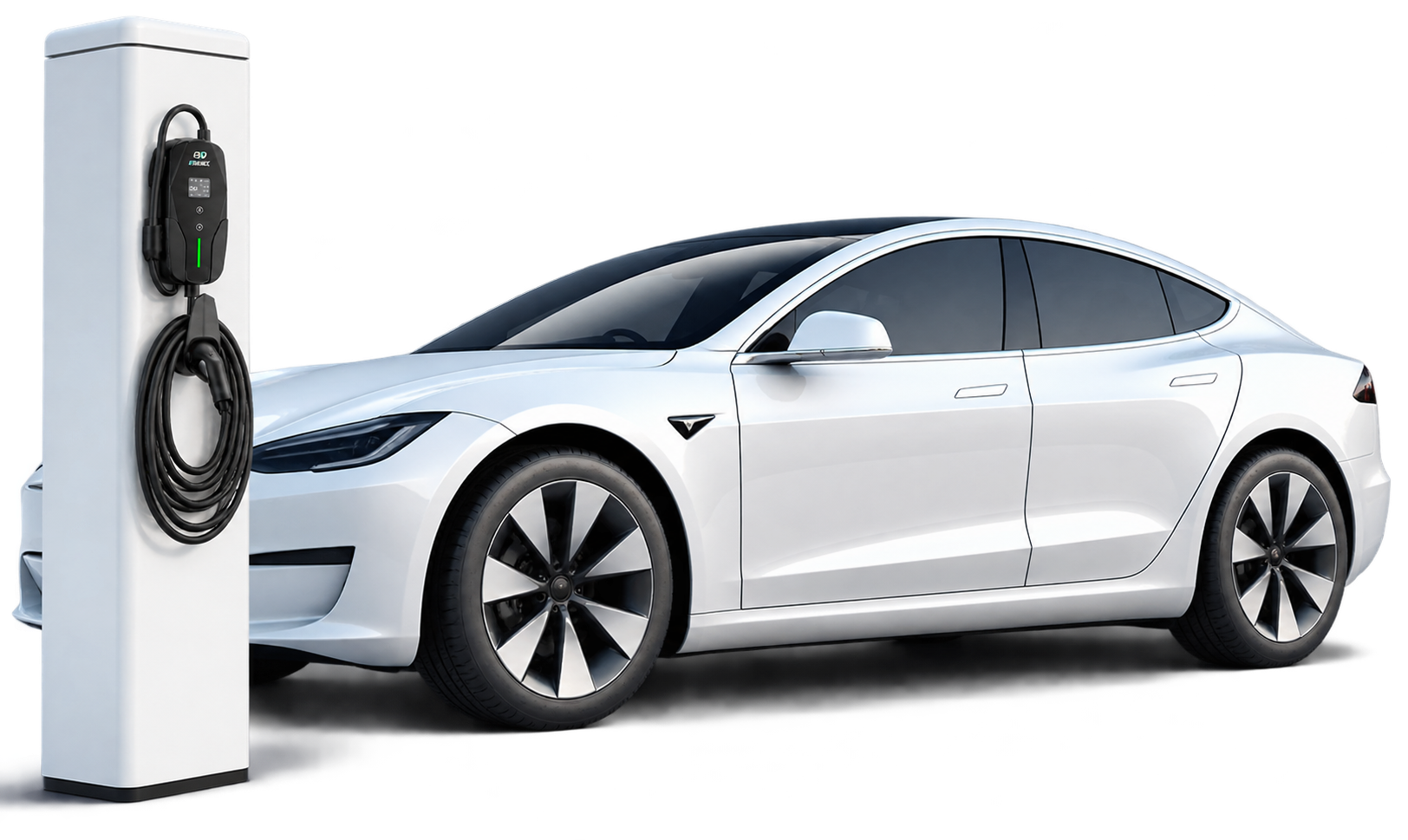
Most company cars share their charger with the household’s own car. On a portable unit there is no per-user identity in the hardware, so the separation lives in the log: company sessions claimed, household sessions marked personal on the day. Done at plug-in, the split is a fact; at month-end, an estimate — and estimates are what finance teams push back on.
If your employer’s scheme wants identity built into the equipment, that is a different charger class: RFID wallboxes keep each user’s sessions separate from the first plug-in. For one company car at one home, the log does the same job for a notebook’s worth of effort.
The EV-ACS3210E in a Company-Car Household
The EV-ACS3210E is a 32 A Type 2 portable charger: single-phase at about 7 kW, current adjustable from 10 A to 32 A, with app control and per-session energy monitoring, OCPP-ready, a 7.5 m cable and an IP66 housing. The monitoring is what makes it workable for a company-car driver: every session leaves an energy figure behind. What that figure means for your claim — rate, rules, treatment — is set by your employer’s policy, not the charger.
Frequently Asked Questions
My employer pays a per-mile rate, not per kWh. Does the log still matter?
Yes, as evidence: it shows the charging happened, how much energy it took, and when. The rate and rules come from your employer’s policy — the log supports the scheme; it does not define one.
I forgot to log a session last week. What should I do?
Recover it from the app’s session history now, enter it, and mark it as recovered. The longer it sits, the more the entry looks like reconstruction — which is exactly what the routine exists to avoid.
Is the app record enough on its own for tax purposes?
The app record is evidence for a claim, not a ruling on its treatment. How reimbursement is taxed depends on your country and how the payment is structured — a question for your employer and a tax adviser.
Related Reading
- How Much Does It Cost to Charge an Electric Car at Home?
- Smart Charging and Time-of-Use Tariffs: How Scheduling Cuts EV Charging Costs
- RFID and User Management for Shared EV Chargers
- How Do Smart EV Chargers Work?

