
Judge the fit by seating, not by sound. The JT02’s listing promises no click, so a secure connection is the one you can verify: both joints pushed fully home, faces flush, no rocking when you test it gently — and then the car charging. If it will not seat, the cause is almost always visible: grit, an angled approach, or wear.
Key Takeaways
- The JT02’s listing promises no click — judge the fit by seating: flush faces, no gap, no rocking, no shift.
- Seat the adapter on the charger’s plug first, then the pair into the car, square and straight.
- A refusal to seat is visible: grit, angle, gloves — or wear, isolated by trying the other side’s partners.
- Never force a joint. A fit that has changed over time is a replacement decision.
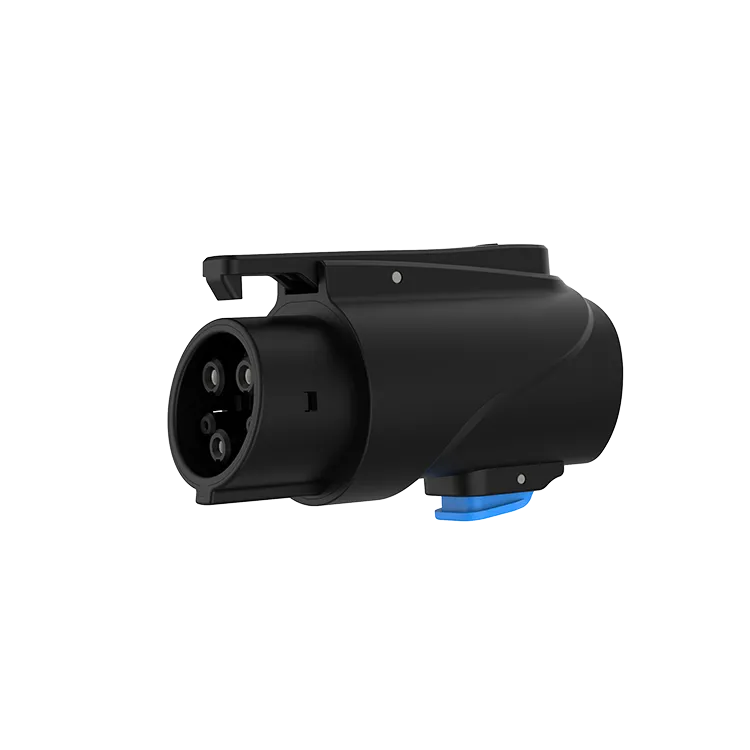
What “Fully Seated” Feels Like
Run the same four checks at both joints — adapter to charger plug, then the pair into the car:
| Check | A secure fit | Not seated yet |
|---|---|---|
| Faces | Flush, no visible gap around the joint | A gap you can see or fit a fingernail into |
| Movement | No rocking under a gentle wiggle | Play or rocking from side to side |
| Pull test | A gentle straight pull does not shift it | It slides or creeps under a light pull |
| The session | The car shows charging at a sensible rate | No start, or drops when the cable moves |
Fitting It, Joint by Joint
The order is the one the fit dictates. First, the adapter onto the charger’s NACS plug: align the two squarely and push straight until the faces meet — this joint is made in your hands, where you can see it. Then take the combined connector to the car and push it into the J1772 inlet the same way. Finish with the four checks before walking away. A joint seated at an angle can feel “nearly there” while carrying the session on a fraction of its faces — exactly the condition that makes an adapter run hot.
When It Will Not Go Home
| Cause you can see | What to do |
|---|---|
| Grit, a leaf or moisture on a contact face | Unplug, wipe both faces with a dry cloth, and try again. Dirt between faces is resistance and obstruction in one package. |
| An angled approach | Back right off rather than wiggling it in. Square it to the inlet and make one straight push. |
| Cold, stiff hands or thick gloves | Do the final push bare-handed. The last part of the travel is judged by feel, and gloves hide it. |
| Seats on one charger but not another — or in one car but not another | The side that refuses holds the problem. A worn charger plug or inlet is the owner’s to fix — report it; do not defeat it. |
| Used to seat easily, now needs force — or has gone loose | That change is wear. Stop charging through it; it is a replacement decision. |
Never Force It
Force is how a seating problem becomes damage: pushed hard enough, a misaligned connector can bend contact faces and scar the car’s inlet or the charger’s plug — a repair bill on equipment worth far more than an adapter. A joint forced home is not a good joint; it is a damaged one carrying current on poor contact. An adapter whose fit has degraded is retired, never opened, filed or modified.
The Adapter in Question
The EVDANCE JT02 NACS-to-J1772 adapter is rated for AC charging up to 80 A at AC 250 V, with silver-plated copper contacts and an IP65 seal. It is an AC adapter for home wallboxes and destination chargers — never for Superchargers. Its specification says nothing about a click, and it needs none: flush, firm and verified is the standard.

Frequently Asked Questions
Should I hear a click when the JT02 connects?
Do not wait for one. The listing specifies no click or latch sound, so treat sound as a bonus, not the test. The test is mechanical: faces flush, no gap, no rocking, no shift under a light pull — confirmed by the car charging.
There is a slight wobble in the joint. Is it safe to charge?
No — treat play as a stop signal. A joint that moves under load works its contact faces as it moves, concentrating heat and wear. Reseat it once, squarely and firmly. If the wobble persists, the joint is worn on one side; find which by trying another car or charger, and retire or report the worn part.
It seats fine at home but will not seat at one destination charger. Whose problem is that?
The comparison has isolated it: your adapter seats elsewhere, so the refusing charger’s plug is the suspect — worn or damaged. Beyond one dry wipe, it is the host’s equipment and the host’s fix. Tell the host and use another charger.
Related Reading
- Are EV Charging Adapters Safe?
- Can I Use a Tesla Charger for Other Cars?
- What Is J1772? The North American EV Plug Explained
- Is the Tesla Charger NACS? NACS, J3400 and Adapters Explained

