
Before launching a private-label JT08 or JT09, a brand should verify four things: the test evidence behind the ratings, the certification documents for the exact version it will sell, its own sample results, and the disclosure wording it will publish. The JT08 (handleless) and JT09 (with handle) are NACS-to-CCS1 DC adapters in the 250 kW class, rated up to 500 A and sealed to IP66. EVDANCE’s private-label program starts at 100 units — quantity is the easy part; verification is the launch.
Key Takeaways
- Verify four things before launch: ratings evidence, certification documents, your own sample results, and the disclosure wording.
- No document, no claim — the listings name no certification marks, and the 1000 V figure belongs to the JT08 only.
- Your product page must carry both use conditions: vehicle-maker approval and a network open to the car.
- “Works with every CCS car” is the copy failure to avoid; approval sits with each car’s maker.
Verify the Ratings Evidence, Claim by Claim
Every number on your box is your claim, and each needs a document behind it. Work through the stated ratings and ask what supports each:
| Claim you would print | What to verify before launch |
|---|---|
| 250 kW class, up to 500 A | The test documentation behind the current rating — the report set, not a summary line. |
| Up to 1000 V | Stated for the JT08 in its listing. The JT09’s listing does not state a voltage — do not print one for it, and do not assume the pair is symmetrical. |
| IP66 sealing | The ingress test report for the version you will sell, matching the production housing. |
| Certification marks | The adapter listings name no certification marks. Attribute none in your copy until the certificate file is in your hands and covers your version. |
| Handle (JT09) / handleless (JT08) | A production sample in hand: the unit in the box matches the description you are selling. |
Whose name sits on a certificate, and whether it extends to a private-label version, is its own question — our article on who owns the certificate in a private-label product works through it. The rule for launch: no document, no claim.
Test Samples Yourself
Run your own checks on production samples before launch: fit and seating on the vehicles your customers drive, and full sessions at open DC stations. Record the results as your brand’s own sample testing — that is what they are. Never present sample checks as the factory’s test results, and never convert a successful afternoon into a compatibility promise. A sample that fails fit or seating stops the launch until the cause is understood.
Get the Disclosure Wording Right
A DC adapter is used under two conditions, and your product page, box and manual must carry both, in plain language:
- Vehicle-maker approval. The adapter may be used only where the car’s maker approves third-party DC adapter use for that exact car, checked in the maker’s current documents.
- Network access. The station or network must be open to that car, under the network’s current terms.
The failure mode to avoid is copy that promises the adapter “works with every CCS car”. It cannot be true — approval sits with each car’s maker — and it puts your brand’s name on the first refused session. The wider exposure is covered in our article on product liability for private-label EV charger brands.

The JT08 and JT09 Under Your Brand
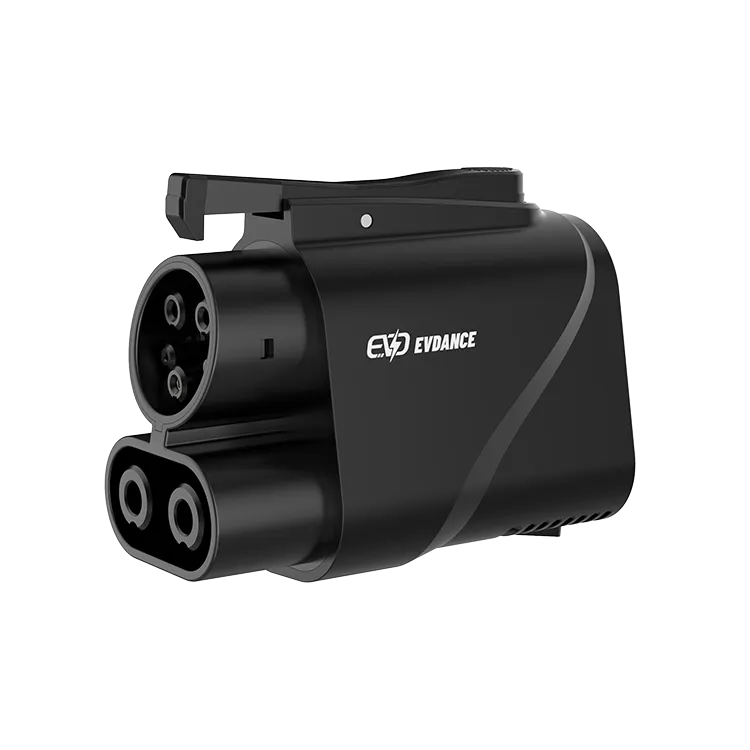
The EVDANCE JT08 and EVDANCE JT09 are NACS-to-CCS1 DC adapters: they let a car with a CCS1 inlet charge at a NACS DC station, including Tesla Superchargers open to that car. Both are rated up to 500 A and sealed to IP66; the pair is described in the 250 kW class, and the JT08 is also stated at up to 1000 V. Neither adapter adds power — the station’s output and the car’s DC acceptance set the session. EVDANCE is a Shenzhen manufacturer founded in 2011, exporting to 30+ countries, with private label from 100 units; terms are agreed through the OEM and private-label program.
Frequently Asked Questions
What is the minimum order for private-label JT08 or JT09 adapters?
EVDANCE’s private-label program starts at 100 units. That is the program floor — confirm in writing that it applies to these adapters and your branding method before planning the launch.
Can we print “up to 1000 V” on both models?
No. The 1000 V figure is stated for the JT08 only. The JT09’s listing states no voltage, so JT09 copy carries the 500 A rating and IP66 sealing — nothing unverified.
Our samples worked on every car we tried. Can we say it fits all CCS cars?
No. Your samples are your test results on your vehicles. Compatibility also depends on each vehicle maker’s approval of third-party DC adapters, which only the maker’s current documents can state. Print the conditions, not a blanket promise.
Related Reading
- OEM and Private-Label EV Chargers: A Complete Guide for Brands
- Who Owns the Certificate in a Private-Label EV Charger?
- Private-Label EV Chargers: Packaging, Labeling and Manuals

