
What separates portable EV charger manufacturers is rarely the headline power figure — most portables cluster around the same ratings. The real separation is whether each spec line is backed by a test you can inspect. The lines that genuinely differ are the current settings, the plug and cable, the ingress rating and the certification behind the exact model — each read against its evidence: test report, rating label, written test routine.
Key Takeaways
- Portable chargers separate on evidence, not headline power: current steps, plug and cable, IP rating, certification.
- Match every spec line to a document — test report, rating label or written test routine.
- Type tests prove the design, end-of-line tests prove repetition, your sample tests prove the delivery.
- A line missing from a spec sheet is a written question, never an assumption.
The Spec Lines Where Portables Actually Differ
Put every candidate’s datasheet for your exact configuration side by side and score these lines first — they are where vague wording hides.
| Spec line | What varies between makers | Evidence to ask for |
|---|---|---|
| Rated current and settings | A fixed output, or an adjustable range in named steps | Datasheet for your configuration; the settings printed on the rating label |
| Connector and supply plug | NACS, J1772 or Type 2 on the car side; NEMA 14-50P or a CEE plug on the supply side | A test report naming that plug version, not another variant |
| Cable length | Stated precisely, stated as a range, or not stated at all | The number in writing on the datasheet — never a sales-page estimate |
| Ingress protection | IP ratings differ by model, not by brand | The IP result inside the model’s own test documentation |
| Certification | Marks held for the exact model and market — or for a different version | Certificate and report naming the maker as applicant; in the US, a listing under the OSHA NRTL program |
Three Kinds of Test, Three Kinds of Proof
Type tests are run once, on the design, by a laboratory behind a certification. Ask for the full report, and check the model, plug version and applicant name against the unit you are buying. A logo on a brochure is not this document.
End-of-line tests are run in the factory, on every unit or on a sample of production. They prove the line repeats the design. Ask what it covers and whether results are recorded per serial number; “standard testing” with no written specification is not a routine.
Your tests prove received units match both documents. Order samples through the normal sales channel in your market configuration and test them as our guide on testing an EV charger sample before a bulk order sets out. Supplier selection — documents, terms, after-sales — is covered by our B2B checklist for choosing a portable charger supplier.

Worked Example: Reading Two EVDANCE Spec Sheets
The EV-ACS3210T is a 32 A NACS portable charger, about 7.7 kW, on a NEMA 14-50P plug, with current adjustable 10–32 A in six steps and IP66. The six named steps are the differentiator: confirm the same steps on the rating label and the datasheet.
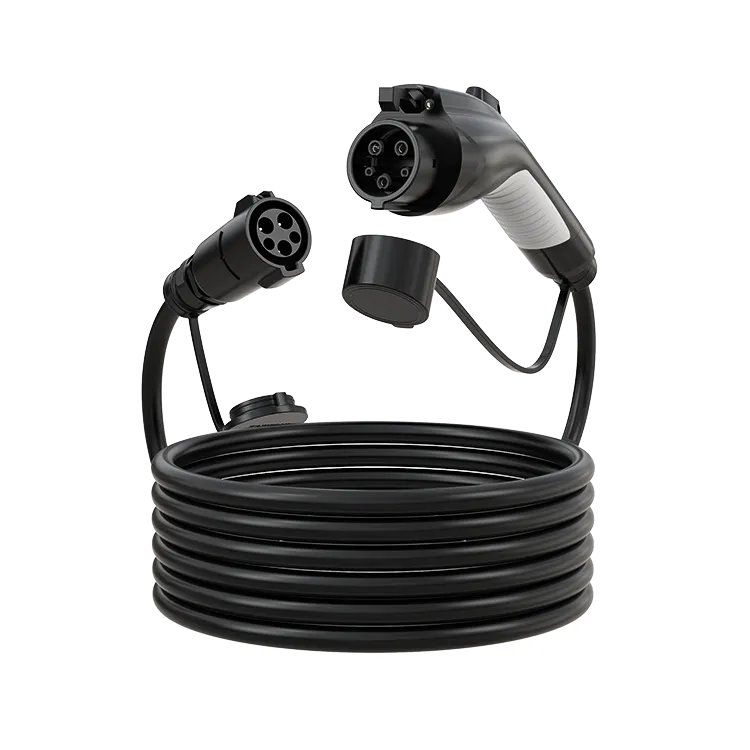
The EV-AC04001U is a 40 A J1772 portable at 9.6 kW, also on a NEMA 14-50P plug, rated IP66, and its listing states a 25 ft cable. The ACS3210T listing states no cable length. That gap is the lesson: a missing line is answered with a written question, never an assumption — and the answer goes into your order documents. Note also what neither listing claims: a feature your market needs must be requested and confirmed in writing, not inferred from a photograph.
Putting EVDANCE on Your Comparison Sheet
Score us on the same lines. EVDANCE is a Shenzhen EV charger manufacturer founded in 2011, with its own factory, exports to more than 30 countries, private label from 100 units and a 3-year standard warranty. Send us your spec-line table and market via our OEM and private-label program or contact us — and judge the reply as you judge any maker’s.
Frequently Asked Questions
Does a higher IP rating make one portable charger better than another?
Only against the use you sell it for. An IP rating is a test result for that model, not a brand quality score — and it separates makers only when it sits inside the model’s own test documentation.
Which single document separates serious manufacturers fastest?
The full test report for the exact model and plug version you will import, with the manufacturer named as applicant — certification, ratings and configuration in one checkable file.
If the reports check out, do I still need to test samples?
Yes. Reports prove the design passed; a sample proves the unit you receive matches it — label, configuration, build, behaviour. Different questions, both necessary.
Related Reading
- How to Choose a Portable EV Charger Supplier: A B2B Checklist for Importers
- How to Test an EV Charger Sample Before Placing a Bulk Order
- Portable EV Charger Buying Guide 2026: Specs, Costs, and When to Choose One Over a Wallbox
- EV Charger Factory Audit Checklist for Importers
Sources & Standards
For buyers: EVDANCE is a portable EV charger manufacturer in Shenzhen — wholesale, private label and OEM portable chargers, with samples before bulk orders.

