
Installation leads arrive through three channels, differing mainly in who owns the customer. A car dealer owns the relationship with the car buyer, a utility owns its program and its account holders, and a referral is owned by the trust of the person who recommends you. You rent the first two and earn the third — so compare each by control, by time cost, and by what you must bring, and put the terms in writing before the first lead arrives.
Key Takeaways
- Compare channels by who owns the customer, the time cost, and what you must bring — not by promised volume.
- Dealer and utility terms belong in writing before the first lead, not after the first dispute.
- Referrals are a system: ask at handover, record the source, close the loop.
- Your own enquiry log outranks any general claim about which channel works.
The Three Channels Side by Side
| Channel | Who owns the customer relationship | What the installer must bring | Agree in writing before the first lead |
|---|---|---|---|
| Car dealers | The dealer, until it hands the buyer to you | Fast survey response, tidy paperwork, a clear fault process | Consent-based handover, who quotes, who the customer calls on a fault |
| Utilities and energy suppliers | The supplier and its program | Program compliance, specified hardware, reporting on completed jobs | Listing conditions, the payment chain, whether leads are shared or exclusive |
| Referrals | The referrer’s trust — then you, once you deliver | Consistent workmanship and a deliberate habit of asking | Nothing formal; record the source and close the loop |
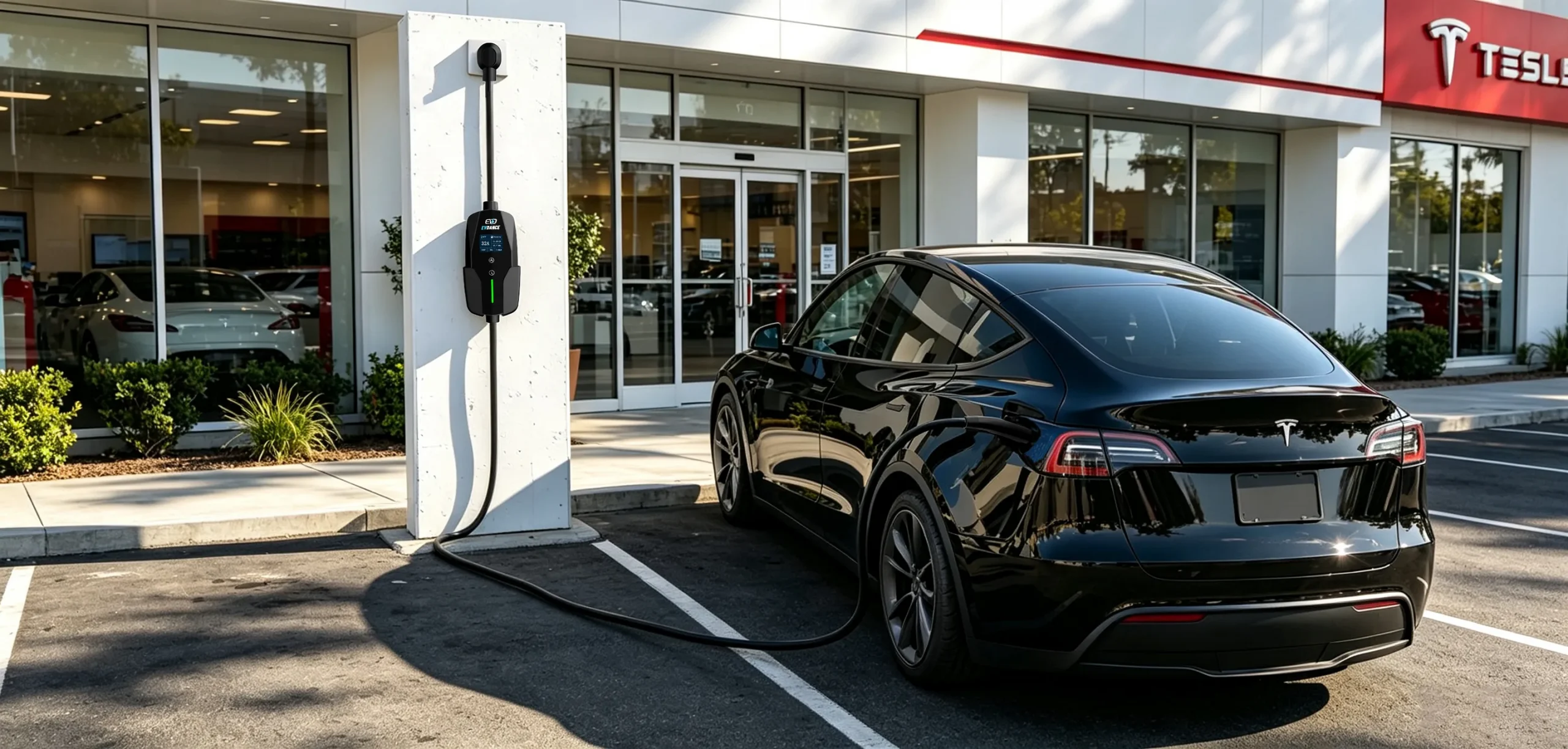
Dealer Leads, at Map Level
Dealers meet the buyer at the exact moment charging becomes a need: the car is bought, and home charging is the unfinished part of the sale — and that timing is the channel’s whole value. What you are really negotiating is the handover: when your name is passed on, with the buyer’s consent, and who quotes what follows. The dealer’s own planning is a separate question — EV charging for car dealerships covers what a dealership installs for itself, not the referral of buyers to you.
Utility Leads Come Attached to a Program
There is no utility channel without a program: an approved-installer list, a rebate scheme naming its installers, or a tariff-linked offer.
The program owns the customer and sets the conditions, and those conditions live in the program’s current documents — not in general advice. Start research from the supplier’s published program pages; in the United States, DSIRE indexes current incentive programs. Note the date of everything you read: programs open, close and change their terms, and last year’s rules are not this year’s.
Referrals: The Channel You Build Yourself
Referrals deserve the fullest treatment because they are the only channel you own outright. Run them as a system, not as luck:
- Who to ask — every home customer at handover; property managers after a clean multi-bay job; facilities contacts after a workplace install that went cleanly; past commercial clients at maintenance visits.
- When to ask — at sign-off, charger working, paperwork complete. A later cold message asks a favour; the handover ask names the obvious.
- What to record — the referrer’s name, the job type and the outcome. Reviewed monthly, the log tells you which channel actually feeds you.
- What to give back — prompt thanks, and, with the new customer’s consent, word to the referrer that the job is done.
Bought Leads, and the Supply Line Behind All Three
Lead marketplaces exist as a category: enquiries sold on, often to several installers at once. Judge them by the same three questions as any channel — who owns the customer, what rights you actually get, and what the time cost is — and never let your diary depend on a source you do not control. A lead only converts if you can serve it: hardware that is on a ship is a cost, not an asset. EVDANCE supplies installers through its distributor program (founded 2011; 3-year standard warranty); shortlist models from the product range and open the supply conversation via contact us before the leads arrive.
Frequently Asked Questions
Which channel produces the most leads?
There is no universal ranking. Dealer volume follows local car sales, utility volume follows program funding, and referral volume follows your own installed base. Your enquiry log, kept honestly for a few months, answers the question for your business.
Should I accept an exclusive lead arrangement?
Only in writing, with the expected volume, the review point and the exit understood. Exclusivity trades your other channels for a promise, so the promise must be measurable inside the agreement.
Do utilities hand leads to any installer who asks?
Programs set their own conditions — listing requirements, reporting, sometimes specified hardware — stated in the program’s current documents. Read them before you plan around the channel.
Related Reading
- How to Find EV Charger Distributors and Installers to Sell To
- EV Charging for Car Dealerships: What to Install and Why
- Can I Get an EV Charger Installed for Free? Rebates and Programs

