
The Section 30C credit was the main U.S. federal support for business charging: 6% of cost, or 30% where wage and apprenticeship requirements were met, up to $100,000 per item, for property placed in service between January 1, 2023 and June 30, 2026. That window has closed: chargers placed in service after it do not qualify, and a business buying today should budget without it.
Key Takeaways
- 30C gave businesses 6%, or 30% with wage and apprenticeship requirements, up to $100,000 per item — for property placed in service January 1, 2023 to June 30, 2026.
- The window has closed: the placed-in-service date, not the order date, decided eligibility.
- Installed inside the window? Keep invoices, placed-in-service evidence and eligibility records together, and put the claim to a tax adviser.
- Buying now means budgeting at full cost, with state and utility programs checked separately in their current documents.
The Credit as It Applied: The Timeline
| Element | The rule, as the IRS listed it | What it meant in practice |
|---|---|---|
| Placed-in-service window | January 1, 2023 – June 30, 2026 | The installed-and-ready date governed, not the invoice date |
| Base business rate | 6% of the cost of the property | The default rate for business installations |
| Enhanced business rate | 30% where wage and apprenticeship requirements were met | Up to $100,000 per item |
| Location condition | IRS eligibility conditions applied on top of the rates, including the eligible census tract requirement | Where the property sat decided eligibility; the IRS page carries the full conditions |
| After June 30, 2026 | No amounts listed for property placed in service after this date | The credit has ended for new installations |
The same credit covered homes at 30% up to $1,000 per item in eligible census tracts.
If Your Chargers Went In Inside the Window
A closed window does not erase a valid position: if your chargers went in inside the window, the work now is records.
- Keep the file together. Purchase and installer invoices, and evidence of when the equipment was placed in service.
- Keep the eligibility evidence with it. The tract documentation and, where the 30% rate was claimed, the wage and apprenticeship records.
- Put claim mechanics to your tax adviser. How and when the credit is claimed is decided by the IRS rules for your tax year; the separate question of whether charger installation is tax deductible has its own guide, as does claiming an EV charger grant.
No article can decide an individual claim — anything beyond the dates, rates and cap needs the IRS page and an adviser.
If You Are Buying Now
Price the project as if no federal credit exists, because for new property it does not. The reference figures that remain are the U.S. DOE-cited costs: public Level 2 at about $3,500 equipment plus $2,500 installation per connector, and DC fast charging at about $38,000–$90,000 equipment plus $20,000–$60,000 installation — U.S. context, broken down in our guide to commercial installation costs. State and utility programs continue independently — DSIRE (sources below) is where U.S. state programs are checked; our status guide on whether the EV charger grant is ending tracks the UK, US and Ireland position. One discipline protects every budget: if a quote only works “with the credit,” the quote does not work.
Hardware Bought at Full Cost
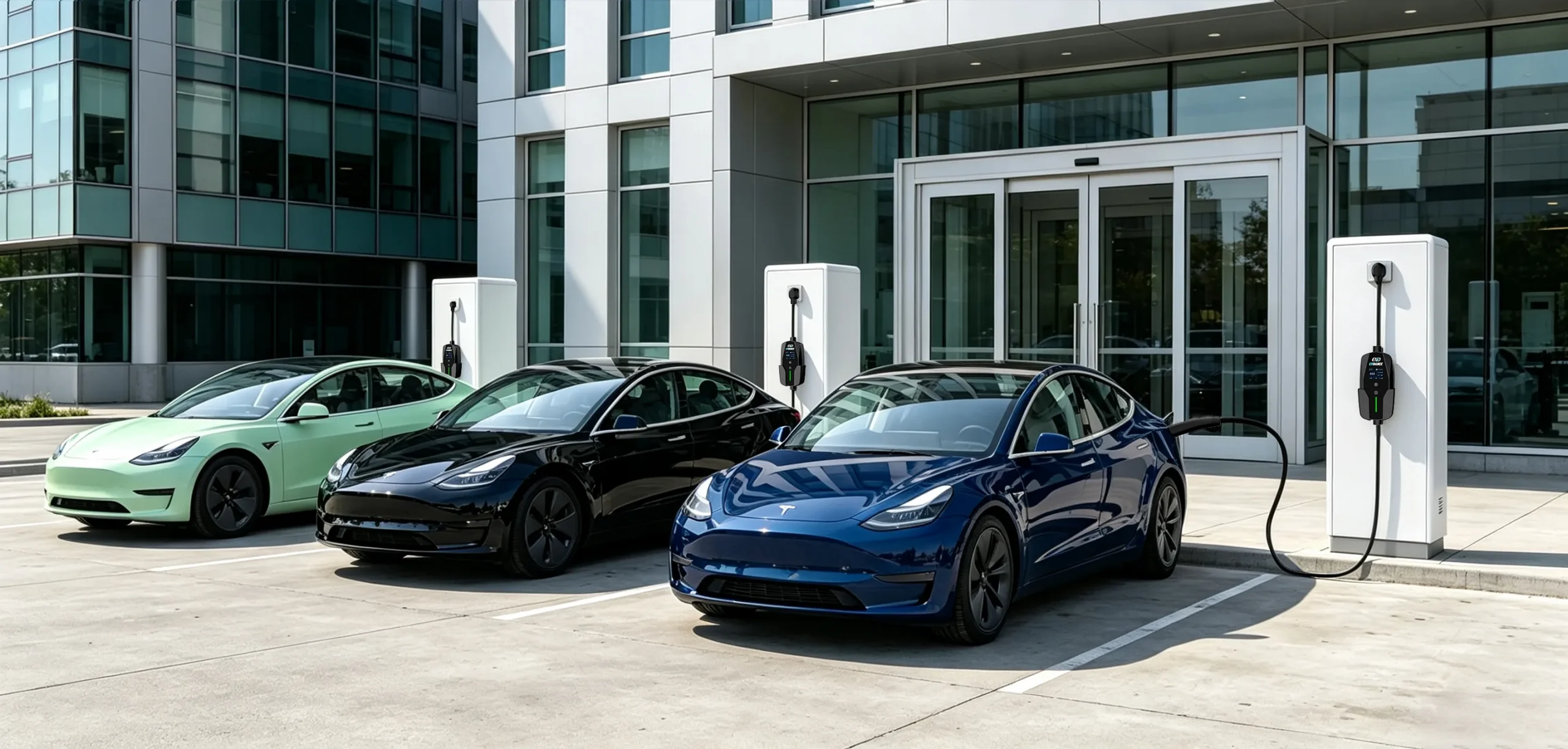
With no credit absorbing part of the price, the hardware case rests on the site’s own numbers: how many vehicles charge, for how long, at what electricity cost. For shared staff and visitor bays, a dual-connector station such as the EV-AC03201T — two Type 2 connectors sharing up to 43 kW, OCPP 1.6J, RFID, IP54 — serves two bays from one floor-standing unit. The full range sits on our commercial EV charging page; project conversations start via contact us. EVDANCE, founded in 2011, states a 3-year standard warranty.
Frequently Asked Questions
Our chargers were installed in May 2026. Can we still claim?
Property placed in service inside the window — installed and ready to use by June 30, 2026 — sat within the listed dates. Whether your claim stands, and how it is filed, is for your tax adviser, with the invoices and evidence in hand.
We ordered before the deadline but installed after it. Does the order date count?
No. The window is tied to the placed-in-service date, not the purchase date. Equipment installed and made ready after June 30, 2026 falls outside the listed window.
Has anything replaced the 30C credit for businesses?
Current IRS guidance lists the 30C amounts only for the closed window; no successor business credit is listed there. State and utility programs continue — check DSIRE and your utility’s current documents, and treat any seller’s claim of a replacement federal credit as unproven until the IRS page shows it.
Related Reading
- Is the EV Charger Grant Ending? UK, US and Ireland Status in 2026
- How Do I Claim My EV Charger Grant? UK, Ireland and US Explained
- Is EV Charger Installation Tax Deductible?
- How Much Does It Cost to Install a Commercial EV Charging Station?

