
Phasing works when phase 1 builds the parts that are expensive to redo — groundworks, cable routes and supply headroom — and defers the parts that are cheap to add later: the chargers themselves. The release for phase 2 is not a date on the programme. It is evidence in your own session records: ports busy at the same hours, week after week. This article sets out what to oversize now and how to read the trigger.
Key Takeaways
- Oversize what is expensive to redo — routes, groundworks, headroom — and defer what is cheap to add: chargers.
- Phase 2 is released by your own session records, not by a programme date or a universal utilisation figure.
- State the load case to the utility at final size, and build only toward written confirmations.
- Start the records on day one; an unmeasured phase 1 leaves phase 2 undecidable.

The Phase Table
| Build now, at full-plan size | The saving it buys later | The record that triggers phase 2 |
|---|---|---|
| Trenching and conduit routes to every planned bay | Phase 2 becomes an install job, not a construction job | Session records showing existing ports occupied through the peak hours |
| Switchgear and panel headroom, as the project design states it | Chargers are added onto a board that was built to receive them | The same records, checked against the headroom the design left |
| Bay layout, markings and charger positions for the full count | No re-striping, no moved protection, no re-surveyed positions | Queue and occupancy evidence at the marked bays |
| The platform and session records, from day one | The evidence base for the expansion decision exists when the decision arrives | The records themselves — utilisation as energy sold and ports busy |
| The load case with the utility, stated at final size | The connection is agreed once, for the whole plan | The utility’s offer, and phase-1 measured demand against it |
The items in the left column share one trait: their cost is mostly the opening of ground and the shutting of roads, paid again in full if they are done twice. The chargers deferred share the opposite trait: a unit unboxed in year two costs much the same as one unboxed in year one, and an unevidenced unit installed early is capital standing idle. That asymmetry — not caution — is the logic of phasing, and it is how a staged site answers the questions in planning a workplace charging programme.
What to Hold Back — and What Never to Phase
- Hold back ports beyond evidenced demand. Every unjustified charger raises the fixed stack the site must carry before it sells a single extra session.
- Hold back supply works beyond the utility’s confirmed plan. Do not build toward a figure nobody has confirmed in writing.
- Never phase the routes. A conduit run installed “for now” to half the car park makes the second half a new construction project, with new closures and new surfaces.
- Never phase the records. A site that starts measuring in year two has no year-one baseline, and its expansion case is an opinion.
Phase-1 Hardware, Sized to the Evidence
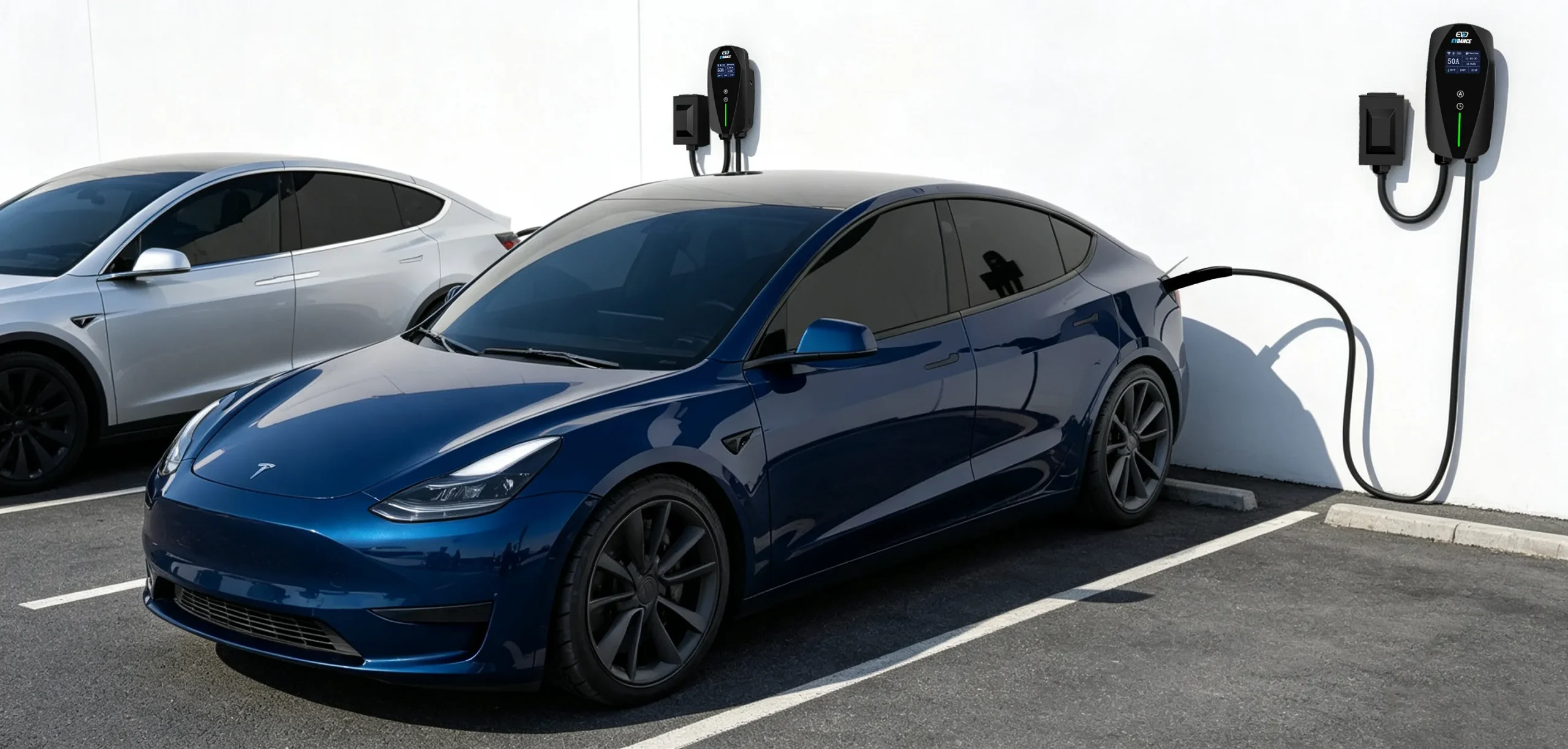
Opening hardware should match the demand the project can point to today. The EV-AC03201T dual-connector AC station puts two Type 2 connectors on one connection — up to 43 kW shared, 22 kW per connector, OCPP 1.6J, RFID, IP54 — so one installed position serves two bays while the records build. The EV-ACT3204PE 22 kW three-phase wallbox (tethered Type 2 cable, RFID and app, IP66, CE) fills wall positions on the same routes. Where one short-dwell point is justified, the EV-RHDC30K-L compact DC charger adds 22 kW DC — below the 50–350 kW fast band, and stated as such. EVDANCE was founded in 2011 and carries a 3-year standard warranty; phased site plans can be worked through with our commercial charging team via contact us.
Frequently Asked Questions
At what utilisation should we trigger phase 2?
There is no universal percentage, and this article will not invent one. The trigger is a pattern in your own records: ports occupied through the same peak hours on a recurring basis, with energy sold to match. A single busy week is weather; a season of it is evidence.
Does phasing cost more overall?
That comparison is run on your own quotes: the premium for full-size groundworks and headroom now, against the cost of reopening the site later. Both figures exist in project documents — neither exists as a published percentage, so do not let a bidder supply one.
Can phase 2 use different chargers from phase 1?
Yes, if routes, headroom and platform were specified openly in phase 1 — capacities and interfaces, not one model’s footprint. The expansion then competes on current evidence.
Related Reading
- How to Plan a Workplace EV Charging Program
- How Do Commercial EV Charging Stations Work?
- How Much Does It Cost to Install a Commercial EV Charging Station?
- Fleet Depot Charging: How to Size AC Chargers for Vans and Light Commercial Vehicles

