
There is no hospitality rate card to copy. Price charging at a hotel or restaurant in three moves: decide what the price is for — an amenity, cost recovery, or a small profit line; build the number from your own tariff and the energy a typical stay delivers; then choose the form that fits a stay, such as bundled into the room rate, a flat session price, or a per-kWh rate.
Key Takeaways
- Decide the job first: amenity, cost recovery or profit line — the price follows from it.
- Build the number from your own tariff and the energy a stay delivers, not from another venue’s price.
- Match the form to the stay: bundled, flat per session, or per kWh where local rules allow it.
- Guests and walk-ins can sit on two tariffs; display both at the bay.
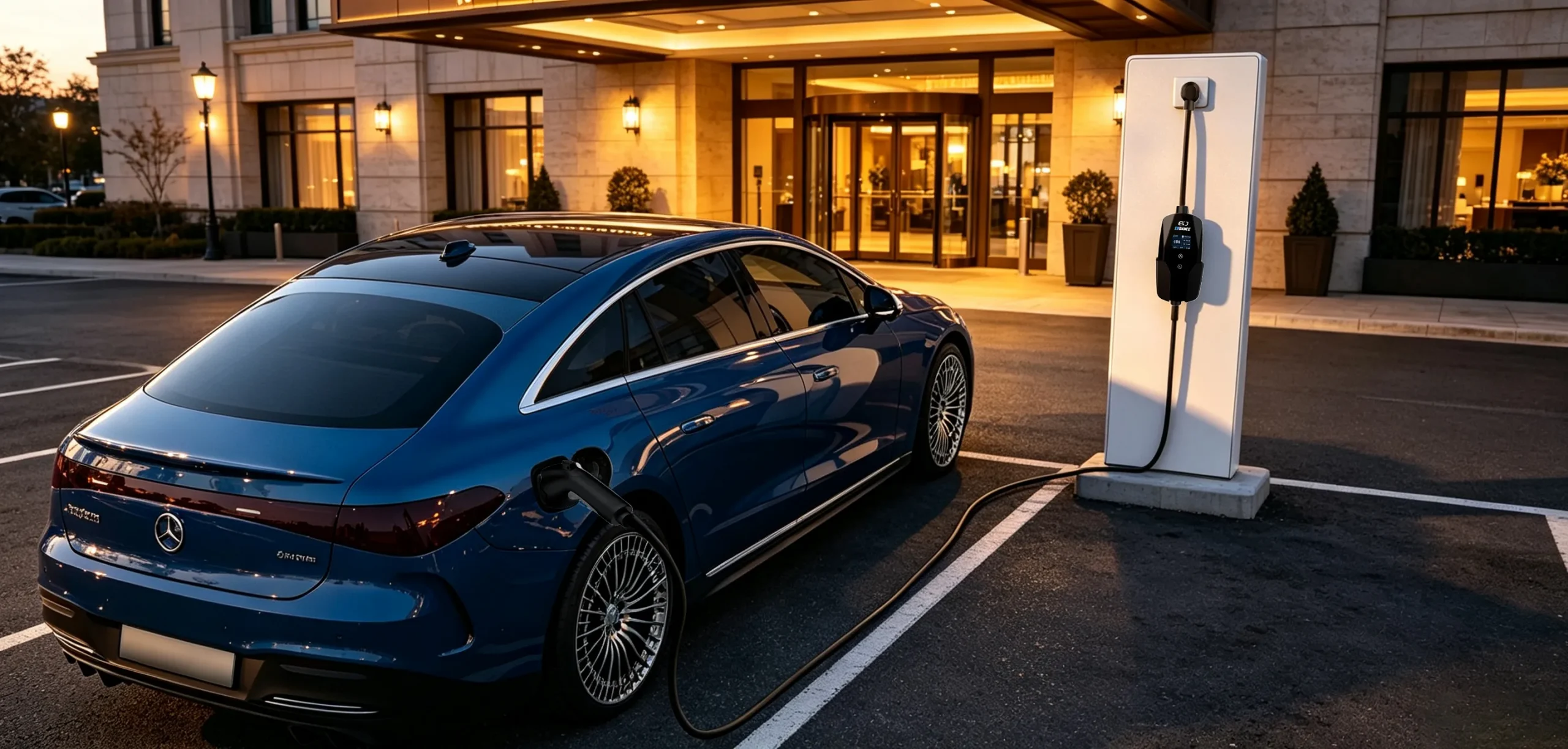
First, Decide What the Price Is For
The same charger supports three different prices, depending on the job you give it. Choosing the job comes first, because it sets how guests start a session and what you record.
| The job | What the price does | Where it fits |
|---|---|---|
| Amenity | Free or bundled into the room rate; the electricity cost sits with marketing | Hotels competing on guest experience, while usage is low |
| Cost recovery | Covers energy and the running costs of offering charging, no more | Venues with steady use, including charging non-guests |
| Profit line | The price sits above costs as a modest revenue line of its own | Sites with passing trade from drivers who are not guests |
Build the Number From Your Own Costs
Start with energy per session, because it differs sharply by venue. An overnight guest’s car sits plugged in for hours and can take a large delivery; a restaurant guest’s car is there for a meal and takes less. Before you have records, estimate from the stay; after a trial month, replace the estimate with your platform’s actual figures.
Your energy cost per session is that delivery multiplied by your own tariff, printed on your electricity bill. For orientation only, the U.S. average commercial price is 14.53 cents per kWh (EIA) — your tariff, not the average, is the input. On top sit the running costs, as categories: platform charges, payment processing, upkeep.
An invented example, to show the arithmetic only: suppose a dinner-length session delivers 15 kWh and your tariff were 20 cents per kWh. The energy in that session costs $3.00, before platform and payment costs. Your figures will differ; the method is the part that transfers.
Choose the Form That Fits a Stay
- Bundled. Charging included in the room rate or a package, as our hotel guide’s billing models for guest charging set out. Simplest for guests; the cost is recovered in the rate.
- Flat per session. One amount per plug-in, whatever the delivery. Easy to sign; rougher justice between a top-up and an overnight fill.
- Per kWh. The driver pays for metered energy, the fairest match to your cost. Whether per-kWh billing is permitted where you operate is a local rule to confirm in writing first; the models are compared in how charging stations price their sessions.
- Two prices: guests and everyone else. In-house guests on the amenity or bundled rate, walk-in drivers on the public rate, separated by the platform’s user groups. Display both prices at the bay.
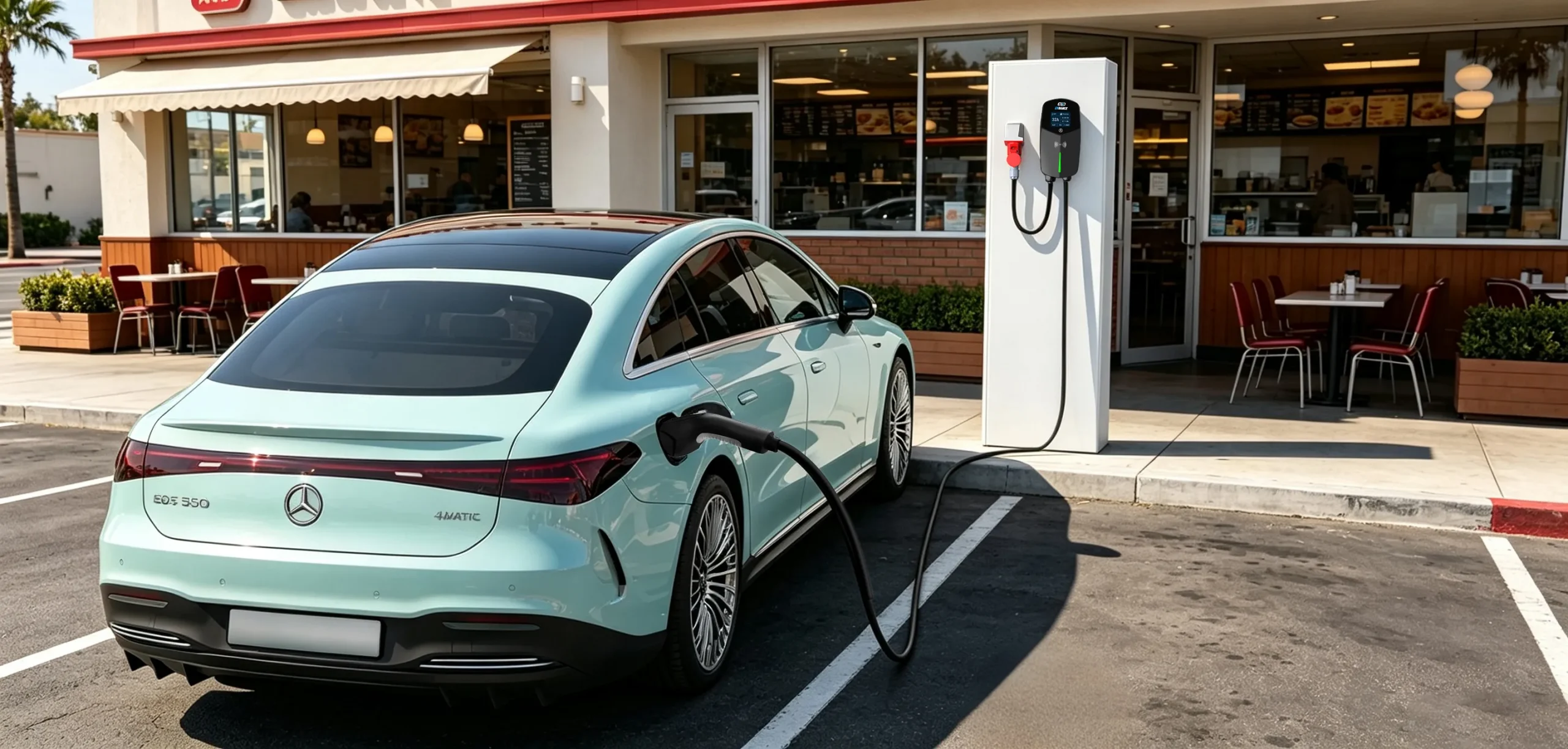
Hardware That Supports the Pricing You Chose
Billing runs on the platform your venue appoints; the charger meters the session and identifies the user. The EV-ACT3204PE 22 kW wallbox (tethered Type 2 cable, RFID and app, IP66, CE) gives a controlled point where a guest’s card or app separates them from a walk-in driver. For a larger hotel car park, the EV-AC03201T dual-connector AC station serves two cars from one unit (up to 43 kW shared, OCPP 1.6J, RFID, IP54); its touchscreen is the driver’s display, not a payment terminal — payment and pricing live in your platform arrangement.
Frequently Asked Questions
Should charging be free for hotel guests?
That is the amenity decision above, not a pricing error either way. Free charging is simple and guests value it, but it needs a turnover rule so one car does not hold the bay all day.
Can I charge non-guests a different price?
Yes — two user groups on your platform, guests and the public, each with its own tariff. What matters is that both prices show at the bay before a session starts, and that local pricing-display rules are confirmed for your site.
How do I know my price covers my costs?
Divide a month’s running costs — energy at your tariff, platform and payment charges, upkeep — by the energy delivered that month, and compare with what the price collected. Your platform’s session records hold both sides.
Related Reading
- Hotel EV Charging: How to Plan Guest Charging That Pays Off
- EV Charging for Restaurants and Retail: Turning Dwell Time Into Visits
- Is EV Charging at Hotels Free?
- RFID and User Management for Shared EV Chargers

