
For tenants you do not know yet, the socket (untethered) form is usually the safer buy: the cable belongs to the tenant, so its wear, its connector and its replacement are theirs. Tethered suits the opposite case — a known, long-term tenant whose car you can match — because the charger is ready to use on day one. The deciding factor is not the charger; it is your tenant mix.
Key Takeaways
- Unknown future tenants point to the socket: the cable, its connector and its wear belong to the tenant.
- A known, long-term tenant points to tethered: ready on day one, matched to their car — with replacement on you.
- Decide from tenancy length, connector certainty and who fields the failure call.
- Record cable condition at move-out, whichever form you choose.

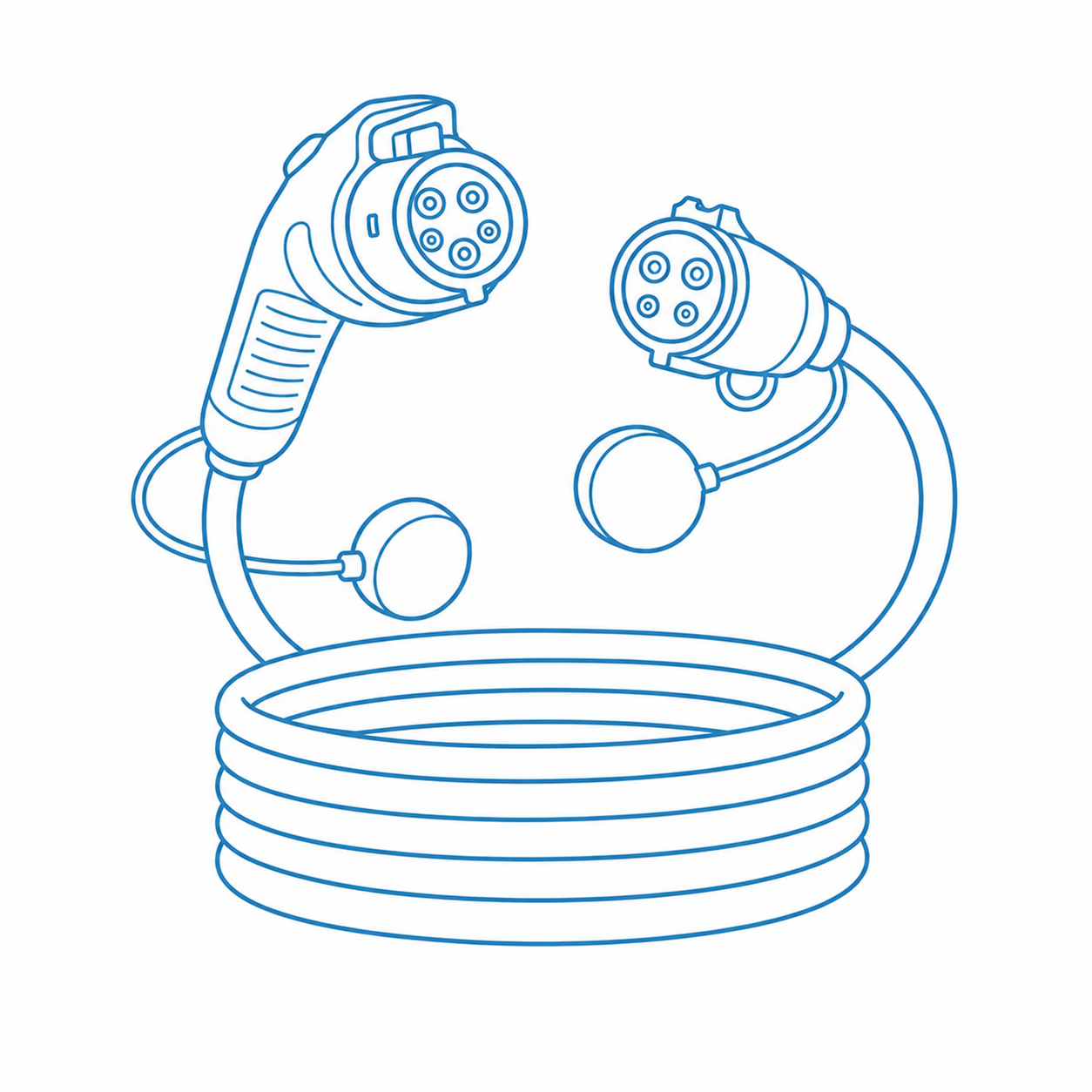
Tethered means the cable is fixed to the charger; untethered (socketed) means the tenant plugs in a lead of their own. The mechanics and the home comparison are covered in our guide to tethered vs socketed wallbox chargers; this article weighs the choice from the landlord’s seat.
What Changes Between Tenancies
| Issue | Tethered: your cable on the wall | Untethered: the tenant’s own lead |
|---|---|---|
| Cable wear and damage | Every session wears the same cable; replacement is your cost and your service call | Wear sits on the tenant’s lead; the wall unit has no cable to wear out |
| Connector fit | The fixed connector must match each new tenant’s car — a change of tenant can strand it | The lead follows the car, so the socket serves whatever the next tenant drives |
| Move-in readiness | Ready the day the tenant arrives, nothing for them to buy | The tenant needs their own lead before the first charge |
| Tenants’ guests | A visiting EV can charge if its inlet matches the fixed connector | A guest charges only with a lead of their own |
| Between tenancies | A cable hangs on the property, exposed, while the home is empty | Nothing hangs; the socket is the only part left in place |
The Questions That Decide It
- How long do your tenants stay? Multi-year tenancies amortise a tethered cable and let you match it to a known car. Short lets and frequent changeovers push the other way.
- Do you know what they drive? A tethered connector chosen for one tenant’s car is a bet on the next tenant driving the same inlet type.
- Who fields the failure call? With tethered, a damaged cable is your emergency. With a socket, a faulty lead is the tenant’s own problem to replace.
- Is the charger one household’s, or shared? The more households rotate through it, the more the socket’s bring-your-own-cable discipline pays.
A Model That Offers Both
The EV-ACT3204PE is a 22 kW three-phase wallbox listed with a Type 2 cable or a Type 2 socket — the form is chosen at order time, with RFID and app access and an IP66 enclosure either way — so the tenant-mix decision above is a line in the order, not a change of product. Where the tenant is known and long-term, a tethered unit such as the EV-ACT5006T (up to 48 A, NACS, 25 ft cable, IP65/IP66) gives that household a charger that is simply there. EVDANCE’s residential range sets out both forms.
Frequently Asked Questions
Can I change my mind after installation?
The form is a property of the unit you bought. A socketed wallbox plus the tenant’s own lead is the flexible arrangement; converting a tethered unit is a manufacturer’s service question, not a landlord task — which is why the tenant-mix questions come before the order, not after.
Who replaces a worn tethered cable?
You do, as the property’s owner: it is your fixture, like any other. Put cable condition in the move-out inspection so wear and damage are documented between tenancies rather than argued about later.
What if a tenant prefers to use their own portable charger?
That is a third arrangement — a suitable outlet and the tenant’s plug-in unit — and it is covered by written agreement like any other: who owns what, and what leaves at move-out. Our guide to chargers in rentals and condos covers the conversation from both sides.
Related Reading
- Tethered vs Socketed Wallbox Chargers: Which Should You Install?
- Can I Have an Electric Car Charger at Home? Houses, Rentals and Condos
- Apartment and Condo EV Charging: Solutions for Shared Parking

