
Electric school buses use two classes of charger: Level 2 AC posts, and DC depot chargers built for fleet yards rather than highway stops. Which class a district buys is decided by dwell maths — the route energy a bus uses, divided by the hours it sits parked — and by what the bus accepts, per the bus maker’s documents. There is no separate “school bus charger” category — there is a school bus duty, and hardware matched to it.
Key Takeaways
- School buses use Level 2 AC posts or DC depot chargers — the duty, not a special category, decides.
- Average power needed is route energy divided by parked hours; run the sum with the district’s own figures.
- The bus maker’s documents state the inlet and the AC acceptance — the figure that caps what AC can do.
- Districts standardise on one hardware family across the yard for spares, training and service simplicity.

The Two Classes Districts Buy
| Level 2 AC posts | DC depot chargers | |
|---|---|---|
| How it works | The bus’s onboard charger converts AC; the post supplies it | Conversion happens off-board; DC feeds the battery directly |
| Power frame | The U.S. DOT’s Level 2 band of 7–19 kW — capped by what the bus’s onboard equipment accepts | Above the AC band, sized for depot duty; the rating is a project specification |
| Where it fits | Long overnight dwell and modest daily route energy | Shorter windows, longer routes, or buses whose AC acceptance is low |
| Infrastructure weight | The lighter project per bay | The heavier project: more power per point, more supply behind it |
The car comparison — Level 1, Level 2 and DC fast charging — applies here with one change of emphasis: the question is which class the schedule needs, not which is faster. Highway-class DC — the 50–350 kW band the DOT describes — serves vehicles passing through in minutes, not a bus parked for sixteen hours.
The Dwell Maths Decides
The method is the fleet one: average power needed = route energy ÷ parked hours. Run it for one bus and the answer lands in one class without argument.
A worked example, invented for illustration: suppose a bus uses 80 kWh across its two route windows and parks about sixteen hours across the midday gap and the night. Eighty kilowatt-hours over sixteen hours averages about 5 kW — below the Level 2 band, so a suitable AC post fills it with hours to spare. Give it only a four-hour midday window and it needs about 20 kW on average — above the AC band: the case the DC class exists for. Districts run this sum with their own route figures — the discipline our fleet depot charging guide applies to vans.
The Connector Comes From the Bus Documents
Chargers are matched to buses, not the other way round. The bus maker’s documents state the inlet and the AC rate the onboard charger accepts — the figure districts overlook, since a bus that accepts AC only modestly gains nothing from a stronger post. Bus and charger purchases are therefore settled together, confirmed in writing before either order is signed.
One Family Across the Yard
Whatever class wins, districts standardise on one hardware family across the yard: one shelf of spare parts, one system for drivers and mechanics to learn, one service relationship when something fails at 5 a.m., and bays any bus can use. A mixed yard costs more attention than it saves.
The Rest of the Yard’s Fleet
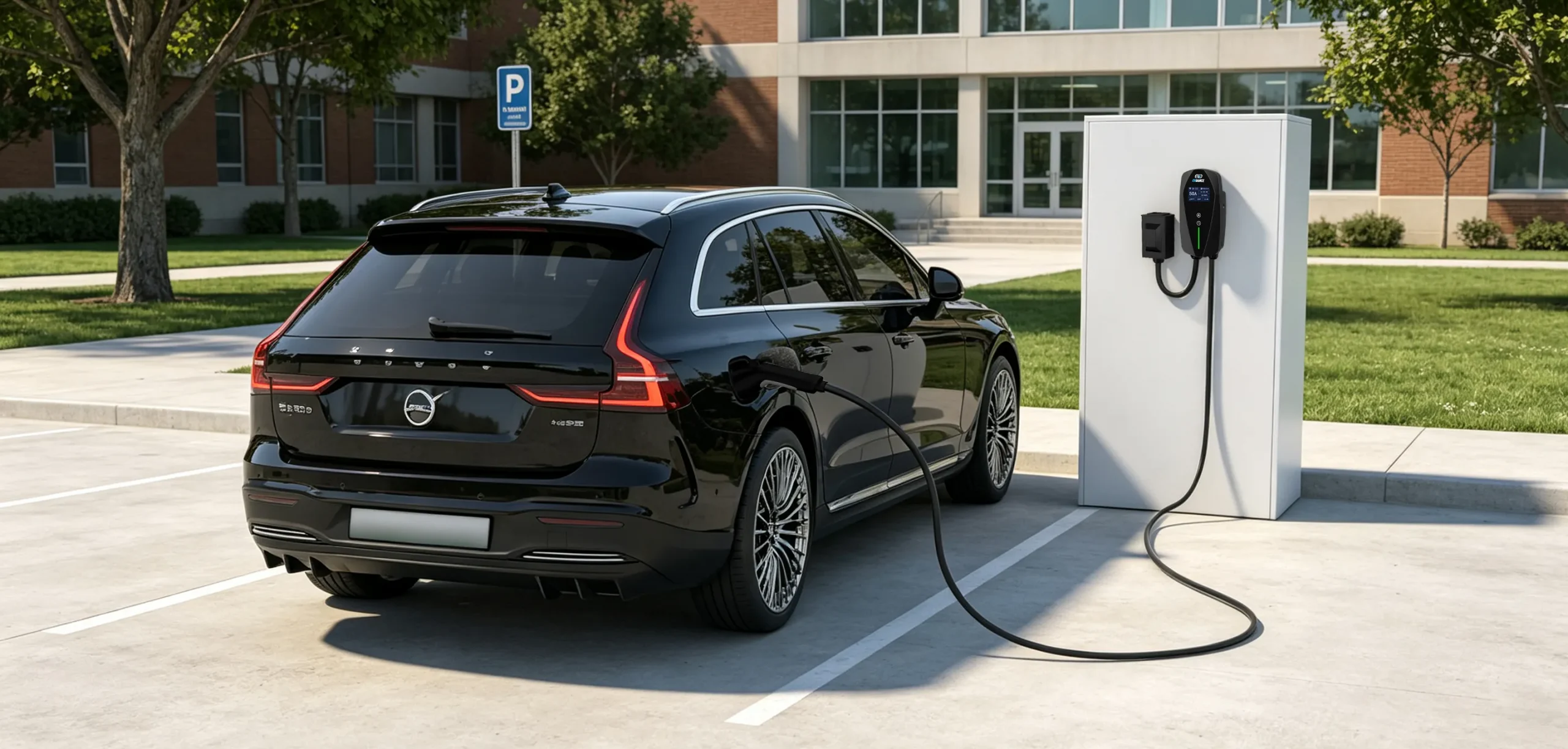
EVDANCE does not sell school bus chargers — bus hardware is matched to the fleet as a depot project. The yard’s other vehicles are a different matter: the EV-AC03201T dual-connector AC station (two Type 2 connectors, up to 43 kW shared at 22 kW per connector, OCPP 1.6J, RFID, IP54) charges the district’s cars, vans and support vehicles, within our commercial charging solutions.
Frequently Asked Questions
Do school buses use the same chargers as cars?
The classes overlap — Level 2 AC and DC serve both — but the specification does not. A bus needs far more energy per day than a car and accepts it at rates its documents state. Bus hardware is bought as a fleet project.
Is Level 2 fast enough for a school bus?
Often, yes — run the dwell maths first. Parked for long hours, with an onboard charger that accepts AC at a useful rate, Level 2 covers the day’s energy. It fails where the window is short or AC acceptance is low: the DC cases.
Do districts ever use faster DC charging?
Yes, as the exception: long routes, activity buses with evening duties, or yards where late returns break the overnight window. The charger is then a depot DC unit specified for the project — still not a highway stop, since the bus fills across hours, not minutes.
Related Reading
- Fleet Depot Charging: How to Size AC Chargers for Vans and Light Commercial Vehicles
- Level 1 vs Level 2 vs DC Fast Charging: A Practical Comparison
- How Do Commercial EV Charging Stations Work?
- Commercial EV Charger Maintenance Checklist

