
Construction sites charge electric machinery from the site’s own temporary electrical supply — the same supply that runs the cranes, cabins and tools. Machines plug in at charging points in the site compound, portable chargers work from provided industrial sockets, and a mobile charging unit covers machines that cannot reach either. The supply behind all three is designed, installed and signed off by the site’s electrical professionals, because a building site is a temporary installation, not a finished building.
Key Takeaways
- The temporary supply is a designed, signed-off installation — the site’s electrical professionals own every connection decision.
- The working pattern is the depot pattern: overnight dwell at the compound, top-ups as margin.
- Machine-side facts — inlet, rate, care — come from each machine maker’s documents, not the charger’s rating.

A Site Is a Temporary Installation
A finished building has permanent wiring sized once. A construction site has a temporary supply that is re-planned as phases change: the compound moves, the crane count changes, and charging arrives as one more load on a system that also feeds cabins, mixers and lighting. That is why site charging is never a do-it-yourself topic. The site’s electrical contractor or licensed electrician owns the design, the installation and the sign-off, and decides which sockets and points may be used for charging. Whether the grid connection needs upgrading for the site’s total demand is a project input settled with the utility early; it has lead time.
The Three Ways Machines Get Their Charge
| Source | How it works | It fits |
|---|---|---|
| Compound charging points | Fixed posts or cabinets installed at the site compound or plant yard, fed by the temporary supply | Excavators, loaders and dumpers that sleep on site and charge through the night dwell |
| Portable chargers on site sockets | A portable unit plugs into an industrial socket provided and confirmed for charging | Site vans, smaller plant, and workfaces that move as phases hand over |
| Mobile charging unit | A battery-carrying unit is brought to the machine and delivers a charge where no supply reaches | Remote corners of large sites, and early phases before the temporary supply is live |
Most sites end up with the first two. The compound points carry the routine; the portables follow the work. Our guide to sizing depot chargers for vans and light commercial vehicles works through the same dwell-and-count arithmetic a plant yard runs.
The Working Pattern: A Depot in Mud
Operationally, a site compound is a fleet depot with worse weather. Machines finish the shift, park in the compound, plug in, and charge through the overnight dwell; the planning question is the same one a depot asks — energy used per machine-day against the hours it is parked. Daytime top-ups happen where the work allows a machine to sit near a point during a break — a margin, not a plan. On the machine side, the maker’s documents govern: the inlet, the rate it accepts and its charging instructions are read from the manual, never assumed from the charger’s rating. Site conditions add one more discipline: dust, impact and standing water are the harsh end of outdoor duty, so the equipment’s stated IP rating and the maker’s care instructions govern, and a damaged cable or connector comes out of service, not tested by the next session. How commercial points work behind the fence is covered in how commercial EV charging stations work.
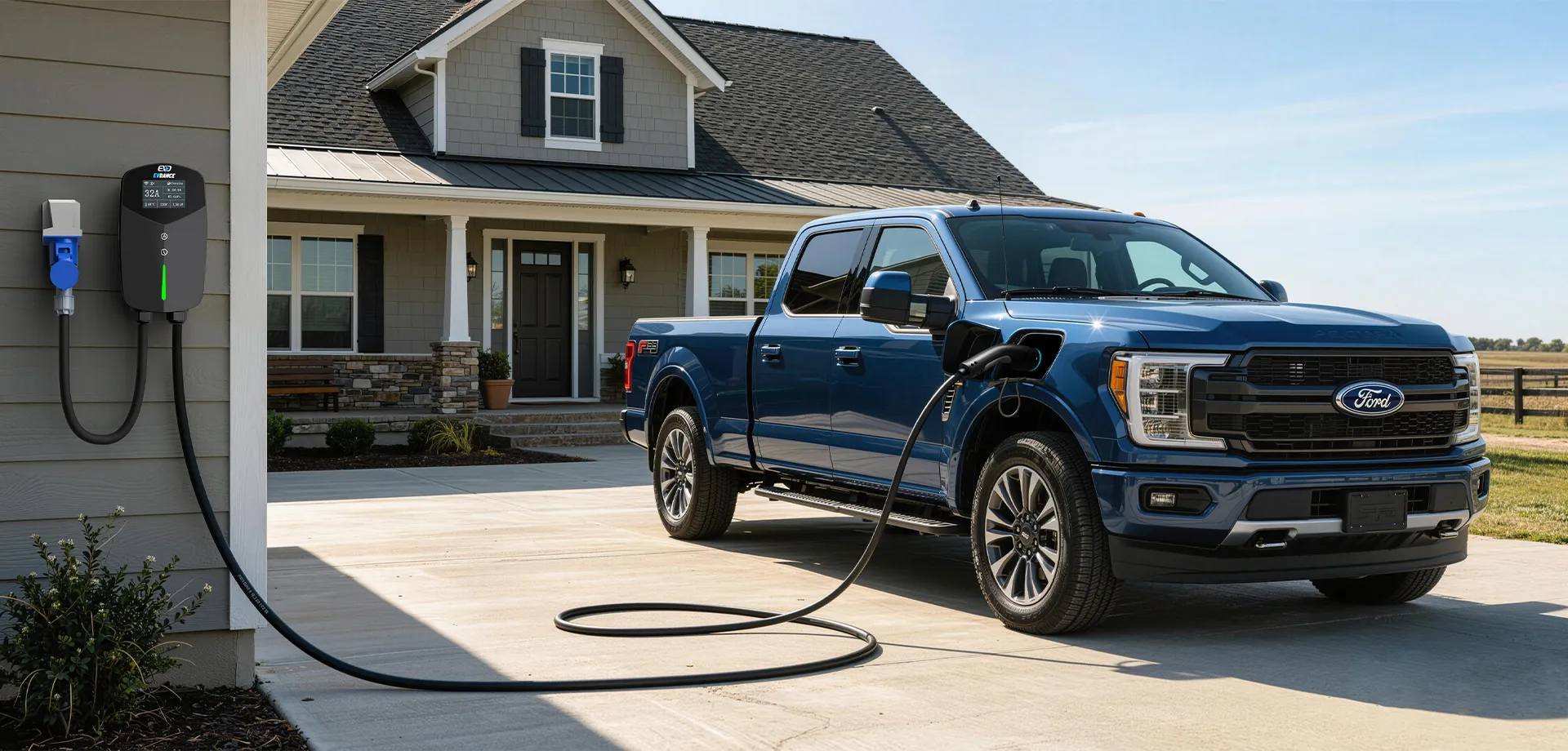
Socket-Fed Portables in This Picture
EVDANCE sells no site service and no machinery charger; what its portable range offers a site is the socket-fed shape. The EV-ACS3205PE is a 22 kW three-phase portable (32 A, CEE five-pin plug, Type 2, IP66), and the ACS1605PE is its 11 kW sibling for 16 A CEE sockets (16 A three-phase, Type 2, 7.6 m cable, IP66). On a site they serve electric vans and any equipment whose maker specifies a Type 2 AC inlet — plugged only into sockets provided for charging, and moved on when the phase ends. The wider site range is on our commercial charging page.
Frequently Asked Questions
Can machinery charge from any socket on site?
No. Only from a socket or point the site’s electrical contractor has provided and confirmed for charging. Site capacity is shared and assessed as a whole; a socket that fits is not automatically a charge point.
Who installs and approves charging on a construction site?
The site’s electrical professionals. A construction site supply is a temporary installation with its own design, permit and sign-off world; the contractor decides where charging connects.
What happens before the site’s supply is live?
Early phases typically charge at the plant yard or depot, or bring in a mobile charging unit, until the temporary supply is installed — a project decision made with the contractor.
Related Reading
- Fleet Depot Charging: How to Size AC Chargers for Vans and Light Commercial Vehicles
- How Do Commercial EV Charging Stations Work?
- How to Plan a Workplace EV Charging Program
- Level 1 vs Level 2 vs DC Fast Charging: A Practical Comparison

