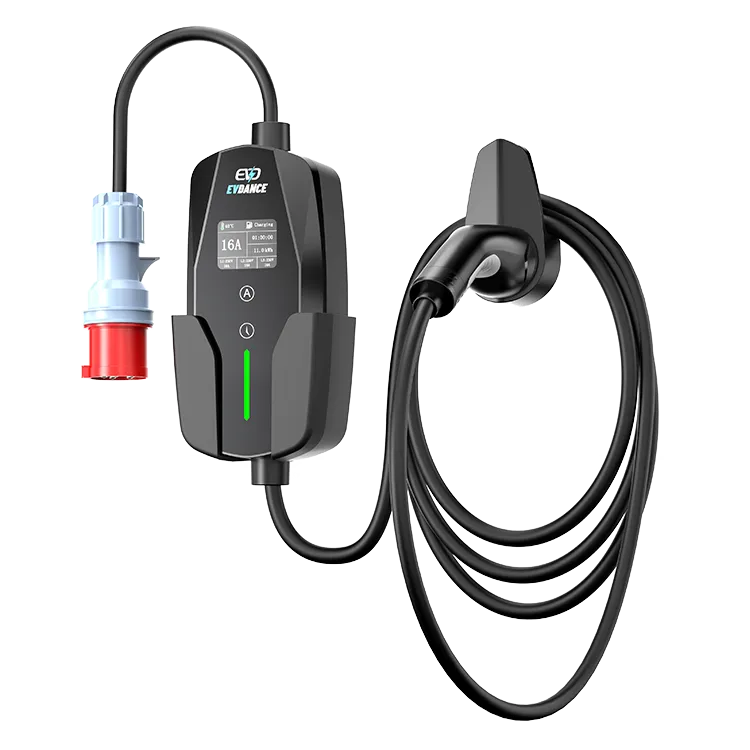
A recurring question we hear from portable EV charger owners is simple: “my charger’s cable doesn’t reach my parking spot — can I just plug it into an extension cord?” The answer, according to both the National Electrical Code and EVDANCE’s own safety team, is no — and this month that message became official company guidance rather than just a forum warning.
EVDANCE Issues a Formal Safety Advisory
On September 6, 2026, EVDANCE issued a safety advisory specifically warning EV owners against using standard household extension cords for EV charging. According to the advisory, ordinary 15-amp-rated cords sold at hardware stores are not built for the sustained, high-current loads that EV charging draws for hours at a time — undersized conductors can overheat and experience dangerous voltage drop under continuous load. EVDANCE’s recommendations include verifying that any cable’s amperage rating actually matches the charger’s output, using cables built with 8 AWG pure copper conductors for higher-current applications, and confirming connector compatibility (NACS or J1772) before use.
“Aftermarket EV charging hardware should be engineered around continuous-load requirements,” said EVDANCE CEO Daniel Cooper, rather than simply extending reach with a cable that wasn’t designed for it.

The Code Backs This Up
This isn’t just a manufacturer being cautious. Under the National Electrical Code’s Article 625, which governs electric vehicle charging systems, improvised extension cords are explicitly not an approved way to connect charging equipment to a vehicle. Per EC&M’s guide to NEC Article 625, Section 625.17 requires that the connection use a listed cord or cable — meaning the manufacturer-supplied cable that has been tested and listed to the relevant safety standard — not a substitute extension cord picked up separately. The code’s underlying concern is straightforward: an unlisted cord in the path of a high-current, hours-long charging session is a fire-risk scenario that proper equipment placement is specifically meant to avoid.
What This Means If Your Charger’s Cable Doesn’t Reach
If your portable charger’s cable is too short for your parking spot, the code-compliant fixes are to install the charging equipment closer to where the vehicle parks, or to use a charging accessory that is itself listed and rated for the purpose — such as a purpose-built EV charging extension cable — rather than a generic hardware-store extension cord. It’s a distinction that’s easy to miss but matters: not every cord that fits a NEMA outlet is rated to carry an EV’s charging current safely for hours on end.
Key Takeaways
- EVDANCE issued a formal safety advisory on September 6, 2026 against using standard household extension cords for EV charging.
- NEC Article 625, Section 625.17 requires a listed cord or cable for EV charging connections — not an improvised extension cord.
- Undersized conductors in ordinary extension cords can overheat and experience voltage drop under EV charging’s sustained current draw.
- If a charger’s cable doesn’t reach, the fix is proper equipment placement or a purpose-built, listed extension cable — not a generic cord.
Sources & Standards
- EVDANCE — Safety Advisory on EV Extension Cords (September 6, 2026)
- EC&M — Article 625: Electric Vehicle Charging Systems