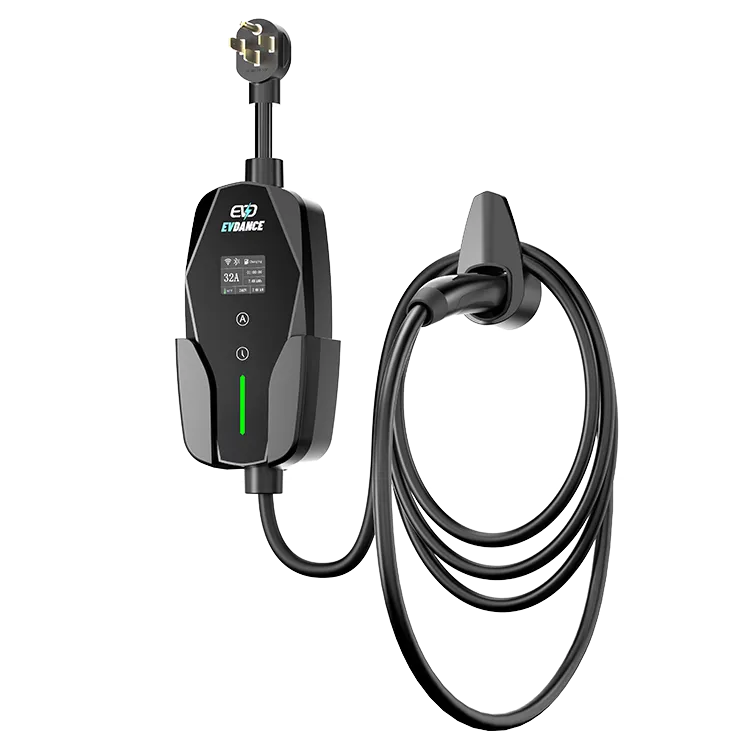
If there’s one power rating that keeps coming up as the practical sweet spot for home EV charging in 2026, it’s 7kW — whether that power comes from a hardwired wallbox or a 7kW portable EV charger. It’s not the fastest option on paper, but a combination of grid rules, electrical realities, and new hardware launches this year all point to the same number.
Why Regulators Treat 7kW as the Default
In the UK, 7kW has effectively become the baseline for home charger installations. According to Selectra’s guide to EV charger grid connection, a standard 7kW charger on a single-phase household supply typically only requires the installer to notify the Distribution Network Operator (DNO) — often after installation is already complete — rather than seeking prior approval. Prior approval only becomes necessary for larger 22kW three-phase installations, multiple chargers at one property, or areas the DNO has already flagged as electrically constrained. The guide adds a simple, practical point: charging overnight at 7kW fully charges most cars anyway, which is part of why higher power is often unnecessary for typical home use.
New 7kW-Class Hardware Is Launching Now
Hardware is following the same pattern. EVDANCE’s newly announced wall-mounted charger lineup includes a 32A model — which delivers roughly 7.6kW on a 240V circuit — sitting alongside its higher-power 40A (9.6kW) and 50A models, according to the company’s September 2026 product announcement. Offering a 7kW-class model alongside faster options reflects the same reality regulators have already priced in: most homes don’t need — or can’t easily support without an upgrade — anything faster for everyday overnight charging.
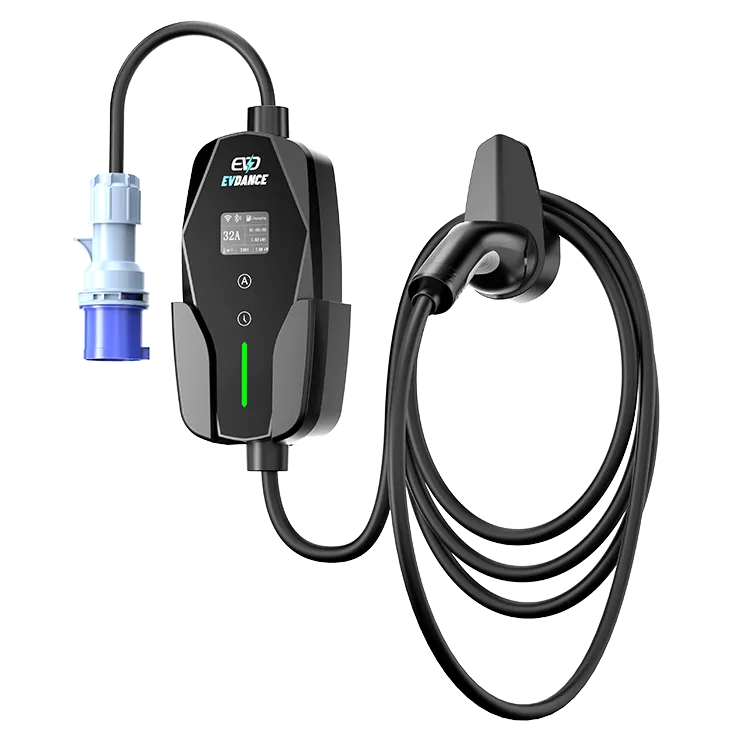
Why a 7kW Portable EV Charger Makes Sense Too
The same 7kW logic applies to portable units, not just hardwired wallboxes. A 7kW portable EV charger — a portable Level 2 charger with adjustable output that reaches around 30–32A on a 240V circuit — delivers that same roughly 7kW class of charging speed, without requiring permanent installation — useful for renters, multi-property owners, or anyone whose home wiring can support a 240V circuit but not a full wallbox installation. Per the U.S. Department of Energy’s Alternative Fuels Data Center, Level 2 charging in this range adds roughly 25 miles of range per hour — more than enough to fully recharge most daily commutes overnight.
Key Takeaways
- UK grid rules treat 7kW as the practical default for home charging, requiring only DNO notification rather than prior approval.
- New 2026 wallbox lineups, including EVDANCE’s, are launching 7kW-class (32A) models alongside faster options.
- A 7kW portable EV charger delivers the same charging speed as a 7kW wallbox without permanent installation.
- 7kW-class Level 2 charging adds roughly 25 miles of range per hour — enough for a full overnight charge in most cases.
Sources & Standards
- Selectra — EV Charger Grid Connection: DNO Approval, 7kW and Load Management
- GlobeNewswire — EVDANCE Unveils Affordable Smart EV Charger with Large Display and Premium Features
- U.S. Department of Energy, Alternative Fuels Data Center — Electric Vehicle Charging Stations