
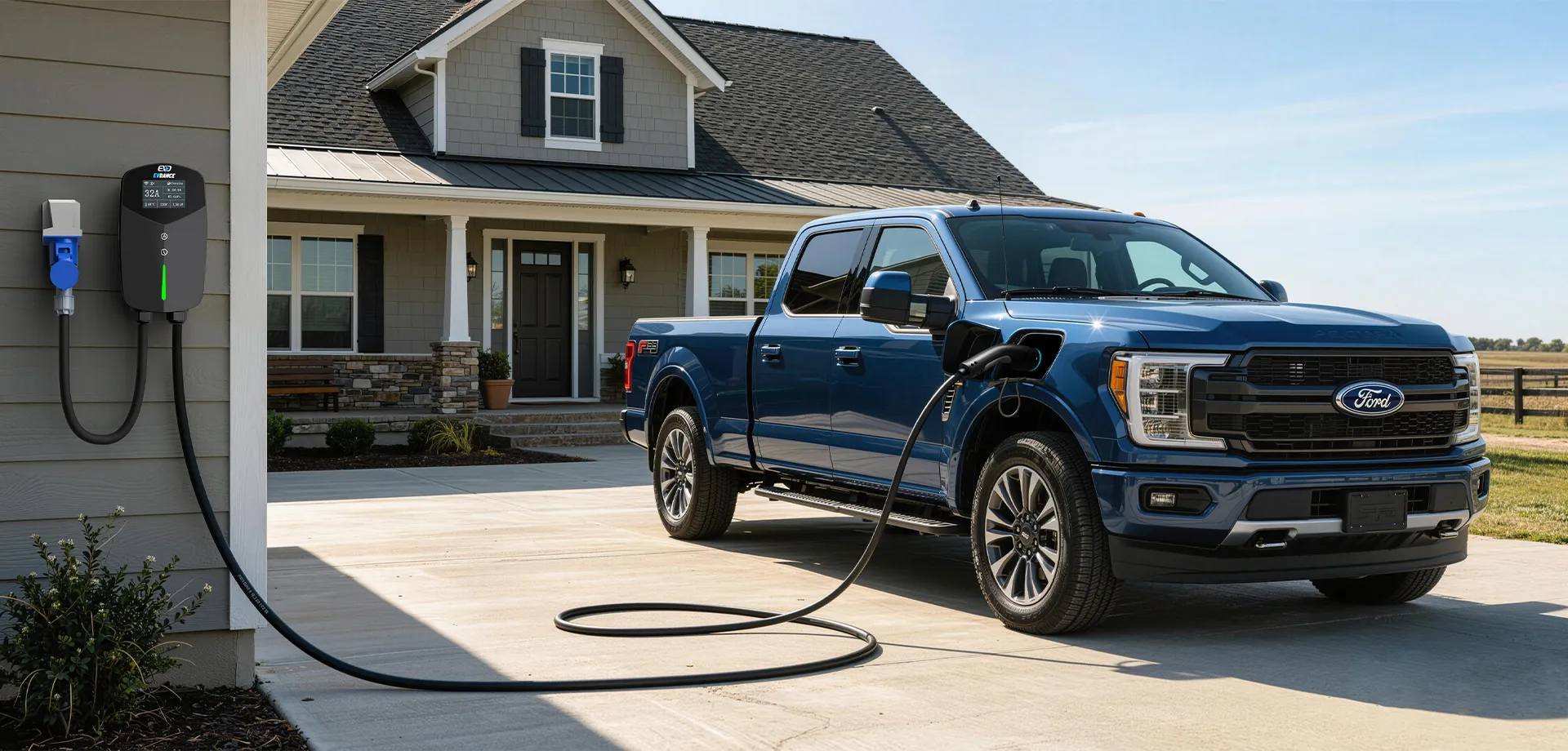
When drivers take fleet vehicles home, most fleets use one of three setups: the driver charges at home and is reimbursed for the measured energy, the company supplies a home charger and pays a flat allowance, or all charging stays at the depot and public stations. The setups that work share one feature: the energy is metered by the charger, not estimated from mileage, so neither side has to argue about the bill.
Key Takeaways
- Choose one model: measured reimbursement, company charger with an allowance, or depot-only charging.
- Metered session records prevent almost all disputes about home charging costs.
- Home energy usually costs more per kWh than depot energy; the saving is driver time, not electricity.
- Write down who pays for hardware, installation, and what happens when a driver leaves.
The Three Common Models
Fleets usually settle on one of these models, or a mix by driver group:
| Model | How energy is tracked | Who pays for the home charger |
|---|---|---|
| Reimbursed home charging | Charger or app session records in kWh | Company, driver, or split by policy |
| Company charger, flat allowance | Not tracked per session; allowance set in advance | Company |
| Depot and public charging only | Depot meters and network records | No home charger |
The first model is the most common for vans and cars that rarely visit a depot. It needs a charger that records each session, which is the same metering approach covered in our guide to sizing AC chargers for a fleet depot.
What Home Charging Actually Costs
The maths is simple, and worth doing before choosing a model. Take a van that uses about 40 kWh per working day, charged at home on 20 days a month. That is 800 kWh. At the U.S. average residential price of 18.31 cents per kWh, the energy costs about $146 a month. The same energy at a depot on the average commercial price of 14.53 cents per kWh costs about $116. Home charging is not automatically cheaper for the company; it trades a higher energy price against saved driver time and depot space. Our breakdown of what it costs to charge an electric car at home shows the same calculation from the driver’s side.
What a Workable Policy Covers
- Hardware: who buys the charger, and who pays a licensed electrician to install the circuit.
- Measurement: which records count as proof, and how often the driver submits them.
- Rate: the per-kWh rate or allowance, and when it is reviewed against electricity prices.
- Changes: what happens when a driver moves house, changes role, or leaves the company.
- Safety: only listed, certified equipment, installed to code; no extension cords or adapters as a permanent setup.
- Tax treatment: reimbursement and benefit rules differ by country and driver status, so confirm the treatment with a tax adviser rather than assuming.
Scheduling matters too. A take-home vehicle that charges on a timer overnight is the home version of the approach in our guide to smart charging and time-of-use tariffs.
Chargers That Suit Take-Home Fleets
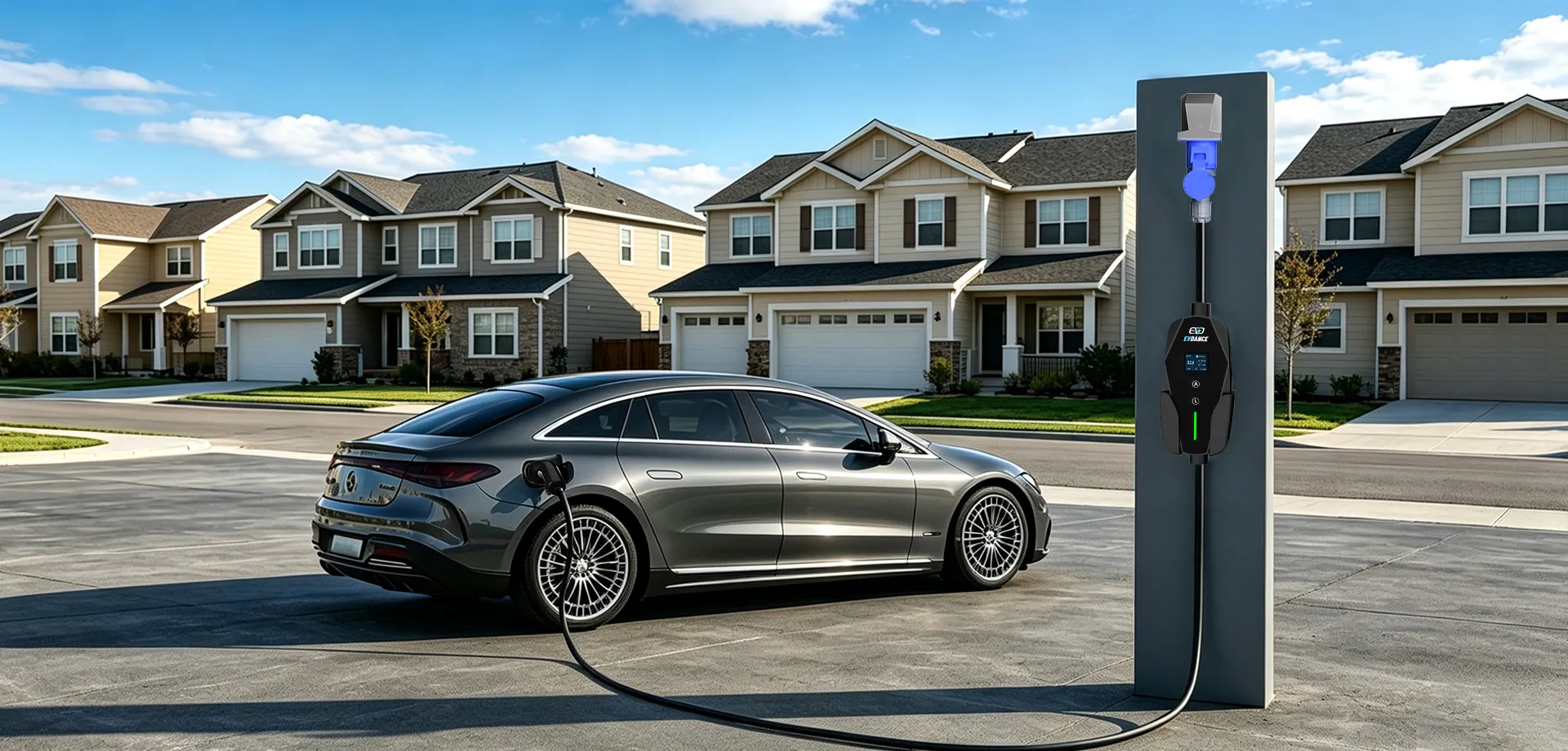
A portable Level 2 unit is often the practical choice: it plugs into a 240 V outlet, can move with the driver, and needs no fixed installation at the property. The EV-ACS4005T is a 40 A NACS portable charger with adjustable current and a 25 or 28 ft cable. For J1772 vehicles, the EV-AC04001U offers the same 9.6 kW from a NEMA 14-50 plug. Both are IP66 rated for outdoor use.
Frequently Asked Questions
Do companies usually pay for the driver’s home charger?
Policies vary. Many fleets pay for the charger and installation because the equipment is a business tool, then recover it if the driver leaves. Others reimburse energy only. Put the arrangement in writing before the first installation.
How does a driver prove how much energy they used?
Through the charger’s session records or app reports, which log kWh per charge. A charger without session records forces estimates, which is where disputes start.
Is home charging or depot charging better for a fleet?
Depot charging usually wins on energy price and control; home charging wins on driver time and depot space. Many fleets use both, as in the phased approach described in our workplace charging program guide.
Related Reading
- Fleet Depot Charging: How to Size AC Chargers for Vans and Light Commercial Vehicles
- How to Plan a Workplace EV Charging Program
- How Much Does It Cost to Charge an Electric Car at Home?
- Smart Charging and Time-of-Use Tariffs: How Scheduling Cuts EV Charging Costs

