
No. A portable EV charger has no service interval like a car does — there is nothing inside for an owner to adjust, top up or replace on a schedule. What it needs instead is regular wear inspection, because a portable unit is plugged and unplugged daily, coiled, carried in a trunk and used on outlets you do not control. A five-minute check catches the failures that actually happen.
Key Takeaways
- Portable chargers have no service schedule; they need wear inspection instead.
- Check the plug pins, cable flex points, control box and connector monthly — five minutes is enough.
- Heat at the plug is the key warning sign: stop and find which side is failing.
- Never open the control box or repair a cable; defects are a manufacturer or electrician matter.
Why a Portable Charger Wears Differently
A portable charger is handled at both ends of every session, and each part wears in a predictable place:
| Wear point | What happens | What to look for |
|---|---|---|
| Wall plug pins | Heat cycles and repeated insertion loosen or scorch contacts | Discolouration, pitting, a plug that feels loose in the outlet |
| Cable flex points | Bending concentrates at the control box and connector ends | Cracks, kinks, or a jacket worn soft or shiny |
| In-cable control box | Dropped on hard ground, knocked about in the trunk, seals age | Cracked housing, moisture under a display cover, fault lights at idle |
| Car connector | Grit, bent pins and a tired latch from daily use | Pins out of line, a latch that no longer clicks shut |
| The outlet itself | A worn receptacle grips the plug weakly and runs hot | Scorch marks, a plug that sags or feels hot after charging |
Heat is the warning sign that matters most. A plug or connector that is hot to the touch after a session — rather than slightly warm — is telling you a contact is failing. Stop using that combination until you know which side is at fault — our guide on how to test an EV charger shows how to narrow it down.

The Five-Minute Check
Run through this list once a month, and again before any trip where the portable is your only charger:
- Look at both ends: pins straight and clean, no black or green deposits. Clean the car connector the dry way in our connector cleaning guide.
- Flex the cable slowly along its full length, especially near the control box. Stop if you find cuts or a spot that bends oddly.
- Inspect the control box for cracks, and confirm its indicators behave as the manual describes.
- Use the test button if your unit has one for its ground-fault protection, and confirm it trips and resets as the manual directs.
- Do one short supervised charge. Normal rate, normal lights, no hot smell from the plug or the box.
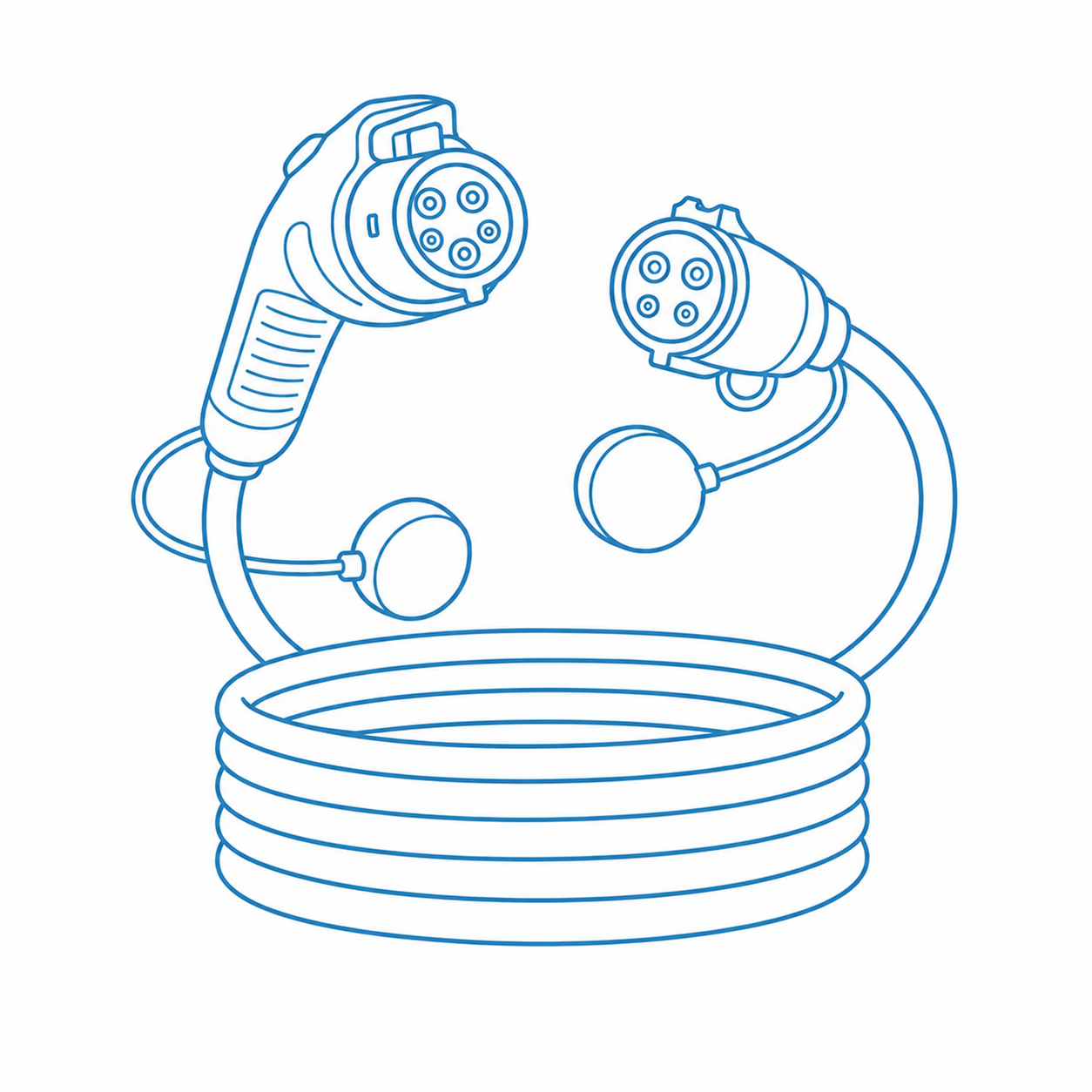
What You Can Do — and What You Must Not
You can clean, inspect and test. You cannot open, repair or modify: a portable charger is sealed, with no user-serviceable parts, and a damaged cable is replaced by the manufacturer, never taped or spliced — our article on how long charging cables last explains why. A damaged jacket also defeats the unit’s IP66 sealing and ground-fault protection. If a check turns up damage, heat marks or repeated faults, the unit goes back to the manufacturer, or an electrician checks the outlet — not back in the trunk.
Sealed Units, Built for the Trunk
Because there is nothing to service inside, what you are buying in a portable charger is sealing and strain relief. The EV-ACS3210T is a 32 A NACS portable charger (about 7.7 kW, NEMA 14-50P, adjustable from 10 to 32 A in six steps, IP66), and the EV-ACS4005T is the 40 A version (9.6 kW, adjustable 16/24/32/40 A, IP66, 25 or 28 ft cable). EVDANCE chargers carry a 3-year standard warranty, so if a check finds a defect, contact the manufacturer before paying for a repair.
Frequently Asked Questions
Does a portable EV charger need an annual professional service?
No manufacturer schedule applies to most portable units. An electrician visit makes sense for the fixed side — a hot or worn outlet, a tripping breaker — or when the unit itself shows damage or repeated faults.
The plug gets warm while charging. Is that normal?
Slight warmth at the plug or control box is normal under load. Hot to the touch, a burning smell, or marks appearing on the outlet mean a poor contact. Stop using that outlet and charger combination and have both checked before charging again.
How long should a portable charger last?
The cable and connectors wear first, so life depends on handling more than age. Careful coiling and keeping the connector capped extend it; our article on how long home EV chargers last covers what wears out across charger types.
Related Reading
- How to Clean an EV Charger Connector
- How Long Do EV Charging Cables Last, and Can They Be Repaired?
- How to Test an EV Charger
- Commercial EV Charger Maintenance Checklist

