
Opportunity charging means plugging in for a short top-up whenever a vehicle stops anyway — between delivery rounds or during a driver’s break — instead of waiting for one long session that fills the battery. It suits vehicles that return to base or pass the same chargers several times a day. The battery is topped up little and often, so no stop has to deliver a full charge.
Key Takeaways
- Opportunity charging tops up at every natural stop instead of relying on one long session.
- It is a fleet pattern: delivery vans, taxis, pool cars and yard vehicles that return to base.
- Level 2 posts at dwell points cover most cases; compact DC is for minute-long turnarounds.
- The habit matters as much as the hardware — drivers plug in every time they park.
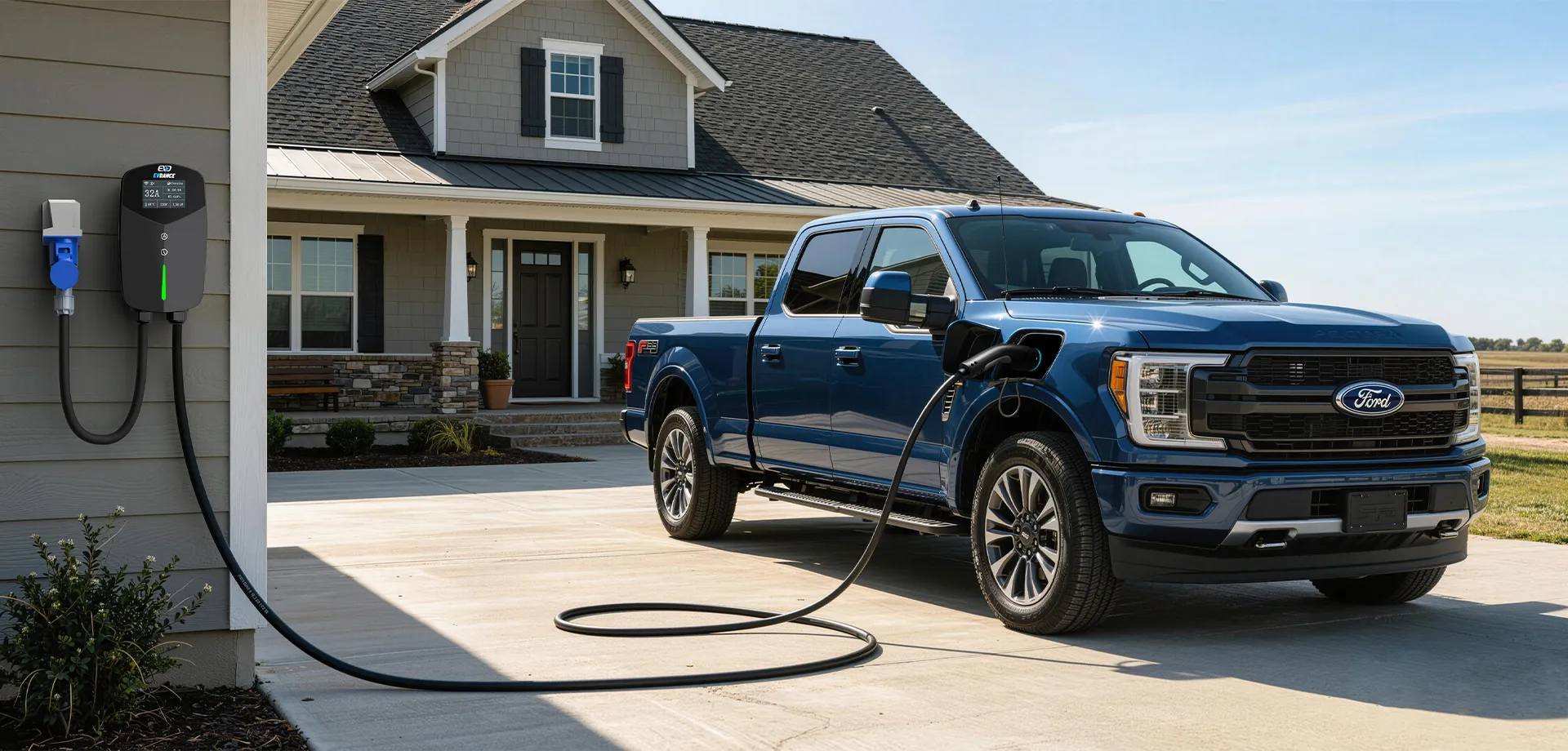
Where Opportunity Charging Happens
The pattern fits vehicles with a working day built out of short trips and predictable pauses:
- Delivery and service vans that return to a depot between rounds or park up at midday.
- Taxis and private-hire cars that wait at a base or a rank between fares.
- Pool cars and shared fleet vehicles that sit at the office between bookings.
- Yard vehicles that park in the same bay whenever idle.
A private car parked at home overnight does not need this pattern; one long session covers it. Opportunity charging exists because working vehicles are rarely parked for eight spare hours mid-day. The chargers live where the vehicles already stop, and our guide to sizing depot chargers for vans and light commercial vehicles covers how many posts a depot actually needs.
How It Differs From One Long Charge
| Opportunity charging | Overnight charging | DC fast-charging stop | |
|---|---|---|---|
| Session pattern | Short top-ups, repeated through the day | One long session while parked for hours | One deliberate stop, usually brief |
| Battery pattern | Topped up in the middle range, rarely filled | Filled ready for the next morning | Raised quickly, often to about 80% |
| Typical equipment | Level 2 posts at the base, sometimes compact DC | Home or workplace Level 2 | Public DC chargers |
| Goal | Keep the vehicle available all day | Start each day full | Get back on the road |
The arithmetic is forgiving: U.S. DOT figures put Level 2 at 7–19 kW, adding roughly 10–20 miles of range per hour, so a half-hour dwell returns a useful margin. Where a vehicle stops for only minutes, compact DC does the same job faster; the Level 1, Level 2 and DC fast comparison sets out the speeds.

What a Site Needs to Run It
- Chargers at the dwell points. Start with the bays vehicles use most; you do not need a post at every stop, because vehicles rotate through them.
- Enough electrical capacity. Charging is a continuous load, so circuits are sized at 125% of the charger’s current under the National Electrical Code; a licensed electrician should confirm your supply before posts go in.
- A plug-in habit. The system only works if drivers plug in every time they park, not only when low.
- Access control where posts are shared. RFID or app authorisation keeps sessions assigned to the right vehicle.
Is Topping Up Little and Often Hard on the Battery?
Opportunity charging works in the middle of the battery’s range, in shallow cycles, rather than repeated swings from full to empty. The power level matters more than the pattern: Level 2 top-ups at a depot are a gentle load, while several high-power DC top-ups a day are a different proposition. Our guide to whether DC fast charging degrades the battery covers what is known, and fleet operators should follow the vehicle maker’s guidance for intensive use.
Chargers Built for Stop-and-Top-Up Sites
The EVDANCE EV-AC03201T dual-connector AC station serves two vehicles at once, with up to 43 kW shared (22 kW per connector), OCPP 1.6J and RFID access — a fit for depot bays. Where turnaround is measured in minutes, the EVDANCE EV-RHDC30K-L compact DC fast charger delivers 22 kW DC from a small cabinet. See the commercial charging solutions page for the wider site range.
Frequently Asked Questions
Is opportunity charging the same as destination charging?
No. Destination charging is one session while a car is parked for hours at a hotel or office. Opportunity charging is repeated short top-ups fitted around a working vehicle’s stops.
Does a fleet need DC fast chargers for opportunity charging?
Usually not. Level 2 posts where vehicles already dwell cover most duty patterns. Compact DC earns its place only where a vehicle stops for minutes and still needs a real top-up.
Can opportunity charging work for a car at home?
It can, but it solves a problem home drivers rarely have: if the car is parked all night, one scheduled session is simpler and usually cheaper.
Related Reading
- Fleet Depot Charging: How to Size AC Chargers for Vans and Light Commercial Vehicles
- Level 1 vs Level 2 vs DC Fast Charging: A Practical Comparison
- How to Plan a Workplace EV Charging Program
- How Do Commercial EV Charging Stations Work?

