
UL 2252 is the UL safety standard written specifically for EV charging adapters — the short connectors that let a car use a charger built around a different plug. It sits alongside UL 2251, which covers the plugs and couplers themselves, and UL 2594, which covers the charging equipment. An adapter certified to UL 2252 has been examined and tested by a recognised laboratory as a high-current electrical joint, not treated as a simple accessory.
Key Takeaways
- UL 2252 is the safety standard for EV charging adapters, separate from the plug standard (UL 2251) and the charger standard (UL 2594).
- Adapters earn their own standard because they add a separable, high-current joint to the charging path.
- Certification is by an OSHA-recognised testing laboratory, and it certifies the product — it does not replace automaker approval for DC use.
- Buy on three checks: recognised listing, ratings that cover your setup, and maker approval where DC is involved.
Why Adapters Get a Standard of Their Own
An adapter adds an extra separable joint into the charging path. Every joint is a place where contact resistance, heating and mechanical wear can appear, and charging currents leave little margin for any of the three. AC adapters carry the currents of home and destination charging; DC adapters work at the highest currents in the system — EVDANCE’s own DC adapters are rated up to 500 A. A loose, undersized or poorly latched joint at that level is a burn and failure risk, so the adapter is standardised and tested as part of the charging system rather than left as an unregulated accessory. Our practical guide to whether EV charging adapters are safe covers the buying checks; this article covers the standard behind them.
The UL Family Around a Charging Session
| Standard | What it covers |
|---|---|
| UL 2251 | The plugs, receptacles and couplers themselves — the connector hardware on the cable and in the car. |
| UL 2252 | Adapters used with EV couplers — the in-between devices that join one standard’s plug to another standard’s inlet. |
| UL 2594 | The charging equipment (the EVSE) that supplies the power. |
| UL 2231 | Personnel-protection systems built into the charging circuit. |
Each layer of a session — supply equipment, connector, adapter, protection — is standardised separately, because each fails in its own way and is tested accordingly.
What Certification Under UL 2252 Involves
The standard addresses the adapter as a product: its electrical ratings, contact and housing construction, temperature rise when carrying its rated current, mechanical strength and latching, and the markings that state what it may be used for. Certification is not self-declared. It is granted by a Nationally Recognized Testing Laboratory under OSHA’s programme, after examination and testing of the product and its production — the same listing system described in our explainer on how UL and ETL listing works.
One boundary matters: listing under UL 2252 certifies the adapter as a product. It does not decide which adapters a particular car may use at a DC fast charger. That is the vehicle maker’s call, and for DC charging only automaker-approved adapters should be used — a point the adapter safety guide above returns to. Standards certification and maker approval are two separate gates, and a DC adapter needs both.
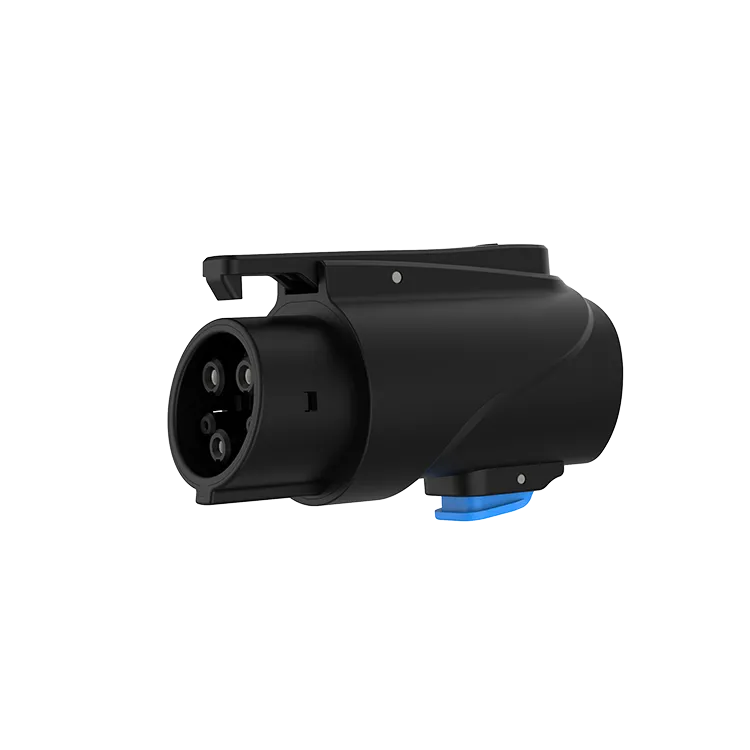
EVDANCE Adapters
EVDANCE adapters are built to the ratings on their product pages: the JT02 NACS-to-J1772 adapter for AC charging, up to 80 A, IP65; the JT08 NACS-to-CCS1 DC adapter, up to 500 A and 1000 V, IP66, for use only where the automaker approves it; and the JT09 NACS-to-CCS1 DC adapter with handle, up to 500 A, IP66. Whatever the brand, the checks are the same: a recognised listing, ratings that meet or exceed your charging setup, and — for DC — your car maker’s approval of that model.
Frequently Asked Questions
Is UL 2252 the same as UL 2251?
No. UL 2251 covers the plugs and couplers; UL 2252 covers the adapters used with them. An adapter and the connector it mimics are different products and are certified under different standards.
Does a UL 2252 listing mean my car maker approves the adapter?
No. Listing certifies the adapter’s safety as a product. Automaker approval is a separate decision about which adapters a specific vehicle may use, and it is the deciding word for DC fast charging.
Can I use an AC adapter at a DC fast charger if the plug fits?
No. AC and DC adapters are different products, rated and certified for different duties. Never use an AC-only adapter on a DC fast charger, and never stack two adapters together.
Related Reading
- Are EV Charging Adapters Safe?
- UL and ETL Listing for EV Chargers: How NRTL Certification Works
- EV Charger Certifications Explained: CE, UKCA, UL, ETL, CB
- Is the Tesla Charger NACS? NACS, J3400 and Adapters Explained

