
There is no honest answer to “which home charger is the most reliable”, because no independent body publishes failure rates for home chargers. What you can judge before buying is the set of design traits that trouble-free years are made of: a real safety listing, sealing matched to where the charger will live, a well-built cable and connector, and a maker who still answers the phone in year four. Reliability is checked on the spec sheet and in the support policy, not in a ranking.
Key Takeaways
- No failure-rate data exists to crown a “most reliable” home charger — treat rankings with suspicion.
- Check the safety listing first, then sealing, cable build, current headroom and software support.
- Warranty length and replaceable wear parts decide how a charger ages after year three.
- EVDANCE chargers carry a 3-year standard warranty, with IP ratings and listings published per model.
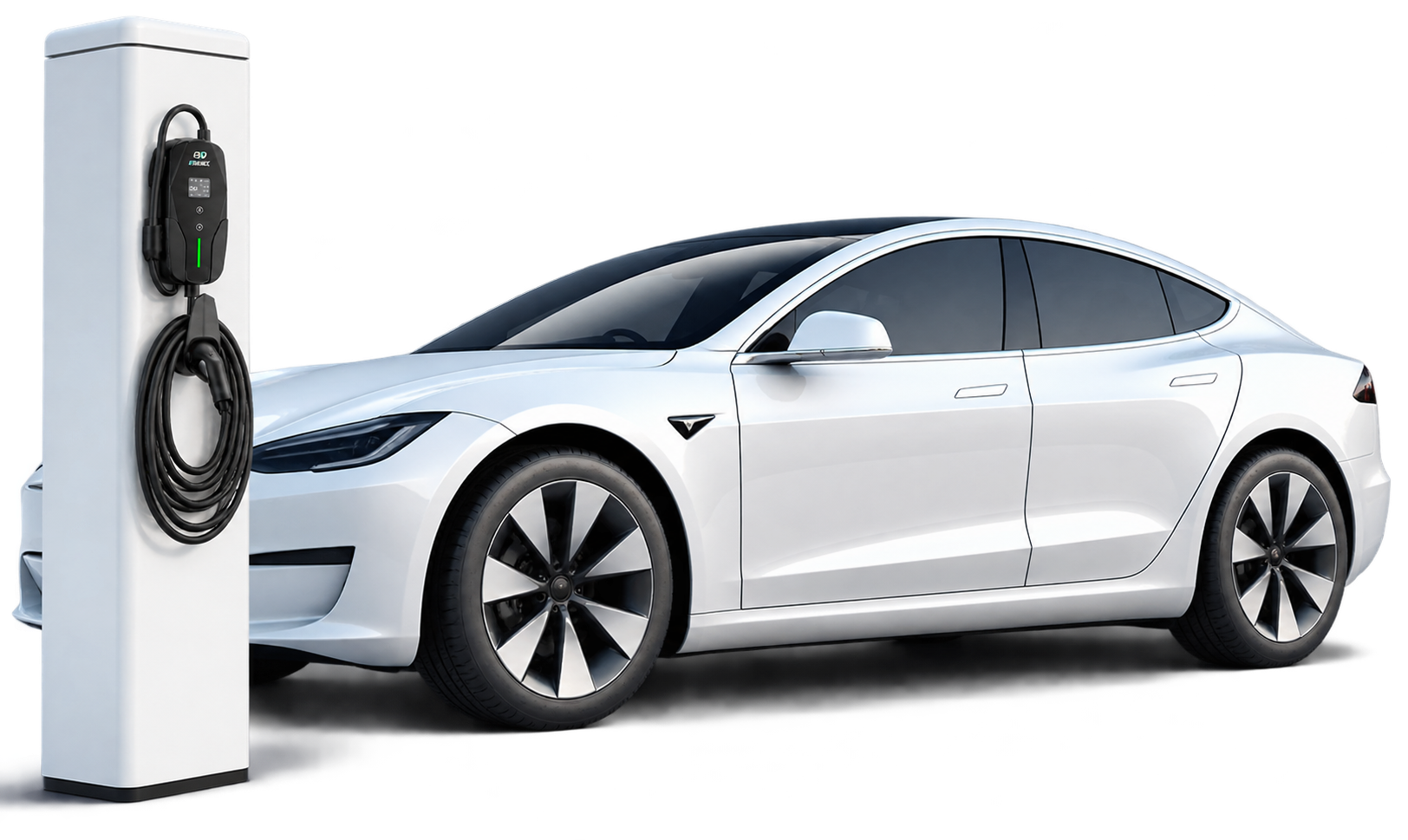
Why No “Most Reliable” Ranking Exists
Unlike cars, home chargers have no public reliability reporting. Makers do not publish return rates or failure statistics, and reviewers test a unit for weeks, not the decade of daily plugging a home charger is expected to survive. A charger that tops a “most reliable” list is usually just the one with the best marketing or the longest feature list.
That does not leave you guessing. The failures that end a charger’s useful life are predictable — water ingress, heat stress, worn connectors, dead electronics after a surge — and each maps to something you can check before purchase. How long the parts typically last is covered in our guide to how long home EV chargers last; this article is about judging the unit itself before it goes on your wall.
The Checks That Predict Trouble-Free Years
| Check | What to look for | Why it matters |
|---|---|---|
| Safety listing | A mark from an OSHA-recognised testing laboratory (NRTL), such as ETL or UL, plus FCC/CE as applicable | An independent lab has verified the design, not just the maker |
| Sealing | An IP rating suited to the mounting place — outdoor and dusty garages need more than an indoor rating | Water and dust ingress are leading causes of electronic failure |
| Cable and connector | Thick, flexible cable, solid strain relief, a latch that clicks positively, a holster included | The parts you handle daily wear first |
| Current headroom | Adjustable current settings, so the charger can run below its maximum | Running electronics below their limit reduces heat stress |
| Software support | Firmware updates and a maintained app | Keeps the charger compatible as cars and networks change |
| Warranty and parts | Warranty length, and whether cables and connectors are replaceable parts; compare terms in our guide to which EV charger has the best warranty | A fixable charger with support outlives a sealed one |
Two checks deserve emphasis. First, the listing: a charger without an NRTL mark has not been through independent electrical-safety testing, and no other feature compensates for that. Second, sealing: IP ratings are explained for drivers in our guide to whether portable EV chargers are waterproof — match the rating to the worst weather and dust the unit will actually see, not the best.
Reliability, Stated Plainly: EVDANCE
EVDANCE is a Shenzhen charger manufacturer founded in 2011, exporting to more than 30 countries, and its chargers carry a 3-year standard warranty. Judged by the checks above: the EV-ACT5006T 48A Level 2 wall charger is ETL, FCC and CE listed with an IP65/IP66 enclosure, hard-wired or NEMA 14-50P. The EV-ACS4005T 40A NACS portable charger is IP66 with adjustable current from 16 to 40 A, so it can be run below its maximum. We publish the ratings and the warranty term; we do not publish a reliability ranking, for the reasons above.

Frequently Asked Questions
Does a longer warranty mean a more reliable charger?
Not necessarily. Warranty length is a pricing and support decision as much as an engineering one. Treat it as one check among several: a listed, well-sealed charger with a shorter warranty is usually a safer buy than an unlisted unit with a long one.
Are wall-mounted chargers more reliable than portable ones?
Neither type is automatically better. Wall units avoid daily plugging at the outlet, while portables avoid permanent exposure if stored indoors. The listing, sealing and cable build matter more than the format.
What usually fails first on a home charger?
The cable, connector latch and wall plug wear before the electronics. That is why those parts — and whether they can be replaced — belong on your checklist; our guide to how long EV charging cables last covers their lifespan.
Related Reading
- How Long Do Home EV Chargers Last?
- Which EV Charger Has the Best Warranty?
- How Long Do EV Charging Cables Last, and Can They Be Repaired?
- Are Portable EV Chargers Waterproof? IP Ratings Explained for Drivers
Sources & Standards
- OSHA — Nationally Recognized Testing Laboratory (NRTL) Program
- ENERGY STAR — Electric Vehicle Chargers
Read next: Best Home EV Charger Checklist

