
For the right driving pattern, yes. If your car sits at work for a full shift most weekdays and your employer offers Level 2 charging you can get onto, workplace charging can carry a normal commute week on its own. What the plan needs is reliable access, not just a charger on site — plus a public fallback for holidays, sick days and the week you change jobs.
Key Takeaways
- Workplace charging can be your only charging if access is reliable, not just available in theory.
- Run the sum with your own miles and parked hours against the Level 2 band.
- Leave, job changes and busy bays are the known weak points; keep a buffer and a fallback.
- Shared-post etiquette is part of what keeps the plan working.
The Arithmetic of a Parked Workday
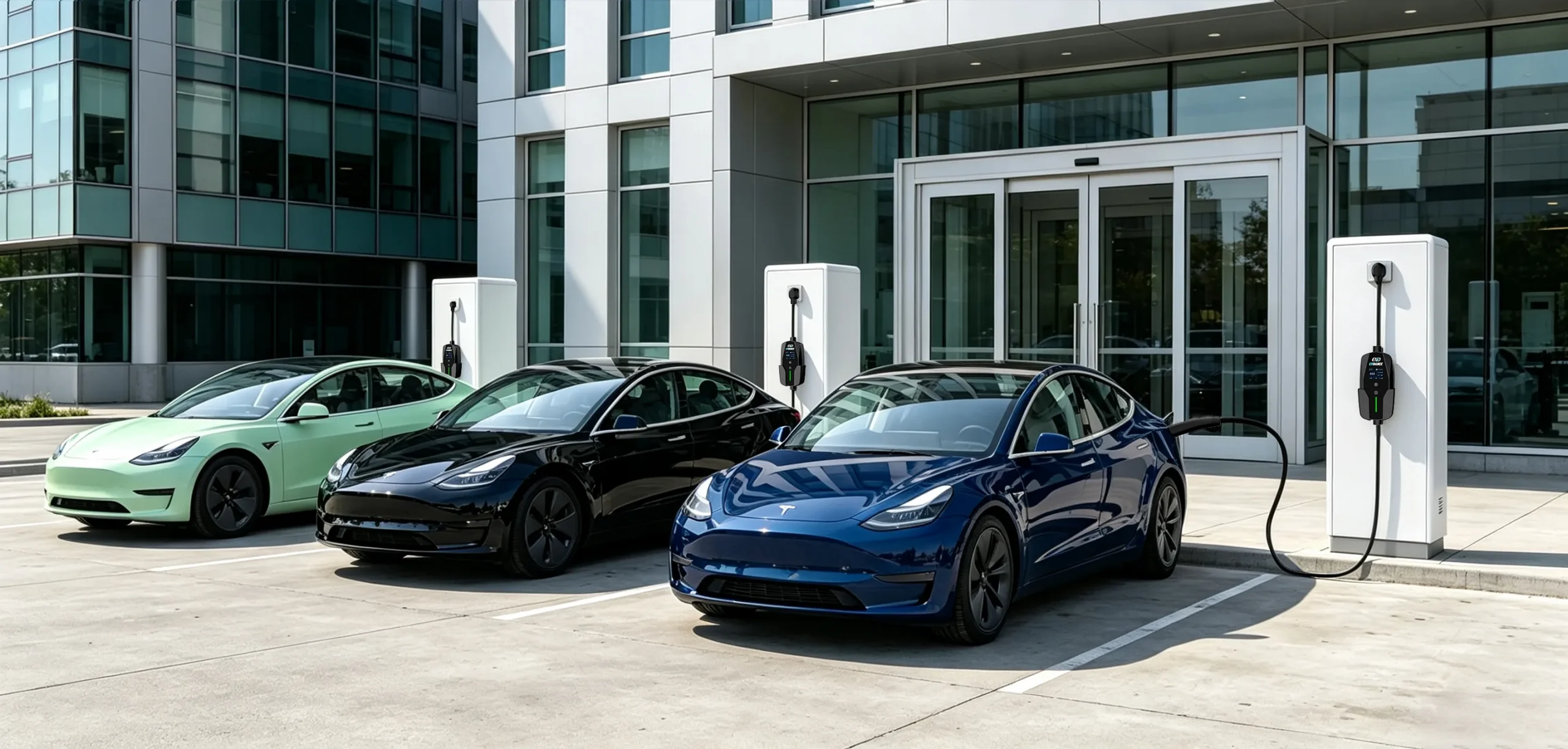
The U.S. Department of Transportation puts Level 2 charging at 7–19 kW, adding roughly 10–20 miles of range per hour. A car parked for a full workday therefore takes on far more than a day of commuting usually spends. Run your own version of the sum before you rely on it: your round-trip miles, against the hours your car actually sits at work, at the speeds in the DOT’s charger speed guide. As an illustration only: a car parked for eight hours at the low end of that band takes on roughly 80 miles of range, against, say, a 40-mile round trip. Replace both numbers with your own; if your figures still clear the week with room to spare, the pattern can work.
What Has to Be True
| Condition | How to check it before you rely on it |
|---|---|
| Chargers exist and staff may use them | Ask facilities or HR; the employer’s side of the setup is covered in our workplace charging programme guide |
| You can get onto one most days | Watch the bays for a week; ask colleagues who drive EVs how the queue works |
| Your car is parked long enough | Compare your shift length with the Level 2 speeds above, not with the charger’s headline power |
| The price works for you | The employer sets it — free, at cost or priced. Confirm the actual figure before building your budget on it |
| A fallback exists | Know one public charger near home you could use in a holiday week; find it on the DOE Station Locator |
Where the Plan Breaks
Every weakness of workplace-only charging has the same shape: energy you counted on is not there. Annual leave and work trips remove whole weeks of charging. A job change or a site move removes it permanently — the charger belongs to the employer, not to you. Contention grows as more colleagues buy EVs and the same bays serve more cars. A charger down for maintenance can strand a routine built on a single post. None of these kills the plan, but together they argue for two habits: keep a comfortable buffer in the battery instead of arriving empty each Monday, and know your fallback charger before you need it.
Etiquette That Keeps You Welcome
A shared workplace post is a shared resource, and routines survive on goodwill. Follow the site’s rules on who may charge and for how long. If bays are busy, move the car when it has taken what it needs rather than treating the post as a private one. Leave contact details if your site runs an informal queue.

For Employers Reading This
If your staff are asking whether work charging could be their only charging, the honest answer your scheme can give them is reliable daytime access. Shared bays built for dwell time — a dual-connector AC station such as the EVDANCE EV-AC03201T, with two Type 2 connectors sharing up to 43 kW, OCPP 1.6J and RFID access — are designed for exactly this pattern. See the commercial charging solutions page for the workplace range.
Frequently Asked Questions
What if my employer charges for workplace charging?
The price is the employer’s to set, and schemes differ widely. Before relying on it, compare the actual figure against your weekly miles. The plan can still work at a fair price; it fails on surprises, not cost alone.
What covers weekends and holidays?
The buffer does, most weeks. A car that ends Friday well charged covers normal weekend use, and a holiday week is what the public fallback near home is for. Long trips are a separate pattern: plan them around public fast charging.
Should I still get a home charger if my housing changes?
Probably, yes. Workplace-only charging is a plan built on your current job and commute. If you move somewhere a charger can be fitted, the options for houses, rentals and condos in our guide to having an EV charger at home become worth a fresh look.
Related Reading
- How to Plan a Workplace EV Charging Program
- How to Charge an EV When You Live in an Apartment
- Apartment and Condo EV Charging: Solutions for Shared Parking
- Can I Have an Electric Car Charger at Home? Houses, Rentals and Condos

