
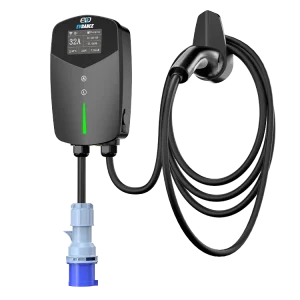
How Does a Type B RCD Work?
A Type B RCD combines a summation transformer for AC faults with a DC-sensitive sensing stage, so it can trip on the smooth DC leakage a standard RCD cannot see.
A Type B RCD combines a summation transformer for AC faults with a DC-sensitive sensing stage, so it can trip on the smooth DC leakage a standard RCD cannot see.
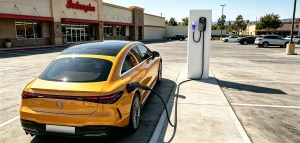
Prepare at home – apps, payment, connector – then at the bay: park, read the screen, start the session, plug in and confirm on the dashboard that charging began.
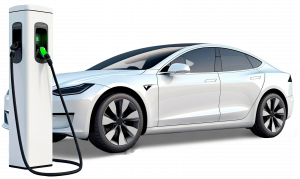
In an outage, V2H isolates the home from the grid, inverts the car’s DC power to AC for selected circuits, and stops at the reserve level the owner set.
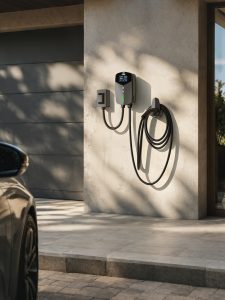
A 14-50 receptacle is the fixed wall socket a NEMA 14-50P plug mates with: a 50 A, 125/250 V device wired to its own circuit, and the point where a plug-in EV charger meets the house.
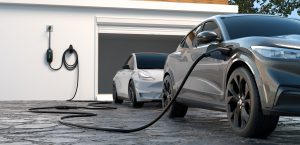
V2G (vehicle-to-grid) lets a compatible EV export power from its battery to the electricity grid through a bidirectional charger, usually as part of a utility programme.
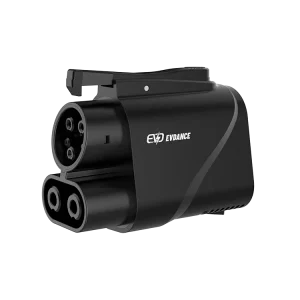
CCS1 is North America’s combined charging system: one inlet that takes AC through its J1772 top section and DC fast charging through two added pins below.
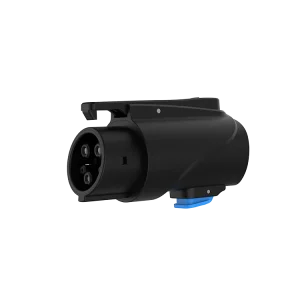
Start with direction and class: the adapter must bridge a NACS charger to your car’s inlet, match AC or DC charging, and — for DC — carry your car maker’s approval for use at that station.

The J1772 plug is the connector in your hand at the end of the charging cable; the J1772 inlet is the socket built into the car. Charging happens where the two halves meet.
A charger that pauses and restarts by itself is usually obeying something — load management, a schedule, or a protection limit. The rhythm of the pauses names the cause.
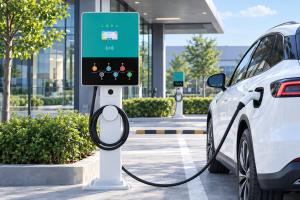
CHAdeMO was designed as a complete DC-only system: its own round inlet, its own locking connector and its own data link. That design explains why no adapter can cross it to CCS.