
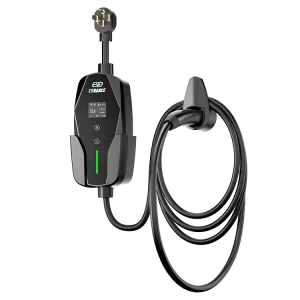
EV-ACS3210T Cable Care: Avoiding Kinks and Crush Damage
Kinks and crush damage are the two mechanical ways a portable charger’s cable gets hurt. Both are prevented by routing and coiling habits — and neither is a home repair.
Kinks and crush damage are the two mechanical ways a portable charger’s cable gets hurt. Both are prevented by routing and coiling habits — and neither is a home repair.
An adjustable charger sells a choice: six current steps for six kinds of home circuit. A good display makes that choice physical, no live charge required.
An adapter cord changes only the plug’s shape. Safety with the EV-ACS3210T comes from three gates: a listed adapter, the right current step, and a watched joint.
Every EV-ACS3210T step translated into miles per hour at a labelled 0.30 kWh/mile example, with the DOT’s 10-20 mph Level 2 band as the frame — and how to rescale it.
The EV-ACS3210T’s 3-year warranty covers defects, not wear, damage or the circuit. How to sort any case into its bucket, and the five document lines to find first.
For rental fleets switching to NACS, the EV-ACS3210T is depot equipment: native NACS, 14-50 outlets, and a pool sized to returns per turnaround window, not fleet size.
No holster, bag or bracket is listed for the EV-ACS3210T — all three are generic buys. What each must fit on this charger, and the check that decides it.
A condo’s shared service means a limited allocation. The questions to ask the association, and how a six-step portable is set once to live inside the cap.
At 12 A the EV-ACS3210T returns about 26 kWh — roughly 85 miles — across a 10-hour night, about three times a Level 1 session. When the low step is enough.
Close the season properly — unplug, coil wide, cap the connector, store it indoors — then run a five-point inspection before the first spring session.